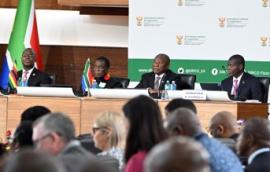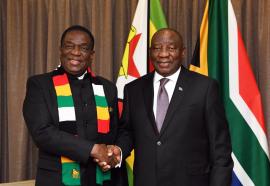
Southern African leaders will meet in Durban on Saturday to discuss the health and well-being of women, children and adolescents, with maternal and newborn deaths, family planning and health financing on the agenda.
President Cyril Ramaphosa is due to chair the Global Leaders Network gathering on the margins of the SADC heads-of-state summit. The Presidency says the meeting is expected to reaffirm political commitment, address financing gaps and advance the regional sexual and reproductive health and rights scorecard.
Those objectives are broad. The most useful way to judge the meeting will be to compare its final commitments with the indicators SADC already tracks — and to ask whether leaders attach budgets, deadlines and accountable institutions to their promises.
What the SADC scorecard measures
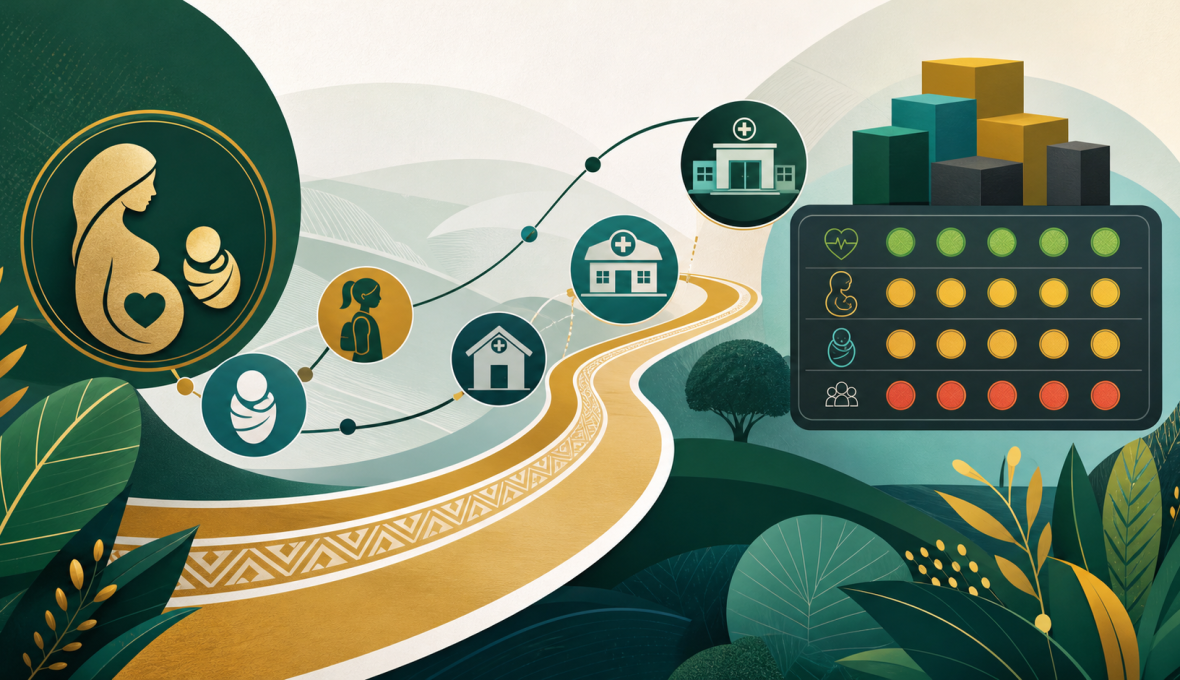
SADC launched its latest biennial sexual and reproductive health and rights scorecard in Johannesburg in February 2026. The tool uses a traffic-light system to track 20 indicators across the region’s 16 member states.
The measures extend beyond one mortality figure. They include:
- maternal and neonatal mortality;
- adolescent birth rates;
- access to family planning;
- new HIV infections and treatment coverage;
- sexually transmitted infections, including HPV;
- the number of facilities offering sexual and reproductive health services;
- sexuality education in schools;
- health-worker availability; and
- national health-budget allocation.
The scorecard also follows laws and policies that affect access to care. That matters because a clinic can exist on paper while age restrictions, third-party consent rules, cost, distance or stigma still prevent a young person from using it.
SADC’s 2025 scorecard update reported progress in reducing adolescent birth rates and mother-to-child transmission of HIV. It also warned of rising sexually transmitted infections, gaps in services for children and adolescent girls and the need for further investment to reduce maternal mortality.
Saturday’s discussion should therefore be measured against a mixed record, not presented as if the region is starting with no data or strategy.
Where South Africa stands
World Health Organization country data currently reports a South African maternal mortality ratio of 117.57 deaths per 100,000 live births for 2023. The estimate was improving compared with 2019, but it remained above the Sustainable Development Goal target of fewer than 70 deaths per 100,000 live births.
WHO’s country page reports a neonatal mortality rate of 11.56 deaths per 1,000 live births for 2022. That is just below the global target of 12, although the estimate had worsened slightly compared with 2021.
The dates matter. Maternal and neonatal indicators do not all come from the same reporting year, and national averages can hide large differences between provinces, districts, income groups and rural and urban communities. Leaders should not combine figures from different periods as if they describe one moment in time.
South Africa’s experience also shows why health financing is about more than the total amount allocated. A WHO-supported Health Financing Progress Matrix launched in Pretoria in March examined how resources are raised, pooled and used to purchase services, as well as the governance behind those decisions.
For maternal and newborn care, the practical questions include whether facilities have skilled staff, essential medicines, functioning referral systems and reliable transport when a pregnancy becomes an emergency.
Six commitments worth looking for
A strong meeting outcome would answer at least six questions.
- Which indicators will improve, and by when? A commitment to “reduce mortality” is weaker than a dated target tied to the SADC scorecard baseline.
- How much domestic funding is committed? Leaders are expected to discuss a changing global financing environment. Any call for health sovereignty should specify the national budget mechanism that will replace or stabilise vulnerable funding.
- Who is accountable for implementation? Commitments should identify responsible ministries or institutions and provide a reporting timetable.
- How will shortages be addressed? Midwives, nurses, community health workers, medicines, blood supplies, ambulances and referral capacity determine whether policy reaches patients.
- Will adolescent access be protected? The scorecard tracks youth services because legal permission does not automatically create confidential, affordable and non-judgemental care.
- Will results be public? A regional scorecard is most useful when citizens, clinicians and civil-society organisations can compare progress and challenge unexplained regression.
Domestic financing needs to be specific
The Presidency says leaders will consider domestic resource mobilisation and country-led approaches. That debate has become more urgent as international health funding faces pressure.
Domestic financing can make services more stable, but the phrase should not become a substitute for a budget. Governments must explain whether money will come from general revenue, insurance pools, reprioritisation, efficiency savings or another source — and what other programmes may be affected.
They should also show how funds will reach frontline services. A regional declaration cannot by itself shorten the distance to an obstetric unit, fill a vacant midwife post or prevent a stock-out.
What happens after the meeting
Saturday’s gathering is linked to the SADC summit but is not itself a replacement for national health planning, legislation or budgets. Its value will depend on what is adopted, how member states incorporate the commitments and whether the next scorecard shows measurable improvement.
EBNewsDaily’s initial report on the Global Leaders Network meeting sets out the official agenda. SADC’s 2025 scorecard update explains the 20 indicators and regional findings. The WHO publishes South Africa’s country health indicators and its report on the country’s health-financing assessment.
The headline test is simple: leaders should leave Durban with commitments that can be measured before the next biennial scorecard, not only a restatement that maternal and child health matters.
This report provides public-health policy information, not individual medical advice.