South Africa is preparing to take the full chairship of the Southern African Development Community at a leaders’ summit in Durban on Monday, 17 August. The title carries political influence and a prominent regional platform, but it does not hand Pretoria the power to set rules for Southern Africa on its own.
That distinction matters as ministers, officials and heads of government gather around a programme covering economic performance, regional security, food and nutrition, disaster readiness and the implementation of earlier decisions.
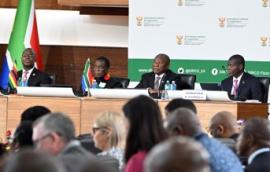
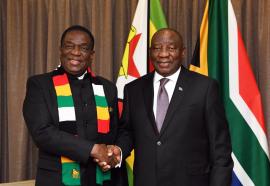
According to the official SADC summit notice, President Cyril Ramaphosa will host and chair the 46th Ordinary Summit at Durban’s International Convention Centre. South Africa has been serving as interim chair since November 2025 and is due to assume the full 12-month role at the August meeting.
Here is what the position means in practice — and what citizens should watch once the summit communiqué is published.
The chair can lead the room, but not govern the region alone
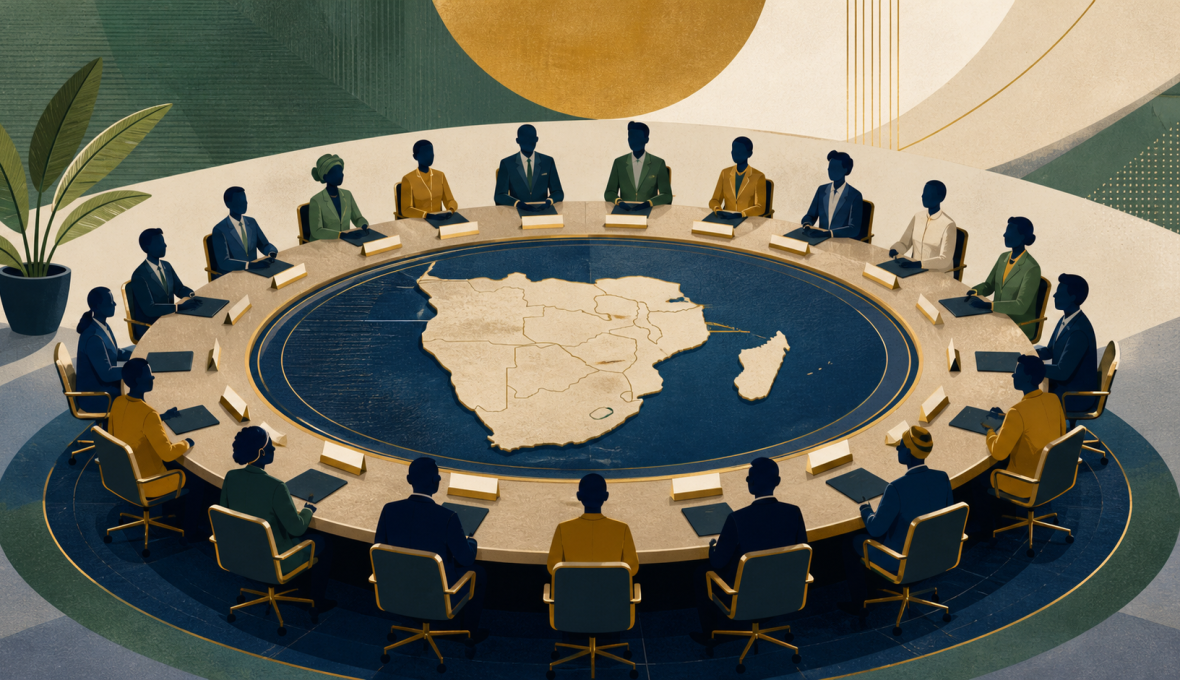
SADC describes its Summit of Heads of State or Government as the community’s main policy-making institution. All 16 member states are represented, and the summit provides the organisation’s overall policy direction.
The chairperson convenes and leads meetings, represents SADC at a high political level and helps keep agreed priorities on the regional agenda. South Africa can therefore use the role to press for attention on subjects such as political cohesion, trade barriers, regional value chains, infrastructure and peace and security.
International Relations Minister Ronald Lamola set out that direction in DIRCO’s May budget vote. He said South Africa’s priorities would include deeper political cohesion, consolidation of the SADC Free Trade Area, fewer non-tariff barriers and stronger regional value chains in fields including agro-processing, pharmaceuticals and critical-mineral beneficiation.
But chairing is not the same as commanding. Under SADC’s institutional arrangements, summit decisions are normally reached by consensus. That means South Africa must build agreement among fellow member states rather than announce a regional policy and treat it as settled.
The chair also works through a troika consisting of the current, incoming and immediate past chairpersons. SADC says this structure can take urgent decisions and provide direction between ordinary summit meetings. It is designed to preserve continuity, not to concentrate authority in one presidency.
Who turns summit decisions into action?
Once leaders agree on a course, implementation does not rest with the summit chair alone. The SADC Secretariat is the organisation’s principal executive institution and coordinates programmes and the implementation of decisions. The Council of Ministers oversees the functioning and development of the community, while specialised committees and national departments handle work in their respective fields.
Member states also remain responsible for domestic steps required to give regional commitments practical effect. A declaration on infrastructure, for example, does not by itself fund a railway or remove a border delay. Those outcomes may require national budgets, procurement, legislation, technical agreements and sustained cooperation among several governments.
This is why regional communiqués should be read as the start of an accountability process, not the end of one. The strongest commitments are those that identify who must act, what resources are available and when progress will be reviewed.
What is on the Durban agenda?
SADC says the summit will consider regional economic and political performance, progress on previous decisions, the proposed Regional Development Fund, food and nutrition security, disaster preparedness and the effect of global geopolitical developments on Southern Africa.
The gathering’s theme links resilient and inclusive industrialisation to infrastructure, agricultural transformation and critical minerals. Those subjects overlap with South Africa’s economic interests, but they also raise political questions about how benefits and costs will be shared across a region of economies of very different sizes.
For a business-focused look at those issues, read EBNewsDaily’s explainer on what the Durban SADC summit could mean for South African businesses.
Five things citizens should look for
When the final communiqué appears, readers should look beyond broad statements of intent and ask five practical questions:
- Was a decision made or was an issue only noted? Communiqués use careful language, and the difference can signal whether governments accepted a concrete course of action.
- Is there a deadline? A target date makes it easier for parliaments, journalists and civil-society groups to measure progress.
- Who is responsible? Implementation may sit with the Secretariat, a ministerial committee or individual member states.
- Is funding identified? Regional projects often stall when political agreement is not matched by finance.
- Will progress be reported publicly? A review date or reporting mechanism creates a clearer accountability trail.
South Africa’s year in the chair can shape conversations and help broker regional agreement. Its real test, however, will not be the prominence of the title or the language of a single summit. It will be whether the chair can turn shared priorities into consensus and then keep attention on delivery across 16 sovereign states.
This is an explainer based on official SADC institutional information, the summit programme and South Africa’s stated chairship priorities. It does not anticipate decisions that leaders have not yet taken.