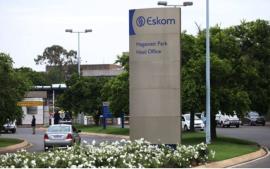
Eskom has recorded a second successive year of profitability as the power utility’s turnaround strategy continues to yield progress in restoring operational and financial sustainability.
On Monday morning, the power utility announced its annual results for the 2026 Financial Year (FY) ended 31 March 2026 – recording a group profit after tax increase of R30.3 billion, up from 2025’s restated R14.0 billion.
The Earnings Before Interest, Taxes, Depreciation and Amortisation (EBITDA) margin has grown to 30.63% from 28.75% restated in 2025.
“Eskom’s purpose is to power growth sustainably. That means holding two mandates at once: a commercial duty to run a financially sound business, and a developmental duty to keep South Africa connected, growing and included. Profit is not the opposite of that public purpose. It is what makes the purpose possible.
“This is the second consecutive year that Eskom has delivered a profit. That performance was earned through operational recovery and cost discipline. It now allows us to reinvest in Eskom Green, in a better customer experience in distribution, in the reliability of the coal fleet, and in grid expansion so that new generation can connect,” Eskom chairperson Mteto Nyati said.
The power utility’s Group Chief Financial Officer, Calib Cassim, noted that Eskom’s operational recovery – which has seen more than a year pass without load shedding – is matched by its financial turnaround.
“Eskom delivered a second successive year of strong profitability, with a healthier balance sheet, materially improved liquidity and positive credit-rating actions from S&P Global, Fitch and Moody’s.
“We received our first credit-rating upgrade in over a decade, which will enhance Eskom’s access to lower borrowing costs to support future Capex, which also contributed to South Africa’s own sovereign upgrade.
“Government’s debt relief support has been a critical enabler, freeing up cash from operations to be reinvested in the business – notably the generation recovery plan – rather than being consumed by debt servicing, the benefits of which the country is experiencing today,” Cassim noted.
Eskom’s Group Chief Executive, Dan Marokane, assured the public that workers and officials at the power utility are “rebuilding an economic asset” for the country – moving from “recovery to transformation, shifting our focus from stabilising the business to building a financially sustainable, competitive and future-ready Eskom”.
“Sustained profitability, significant progress in our audit recovery program aimed at strengthening internal controls, and improved efficiencies enable Eskom to continue to address electricity affordability with our shareholder, as we aspire to remain within single-digit price increases.
“We continue to reinvest profits back into the business to spend on maintaining and expanding critical infrastructure, as well as to develop and introduce the technologies that will drive our decarbonisation journey for the benefit of all our customers and drive investment in the economy,” he said.
The GCE highlighted Eskom’s importance to the economy, communities and consumers.
“The scale of the turnaround is best understood against where we were as an organisation and as a country three years ago. The Council for Scientific and Industrial Research estimated that load shedding cost the economy up to R2.8 trillion in 2023, reducing by 83% to R481 billion in 2024. With four days of load shedding in FY2026 totalling 26 hours, the impact on the economy was minimal.
“When Eskom is not financially sustainable, it weighs heavily on the national budget, the sovereign credit rating and borrowing costs, ultimately reducing resources available for other priorities.
“When Eskom is financially sustainable, we can deliver government reform policy faster through providing the energy security that is vital to give confidence to new competitors to enter the marketplace, as well as integrate variable renewable energy into the grid, none of which is possible without our 24/7, 365 baseload energy supply,” Marokane said. – SAnews.gov.za
Source: Original report at SAnews.gov.za.