By Dr Nombuso Madonsela, Health-e News
South Africa’s HIV response is, in many ways, a remarkable success story. Millions of people now have access to life-saving antiretroviral treatment (ART), transforming HIV from a fatal illness into a manageable chronic condition.
Yet beneath this progress lies a quieter, more uncomfortable truth: many of those on treatment are taking their medication on an empty stomach.
In communities already burdened by poverty, HIV, and tuberculosis (TB), food insecurity is not a peripheral issue, it is a structural barrier to health. This intersection of disease and food insecurity is increasingly understood as a syndemic set of mutually reinforcing conditions.
Hunger accelerates disease progression, illness erodes earning potential, and reduced income deepens food insecurity, creating a cycle that medicine alone cannot break.
Treatment Success Requires More Than Pills
Retention in care, consistent adherence, and sustained viral suppression are shaped by the realities of daily life – foremost among them, reliable access to food.
Food insecurity weakens immune function and ultimately reduces the effectiveness of treatment. Without adequate nutrition, the body struggles to absorb medication properly and becomes more vulnerable to opportunistic infections. For children living with HIV, the impact is even more profound, with undernutrition contributing to high levels of stunting and impaired development.
Success of HIV treatment is increasingly determined by whether patients can sustain treatment within the constraints of rising food prices, unemployment, and fragile household economies, not by drug availability alone.
Stable access to nutritious food reduces anxiety, supports consistent medication use, strengthens retention in care, and improves overall well-being. When food supports medicine, treatment outcomes improve. Nutrition therefore is not an optional add-on.
At AIDS Healthcare Foundation (AHF) South Africa, we have seen firsthand how community-led solutions can bridge the gap between treatment and nutrition.
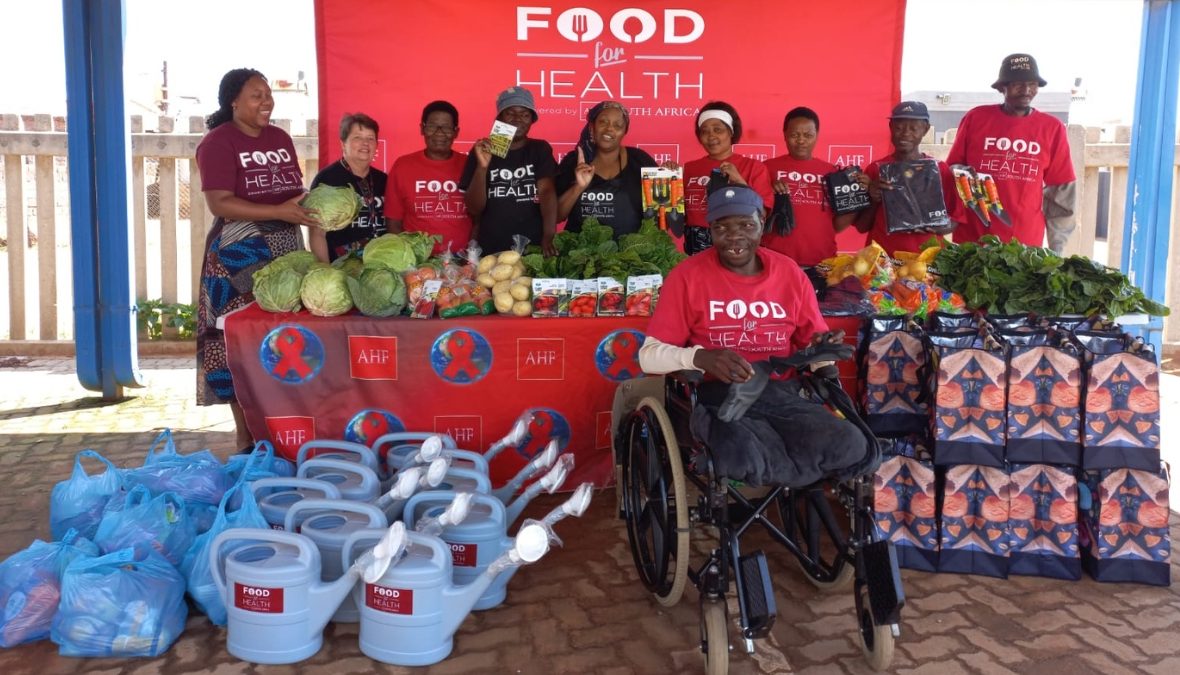
Through our Food for Health Programme, we support clinic-based gardens that enable patients to grow their own food while building resilience and dignity. The Isipingo Food for Health Garden in KwaZulu-Natal is one such example. Located at a clinic serving patients on chronic medication, it provides fresh produce, reduces household food costs, and creates sustainability by empowering patients to replicate gardens at their homes.
Unlocking Community Power for Sustainable Health
Across South Africa, there is untapped potential waiting to be activated. Underutilised municipal land, clinic grounds, school yards, and even small household spaces can be transformed into productive food systems. With the right support, communities can adopt innovative, climate-smart farming techniques – from vertical gardens to water-efficient irrigation – making food production possible even in the most resource-constrained environments.
At the heart of this transformation are peer champions – patients and community members who have experienced firsthand the benefits of linking food production to treatment. Their stories carry credibility and hope. As mentors and mobilisers, they demonstrate that growing food is not only possible, but essential for sustaining health and dignity. Through them, food production becomes embedded in community identity rather than introduced as an external intervention.
Schools, too, hold immense and often underutilised potential in this ecosystem. As trusted community institutions, they can serve as hubs for food production, learning, and intergenerational engagement. School-based gardens can supplement feeding schemes, ensuring that children – many of whom live in households affected by HIV and TB—receive more nutritious meals.
Beyond this, schools can teach practical agricultural skills, nurture environmental stewardship, and extend knowledge into households through learners themselves. When linked with nearby clinics and community programmes, school gardens can reinforce a culture of food production that supports both education and public health.
Community health workers and treatment adherence clubs can further strengthen this ecosystem by integrating food security into treatment literacy, ensuring that patients understand the direct link between nutrition and adherence.
Government’s role in food security
But community energy alone is not enough. Government has a pivotal role to play in recognising food security as a core determinant of health and in creating an enabling environment for these efforts to flourish. This includes embedding nutrition within HIV and TB strategies, ensuring that access to adequate food is treated as a standard component of care, and not left to fragmented, short-term interventions.
It also means unlocking public land for community use, investing in training and support for small-scale and urban agriculture, and fostering collaboration across sectors so that health, agriculture, and local government work toward shared outcomes. When policy aligns with community-driven solutions, scale becomes achievable, and sustainability becomes realistic.
The task before us is not to build parallel systems, but to connect what already exists – clinics, schools, communities, and public resources – into a coherent response that recognises food as fundamental to health.
When food and medicine collide, hunger too often wins. The responsibility before policymakers, health leaders, civil society, and communities is clear: ensure that medicine is never asked to stand alone.
___________________________________________________________________________________________
About AIDS Healthcare Foundation (AHF):
AIDS Healthcare Foundation (AHF), the world’s largest HIV/AIDS healthcare organisation, provides cutting-edge medicine and advocacy to more than 3 million individuals across 50 countries, including the U.S. and in Africa, Latin America/Caribbean, the Asia/Pacific Region, and Eastern Europe. In January 2025, AHF received the MLK, Jr. Social Justice Award, The King Center’s highest recognition for an organization leading work in the social justice arena.