By Nosihle Shelembe
The recently tabled Medium -Term Budget Policy Statement (MTBPS) has highlighted government’s challenge of containing growth in the public-service wage bill while attracting and retaining the skilled professionals needed to deliver essential frontline services over the next three years.
To strike this balance and safeguard long-term fiscal sustainability, government is implementing targeted reforms to renew and professionalise the workforce, reduce unit costs, and curb irregular payments and fraud.
These reforms include the incentivised Early Retirement Programme, aimed at managing compensation spending, renewing the workforce and creating room for younger professionals.
Furthermore, government is investigating allegations of “ghost workers” and payroll irregularities in the public service through a nationwide audit and verification process covering all public – service payroll recipients.
“Over the past decade, the national population has continued to grow and urbanise while overall public-service headcounts have stagnated, straining frontline service delivery.
“If not carefully managed, this imbalance risks compromising the quality of service delivery by critical frontline staff such as nurses and doctors,” National Treasury said in the MTBPS document.
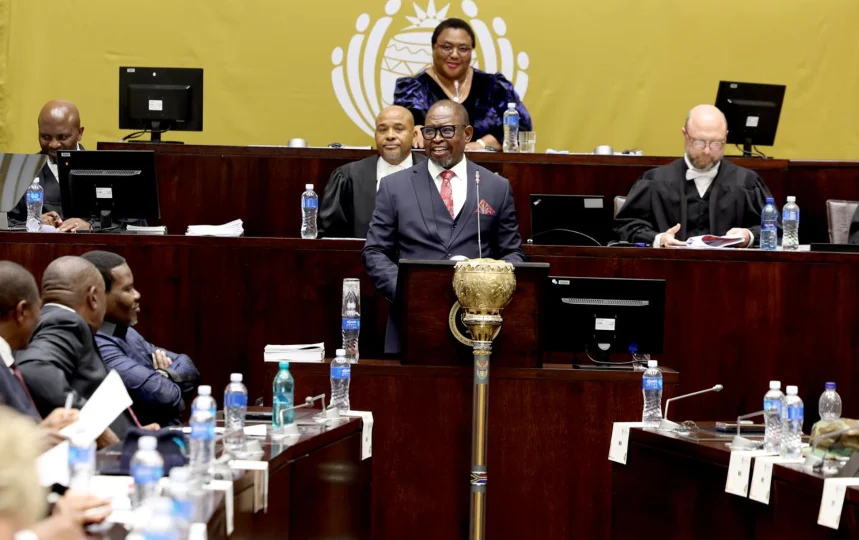
Tabled in Parliament by Finance Minister Enoch Godongwana, the MTBPS allows Parliament to assess how government intends to balance economic growth, service delivery and fiscal sustainability amid competing demands on the public purse.
Payroll audit targets ghost workers
The audit of payroll records across national and provincial departments has flagged 4 323 high-risk cases, involving individuals suspected of being “ghost workers”.
This refers to fictitious, deceased, or unverified individuals receiving state salaries or payments who are flagged as high-risk, suspicious cases in the payroll system.
To address cases involving officials whose details could not be verified against the National Population Register, as well as other individuals flagged as high-risk (potential ghost workers), National Treasury said an online verification platform was developed in partnership with the Department of Home Affairs.
This platform enabled real-time verification and was established in accordance with the Public Finance Management Act (PFMA) Instruction No. 4 of 2026/27, which took effect on 15 June 2026.
Under the PFMA instruction, employees were required to undergo a structured verification process to improve the integrity of public-service employee data and reduce the public-sector wage bill.
The platform remained open for two months, closing on 15 August 2026, and was designed to complement the physical verification processes completed by the Department of Public Service and Administration (DPSA).
Meanwhile, National Treasury is consolidating findings from various government initiatives to identify ghost workers, including those led by the Department of Basic Education and the DPSA.
National Treasury is also working with the Financial Intelligence Centre to investigate high-risk officials. Finance Minister Enoch Godongwana is expected to share the findings with Parliament when he delivers the 2027 Budget.
Exit programmes create room for renewal
Government introduced the incentivised Early Retirement Programme (ERP) and Voluntary Exit Programme (VEP) for the 2025/26 and 2026/27 financial years to manage compensation spending, renew the public service and support fiscal sustainability.
“The programme aims to manage aggregate headcount and long-term wage costs by incentivising long-serving employees to exit the system before the normal retirement age.
“It will facilitate the entry of younger talent at lower entry notches, rejuvenating the public service and lowering the unit cost in the public-service wage bill. However, applications may be rejected where critical skills cannot be replaced,” National Treasury explained.
The document noted significant uptake during the first phase, particularly at the provincial level, where most public servants work in the education and health sectors. Data from the first phase revealed that 8 103 applications were approved. However, approximately 8 245 eligible employees exited the system.
“The additional numbers reflect [the] departments’ use of the Determination and Directive on ERP, which allows them to exit eligible employees at their own cost. Total phase 1 centrally funded financial incentive costs stand at about R3.87 billion,” National Treasury said.
The second phase processed a further 19 347 applications, bringing the total number approved by National Treasury across the ERP and VEP to 27 450.
Following the successful conclusion of phase 1, the second phase processed an additional 19 347 applications. This brought the total number of National Treasury-approved applications across the entire ERP/VEP process to 27 450. After initial exit costs, the programme is projected to generate net savings of R4.3 billion in the 2027/28 financial year, R4.4 billion in the 2028/29 financial year and R4.6 billion in the 2029/30 financial year.
National Treasury said the average annual saving of about R4.4 billion could fund approximately 7 101 additional posts in critical frontline services or ease spending pressures without breaching existing compensation ceilings.
The departures create room for younger employees to enter the public service while generating medium- to long-term savings for the state.
Most eligible applications came from employees at salary levels 8 to 10.
“It is estimated that, on average, a permanent saving of R110 097 per year per employee is realised through this notch saving process. Major front-line sectors such as defence, correctional services, education and agriculture all display average savings exceeding R100 000 per employee per year, validating the fiscal logic of the programme,” National Treasury said.
A large frontline workforce
According to the 2026 Medium-Term Budget Policy Statement, the public service employs about 1.3 million people. Senior Management Service personnel accounted for 0.9% of public service employees between the 2015/16 and 2025/26 financial years.
This highlights the significant contribution of frontline and core functional employees to the overall public service workforce.
National Treasury noted that employee compensation remains relatively high compared with that of peer countries, despite having declined over the past decade.
The MTBPS notes that employee compensation remains the largest component of non-interest expenditure, accounting for 33.4% in the 2025/26 financial year.
“This has declined from a peak of 36.1% in 2018/2019. Similarly, as a share of Gross Domestic Product (GDP), the public-service wage bill has declined from a peak of 10.2% in 2020/2021 to 9.2% in 2025/2026. However, despite the downward trajectory, this remains relatively high when measured against comparator countries,” National Treasury said.
The MTBPS warns that, if left unmanaged, the wage bill could crowd out spending on key priorities.
“Furthermore, the scale of the public service wage bill means that even small percentage increases translate into billions of rands in additional, recurrent spending. If left unmanaged, this will crowd out other priority spending, including infrastructure investment,” National Treasury said.
Containing the wage bill growth
Between the 2015/16 and 2020/21 financial years, growth in the public-service wage bill averaged 6.4%, peaking at 8% in 2016/17.
During this period, government began containing costs by scaling back performance bonuses and introducing the first Early Retirement Programme in 2019.
“A turning point occurred with consolidation measures that were implemented in response to the increasingly strained fiscal position of the state between 2018 and 2021,” National Treasury said.
As part of these measures, government imposed a public-service wage freeze in 2020/21. This limited wage-bill growth to 1.7% in that financial year and produced carry-through effects that changed the baseline trajectory.
In 2021/22, government introduced a non-pensionable cash gratuity to manage compensation pressures. It was extended through 2022/23 alongside a phased policy to end performance bonuses in the public service.
In late 2023/24 and throughout the 2024/25 financial year, government froze recruitment for non-essential posts. In 2025/26, it began implementing targeted structural measures to manage future wage-bill growth.
The focus shifted to internal efficiencies through a comprehensive ghost-worker audit, a new incentivised Early Retirement Programme and targeted and responsible savings measures.
Balancing service delivery and sustainability
According to the document, the public-service wage bill is projected to rise from R716.6 billion in 2025/26 to R850.4 billion in 2029/30.
Education, health, social development, police, correctional services, defence and home affairs together accounted for 88.3% of public-service personnel in 2025/26.
Over the 2027 Medium-Term Expenditure Framework period, the compensation budget is projected to increase by an average of R29.9 billion, or 3.9%, a year — from R760.7 billion in 2026/27 to R850.4 billion in 2029/30.
National Treasury said government remains committed to managing the public-service wage bill while ensuring that essential services are maintained and public funds are used effectively.
“The initiatives outlined … aim to control the growth in compensation expenditure in a fiscally constrained environment, while improving the efficiency of the public service, and ensuring that public funds are used effectively.
“By balancing the need for a capable and well-compensated public service with the imperative of fiscal discipline, government aims to foster a sustainable path towards inclusive economic growth,” National Treasury said. –SAnews.gov.za
Source: Original report at SAnews.gov.za.