Choosing a beach with lifeguards on duty and swimming between their flags is the starting point for avoiding rip currents, according to the National Sea Rescue Institute (NSRI).
This practical guide draws on the NSRI’s rip-current guidance and its 21 September 2026 water-safety advice, checked on 18 November. It does not establish whether a particular beach is open, patrolled or safe to enter today.
Ask the lifeguards before entering
Rip currents carry water away from the beach through the surf zone. The NSRI lists possible clues including differently coloured water, a gap in breaking waves and sand, seaweed or debris moving seawards. It cautions that an untrained eye may struggle to spot them. Swim only where lifeguards are on duty and follow their designated swimming area.
If a current carries you away
The NSRI advises staying calm rather than trying to swim directly against the current. Float and raise an arm to attract attention. When possible, swim parallel to the beach until clear of the current, then use incoming waves to help return to shore.
Call for help without creating another emergency
If someone else is struggling, alert a lifeguard or the NSRI. Its guidance warns against entering a rip current unless trained and equipped with emergency flotation. Where possible, throw something that floats to the person.
Save 112 and the NSRI Emergency Operations Centre number, 087 094 9774. Keep young children within arm’s reach in the water and give them undistracted adult supervision. A flotation aid does not replace supervision.
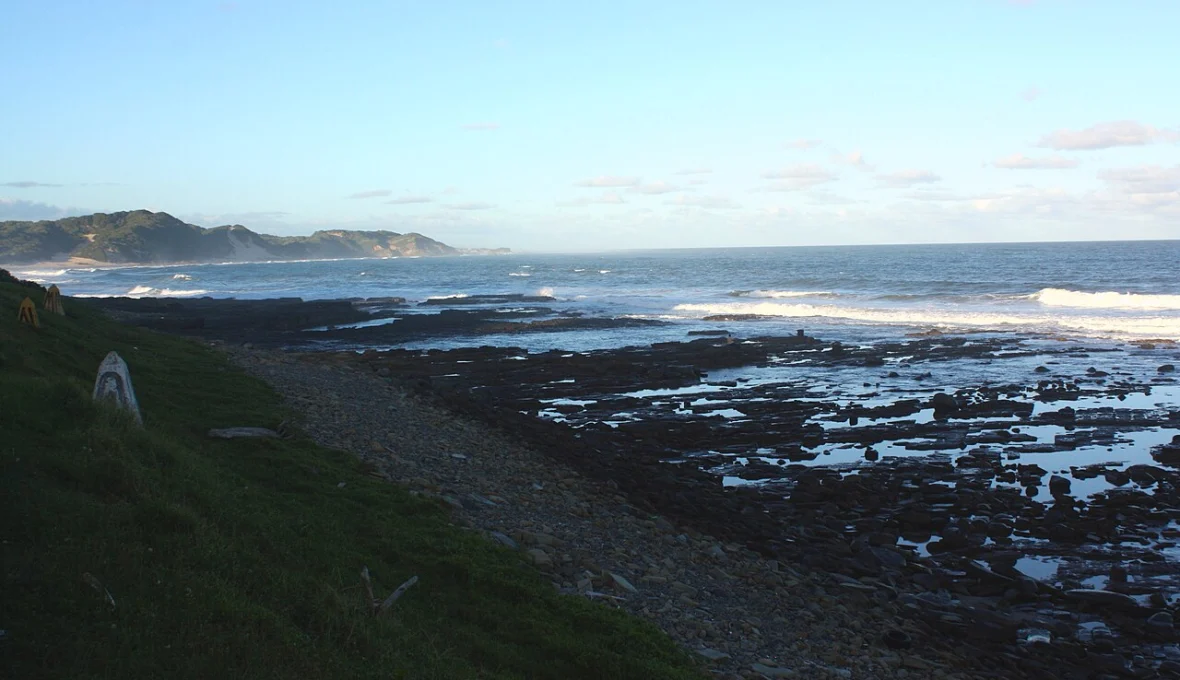
Archive coastal photograph: East London in 2014, used for general coastline context. It does not identify a rip current, a designated swimming area or present conditions. Photo: South African Tourism / Wikimedia Commons, CC BY 2.0. Original photograph. Resized and cropped for display.