By Lerato Kodisang, Health-e News
Residents with chronic health conditions in Zone 7, Sebokeng, in the Vaal, are struggling to manage their illnesses at home after six weeks without electricity. While a man who depends on an electrically powered oxygen concentrator fears for his life, a woman with Type 1 diabetes has resorted to using insulin that may no longer be safe to use.
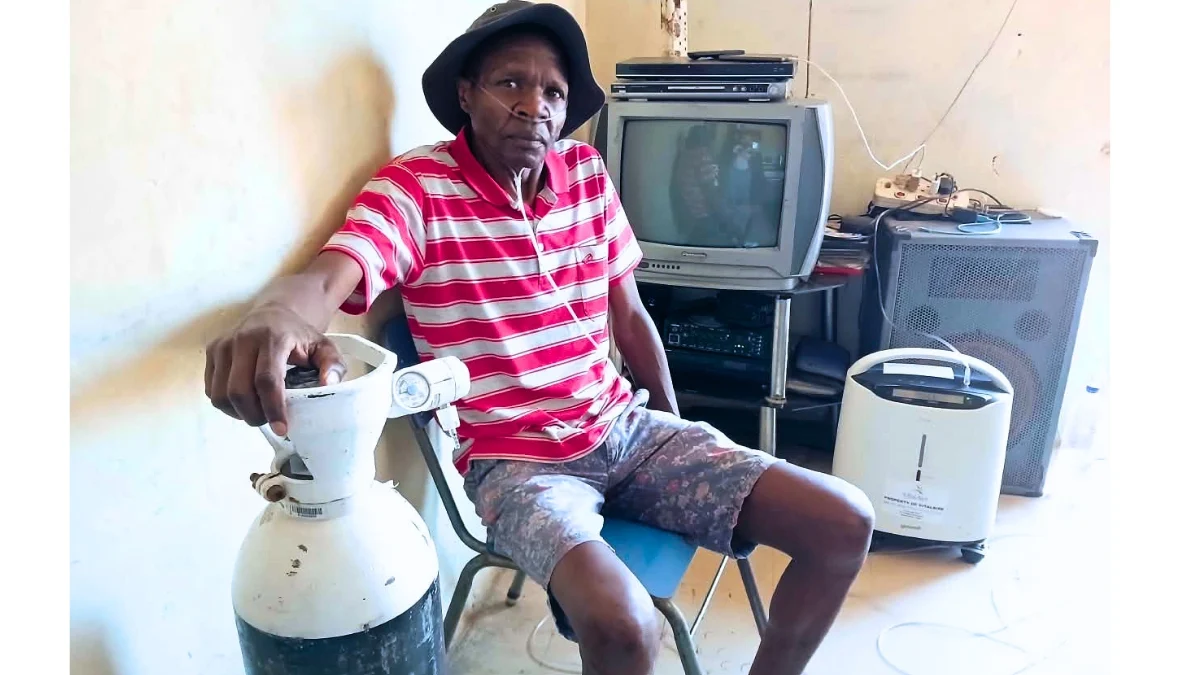
Unemployed 57-year-old Charlie Hoza, who lives with his wife and 14-year-old child, was diagnosed with a chronic respiratory disease in 2017.
“I depend on home oxygen for breathing and this home oxygen uses electricity,” says Hoza. “But I have been without electricity since October.”
Hosa relies on an oxygen concentrator that runs on electricity, to help him breathe. His oxygen device is supplied through VitalAire, a company that provides home oxygen devices to qualifying patients free of charge through the public healthcare system. For emergency use, patients are also supplied with one oxygen cylinder that stores a limited supply of oxygen and works with gas.
Struggling to keep oxygen running
At the start of the power outage in mid-October, Hoza went to Sebokeng Hospital to arrange for VitalAire to supply him with additional oxygen cylinders. But Hoza says the company restricts the amount of oxygen cylinders per patient.
“I should have a gas cylinder on standby at all times. VitalAire used to provide me with a gas cylinder any time I needed it. I already took six cylinders in six weeks.” Each oxygen cylinder lasts Hoza about 12 hours.
“In the beginning of November when I requested a gas cylinder, VitalAire told me that their rules have changed, and a patient can now receive one cylinder per month, despite me telling them my electricity challenges.”
Hoza temporarily moved to a relative’s home in Zone 3, but electricity there also went off.
Hoza now uses an extension cord connected to a neighbour’s house in another block to power his oxygen concentrator. “My challenge is that at night I do not sleep. I have to sit outside or near my door to guard the extension from thieves.”
Insulin damaged during outage
One of Hosa’s neighbours, 53-year-old Connie Radebe, has lived with Type 1 diabetes since 2009 and is dependent on insulin. Since the power outage in Zone 7, Radebe has struggled to store her insulin in a cool place.
“When the electricity went off, I took my insulin to one of the neighbouring blocks to ask them to store it in their fridge,” says Radebe.
Radebe’s neighbour mistakenly placed the insulin in the freezer. “Ten units of my insulin froze and I cannot use them. But I sometimes use the ineffective defrosted insulin to keep me going until my next appointment at the end of November.”
Insulin that has been frozen should not be used, even after thawing, because freezing can affect its effectiveness. Radebe borrowed insulin from another neighbour, but that supply has run out.
The outage has also made it difficult for Radebe to store food. Radebe follows a strict diet to manage her blood sugar levels, but now spends more money to cook more frequently using a gas stove.
Residents asked to pay for transformer
Incoming ward 42 councillor, Kenny Sebego, says the outage affects 36 households. Sebego says an Eskom technician who visited the area, told residents that a transformer that supplies electricity to the affected block, was damaged due to overloading by illegal connections from 18 shacks in a nearby informal settlement.
Sebego says Hoza and Radebe’s homes are among the 36 homes who are legally connected to the electricity supply. Community representatives were told during a meeting at the local Eskom office on 12 November that households would have to contribute R1,500 each towards replacing the damaged transformer because of illegal electricity connections.
Many residents are unemployed and cannot afford the payment. Sebego believes Eskom is unfairly penalising paying customers for illegal connections made by others.
Eskom was approached for official comment but had not responded by the time of publication.
“Emotionally I am not ok, electricity is my life and its absence means I am nearing my death day,” says Hoza. “I am pleading with Eskom to restore electricity faster.”