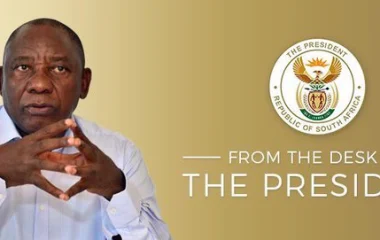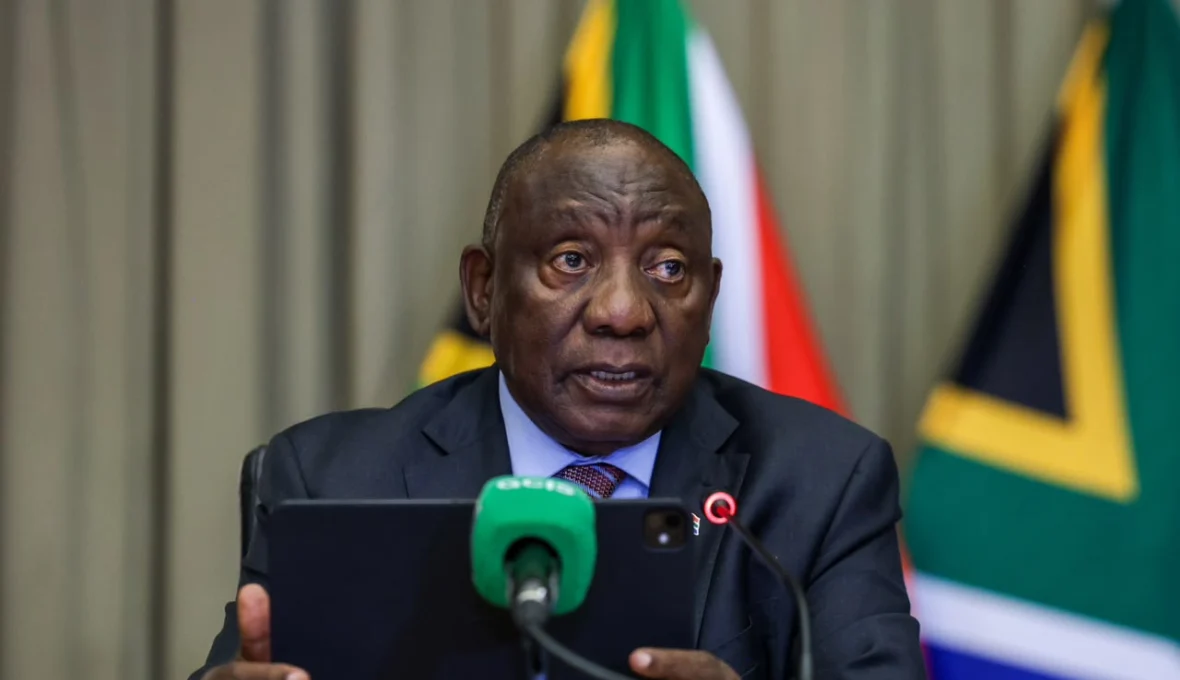
President Cyril Ramaphosa has called for stronger collaboration between government, universities and national science councils to harness research, innovation and skills development towards addressing South Africa’s economic and social challenges.
The President made the call during an engagement with university vice-chancellors and national science councils at the Union Buildings in Tshwane on Tuesday, where he highlighted the need to strengthen partnerships around key national priorities, including job creation, water and energy security, industrialisation and technological development.
He said universities and public research institutions had a critical role to play in supporting the country’s developmental objectives, but that their potential remained largely untapped.
“No developmental state has succeeded without strong universities and strong public research institutions,” President Ramaphosa said.
He noted that South Africa continued to grapple with high unemployment, poverty and inequality, with the official unemployment rate standing at 33.7%, while close to half of young people looking for work remained unemployed.
The President said more than 23 million South Africans continued to live below the lower-bound poverty line, despite a significant decline in poverty rates between 2006 and 2023.
Against this backdrop, he said government was pursuing three overarching strategic priorities: driving inclusive growth and job creation, reducing poverty and tackling the high cost of living, and building a capable, ethical and developmental state.
“We have therefore asked that our discussion today consider, among other things, building partnerships around key national priorities,” he said.
President Ramaphosa emphasised the importance of developing a coordinated skills development system involving universities, Technical and Vocational Education and Training (TVET) colleges and Sector Education and Training Authorities (SETAs).
He said young people should be able to transition from school to further education and ultimately into the workplace without falling through the cracks.
This, he said, required expanding workplace-based learning and ensuring that the education and training offered aligned with the current and future needs of the economy.
On research and innovation, the President raised concerns about the country’s investment levels, noting that South Africa spent approximately 0.6% of its Gross Domestic Product on research and development, significantly below its target of 1.5% by 2030.
“Both public and private investment in research have not kept pace with the needs of our economy,” he said.
He called for increased investment and structured collaboration between government, research institutions, universities and other social partners to ensure that research translated into practical solutions and economic opportunities.
Among the priority areas identified were water and energy security, the development of South Africa’s artificial intelligence capabilities, industrialisation and deriving greater economic and social value from the country’s critical minerals.
On artificial intelligence, President Ramaphosa said South Africa needed to develop its own capabilities to build, govern and use data in the interests of its people.
“South Africa must be a producer, not merely a consumer, of emerging technologies,” he said.
He also called on universities and science councils to contribute towards developing local industries by strengthening research into the processing of critical minerals within the country.
The President further highlighted the role of academic institutions in supporting the development of a capable state through their expertise in planning, public administration and evidence-based policymaking.
However, he stressed that government’s call for universities to contribute to national development did not undermine their institutional autonomy.
“Asking our universities to serve national development does not mean asking them to surrender their institutional autonomy.
“Academic freedom and the freedom of scientific research are important conditions for development. Just as institutions funded by the public carry a responsibility to the country,” he said.
President Ramaphosa said building an effective partnership would also require addressing the financial sustainability of higher education institutions, governance instability and the need for closer engagement on policy developments.
He called for more effective use of public procurement to position the State as a first customer for locally developed innovations.
“By the end of this meeting, we hope to have reached concrete commitments to better structure collaboration between government, our universities and our science councils,” he said.
The President said the country’s universities and research institutions represented an important foundation for development, while its youthful population presented significant potential that needed to be harnessed.
“Our task is to mobilise what we have, appreciate what we can do together and realise the future we want. This meeting represents the start of such an undertaking,” he said. – SAnews.gov.za
Source: Original report at SAnews.gov.za.