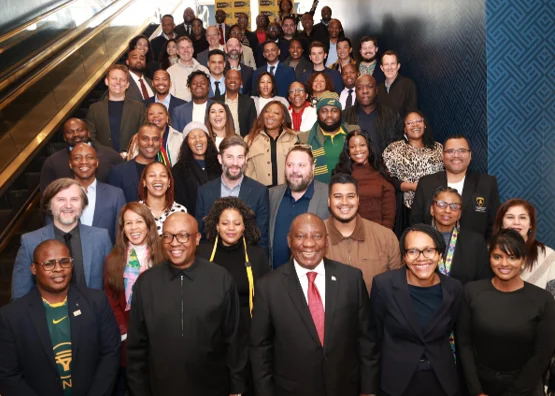
Silicon Valley, California – South African students, academics and entrepreneurs who formed part of President Cyril Ramaphosa’s working visit to Silicon Valley in California have returned with renewed confidence, fresh perspectives and a determination to help position the country as a key player in artificial intelligence (AI).
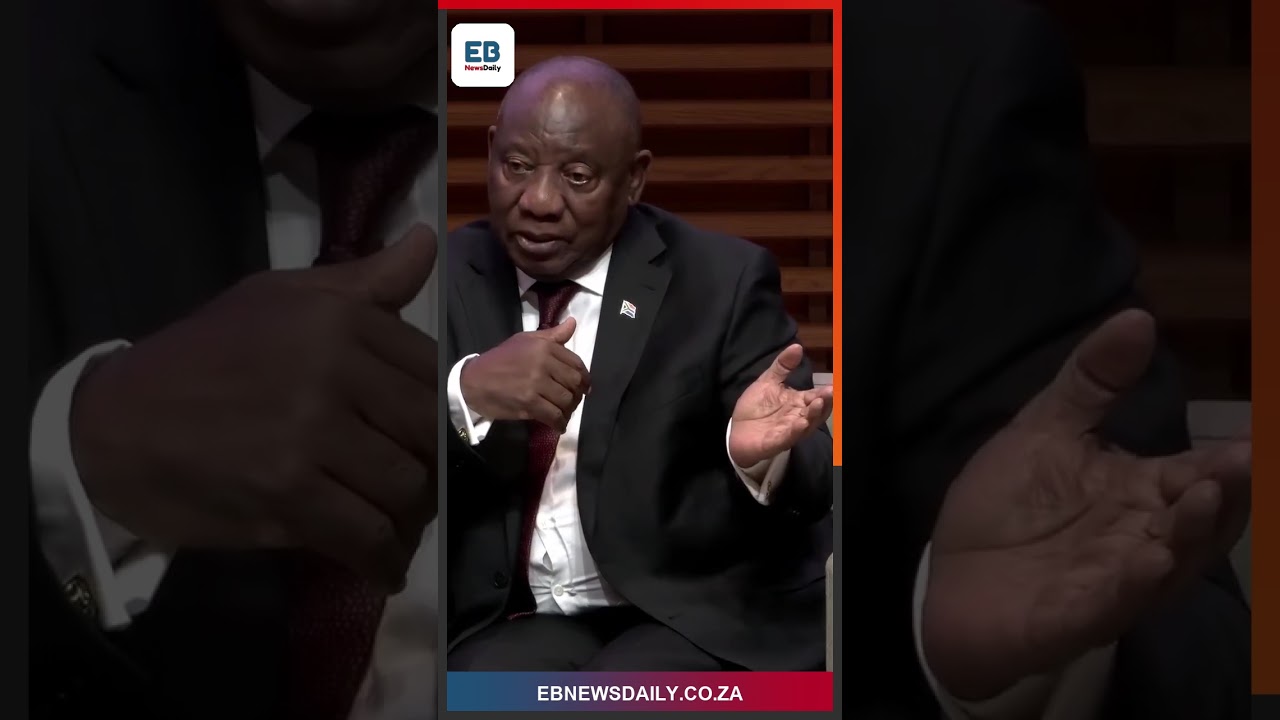
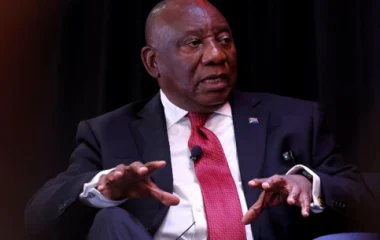
During a media wrap-up session at the conclusion of the visit, the President invited members of the delegation seated alongside him to share their experiences and reflect on what they had learnt from engagements with leading technology companies, universities, investors and AI experts.
Their reflections highlighted a common message: South Africa has the talent and potential to participate meaningfully in the AI revolution but must move swiftly to turn knowledge and ideas into practical solutions that benefit its people.
For South African scientist and entrepreneur Siyabulela Xuza, the experience was a dream come true and an opportunity to recognise the enormous possibilities AI presents for the country.
Xuza said AI would create opportunities for South Africans regardless of their backgrounds or where they lived, but stressed that start-ups, small businesses and entrepreneurs needed to be empowered to benefit from the emerging technology.
He welcomed the President’s call for practical projects to be developed within 90 days, saying the private sector was ready to contribute.
“Business is ready. If we act now, South Africa won’t be catching up. We will be ahead, with no South African being left behind,” Xuza said.
The visit also provided valuable insights for students seeking to understand how AI could be integrated into their respective fields of study and future careers.
Buhle Matiwane, a Master of Commerce in Information Systems student at the University of Fort Hare, said the experience had directly enriched her research into the determinants of AI integration in university curricula to bridge the workforce skills gap.
She said engagements with leading universities and technology companies had given her valuable insights into how different institutions were approaching AI.
Her intention is to translate these lessons into her research and contribute to her institution while exploring opportunities for collaboration.
“My take home is additional knowledge, a new perspective, and opportunities to collaborate,” she said.
Matiwane also emphasised the importance of ensuring that AI integration was accessible and sustainable for universities, adding that students should not be excluded from the changing demands of the workforce.
Similarly, Sicelo Vuyo Bholo, an Electrical Engineering N6 student at Sedibeng TVET College, said the experience had challenged his perceptions about South Africa’s academic capabilities.
He said interactions with students pursuing university qualifications and PhDs had shown him that South African institutions had the potential to compete with some of the world’s leading universities.
“I learned that we actually have a lot in South Africa that is at the level of like even a Stanford or a Sacramento State University, but that is comparable in and world class in terms of academic level,” he said.
Bholo said the experience had also reinforced the urgency of taking decisions that would shape the country’s future, particularly as AI and related technologies continued to transform the world.
Quoting the observation that there are decades when nothing happens and weeks when decades happen, he said the current technological revolution required South Africa to act decisively.
He reflected on the importance of investing in the future generations who would inherit the decisions being made today.
Professor Tankiso Moloi, Executive Dean at the University of Johannesburg, described the visit as potentially marking the beginning of an important phase in South Africa’s economic development.
Drawing on his background in data science and finance, Moloi said the engagements had helped the delegation identify gaps in the country’s capabilities and understand how research could contribute to closing them.
He said the emergence of the AI-driven “intelligent age” presented an opportunity for countries that had previously lagged behind in technological development to leapfrog through innovation.
“What we’ve learned here, will allow us to participate meaningfully in what I call the intelligent age,” he said.
Moloi thanked the President for the foresight behind the visit, saying it could help South Africa reposition its economic standing.
For Pelonomi Moiloa, CEO and co-founder of Lelapa AI, the visit provided reassurance that government and industry were committed to supporting the development of homegrown AI solutions.
Moiloa, whose company develops language models for African languages, said it was encouraging to see that government was looking beyond the country’s immediate challenges and investing attention in technologies that could help drive future development.
She highlighted commitments to increase venture capital investment in local businesses and improve access to computing resources for start-ups.
However, she stressed that developing AI businesses would also require a strong domestic market capable of supporting their products and services.
“We want to benefit from the proceeds of being able to serve these AI services from a sovereign perspective,” she said.
Moiloa said local businesses needed access to contracts and opportunities to ensure that start-ups could grow while contributing to employment creation.
For young graduates, the visit was also an opportunity to see themselves as active participants in the global technology conversation.
Nandi Shandu, an Application Development graduate from Durban University of Technology, said she had initially felt intimidated about entering the AI space as a recent graduate.
However, engagements at Stanford University, Cisco and Microsoft helped change her perspective on the relationship between AI and her existing technical skills.
She said she had realised that AI and AI agents were not necessarily replacing the foundations of software engineering and system design but could strengthen them.
“I realized that AI and AI agents aren’t here to replace the software engineering and system design foundations that I’ve worked so hard to build. They are here to amplify them,” she said.
Shandu said the experience had strengthened her confidence in the ability of South African students to contribute to technological innovation.
She plans to share her learnings with fellow students at DUT and use the technology to develop solutions to challenges in her community.
Meanwhile, Mahlatse Moretsele, a Data Science student at Sol Plaatje University, said one of her biggest takeaways was seeing how students at Sacramento State University were turning their ideas into tangible projects with commercial potential.
She said South African students had considerable ideas, skills and capabilities that could be translated into marketable products.
Moretsele also called for greater investment in AI education, not only for students pursuing technology-related qualifications but also for people in other fields who would increasingly need to integrate AI into their working lives.
She said school learners should also be introduced to AI to help them understand how the technology could shape their futures.
For Alexander Sittmann, a fourth-year medical student and Master’s student in Bioinformatics at the University of Cape Town, the experience challenged his perception of the capabilities of South African students and researchers.
He said he had arrived in Silicon Valley believing that students from South Africa were inherently less capable than those studying at some of the world’s leading universities.
However, the engagements changed that perception, highlighting that the difference often lay in access to infrastructure rather than ability.
“We are not inherently less capable. In fact, we are equally capable, and I think that’s been a fundamental change in how I think about myself and about my fellow students, while I’ve been here, we’re producing the same quality of work. It’s just the infrastructure that we have access to that differs,” he said.
As a medical student and bioinformatics researcher, Sittmann also reflected on AI’s potential to improve healthcare research, support clinical decision-making and optimise hospital workflows.
He said AI could make research more accessible by enabling researchers without extensive coding or bioinformatics skills to work with large datasets.
However, he stressed that South Africa needed to move beyond developing AI solutions and ensure that these innovations reached patients, particularly those in underserved communities.
“The gap lies in our implementation, and that’s especially prevalent in the healthcare sector,” he said.
He called for AI research to be translated into practical interventions that improve healthcare delivery, including for communities in rural areas.
“We take the AI work that we are doing to the patient, to the family in rural Limpopo who have 20 kilometers to travel to the nearest clinic and ensure that they are benefiting and reaping the rewards of the AI research that we’re conducting,” he said.
The reflections from the delegation underscored the importance of ensuring that the knowledge gained during the visit translates into tangible opportunities for South African students, researchers, entrepreneurs and communities.
They also reinforced the President’s message that South Africa must not simply consume AI technologies but develop its own capabilities and ensure that the benefits of the technological revolution are widely shared. – SAnews.gov.za
Source: Original report at SAnews.gov.za.