The African Water and Sanitation Association (AWSISA) has called on stakeholders in the water sector to move beyond discussions and resolutions towards practical interventions that improve service delivery, strengthen institutions, and ensure communities have access to safe water and dignified sanitation.
AWSISA Chairperson Ramateu Monyokolo warned that the continent can no longer afford to rely on commitments without measurable action, calling for greater accountability, increased investment and stronger partnerships to address Africa’s water and sanitation challenges.
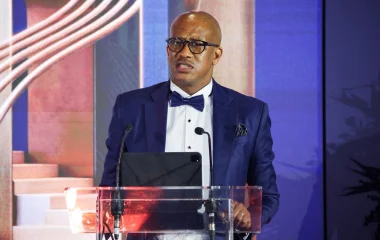
Delivering his opening remarks at the 2nd AWSISA Africa and Global South Water and Sanitation Dialogue 2026, currently underway at the Inkosi Albert Luthuli International Convention Centre in Durban, Monyokolo said the event presents an opportunity to assess progress made since the 2025 dialogue in Johannesburg, and hold stakeholders accountable for commitments made towards strengthening institutions, improving municipal service delivery, mobilising investment and building climate resilience.
“Dialogue 2025 in Johannesburg was about commitments. Dialogue 2026 in Durban must be about accountability,” Monyokolo said.
Municipal partnerships key to improving service delivery
Monyokolo said effective partnerships with municipalities are essential to addressing persistent weaknesses in water and sanitation delivery.
He highlighted the establishment of the Vaal Corporation Water Utility, a public-public partnership between Emfuleni Local Municipality and Rand Water, as an important attempt to bring municipal responsibility together with the technical and operational capabilities of an established water board.
“The next test is performance: reliable services, improved wastewater management, sound maintenance, better revenue collection and accountable governance. We should learn from this model and, where appropriate, replicate what works.
“We must remain open to well-governed public-public partnerships, concessions, public-private partnerships, special-purpose vehicles and outcome-based contracts, always within the law and with public interests protected. The test of a delivery model is not its label; it is whether people receive safe, affordable and reliable services,” Monyokolo said.
He also called for professionalisation of the water sector, clear institutional accountability and the establishment of an independent water and sanitation regulator.
High municipal debt threatens water security
While acknowledging progress, Monyokolo warned that distribution of municipal water losses remains extremely high, with non-revenue water approaching half of the water entering many systems nationally.
“Municipal consumer debt and arrears owed to municipalities by government, business and residents (R460 billion), and by municipalities to water boards (R23 billion), and by water boards, municipalities and others to the Water Trading Entity — soon to be incorporated in the South African National Water Resource Infrastructure Agency (R20 billion) –, threaten the financial sustainability and thus water security in the entire value chain,” Monyokolo said.
He added that the findings of the Blue Drop, Green Drop and No Drop assessments exposed persistent weaknesses in drinking water quality management, wastewater treatment and water-loss control.
“Untreated sewage harms health, rivers, agriculture and tourism, while making drinking water treatment more costly. We must repair infrastructure before failure becomes normal.
“Maintenance is not optional expenditure; it is the price of sustainability. We must protect revenue, improve billing and collections, honour payment obligations, and safeguard basic services for indigent households. The human right to water and financial sustainability must reinforce one another,” he said.
Call for increased investment in water infrastructure
Monyokolo said public funding alone will not be sufficient to address the infrastructure investment gap, calling for greater participation by development finance institutions, commercial banks and responsible private investors.
He said investors need credible and bankable projects, transparent governance, predictable regulation, ring-fenced revenue streams and confidence that infrastructure will be operated sustainably.
“Our people cannot drink promises. They cannot wash with declarations. Investment must move from conference halls to construction sites, and from financial models to functioning infrastructure,” he said.
He said AWSISA is also working towards establishing an infrastructure fund, in collaboration with its member institutions, the Department of Water and Sanitation, local and international institutions and development finance institutions.
The association is also in advanced negotiations with the department to be appointed as an implementing agent for water and sanitation projects, as part of a memorandum of cooperation signed during the African Union–Continental Africa Water Investment Programme (AU-AIP) G20 Investment Summit, held in Cape Town in 2025. – SAnews.gov.za
Source: Original report at SAnews.gov.za.