By nine votes to six, the International Court of Justice (ICJ) has ruled that Myanmar committed genocide against the Rohingya people in connection with its 2017 “clearance operations” in Rakhine State. The ruling is an alarm bell for all states accused of genocide.
The year 2017 was not the first Rohingya exodus from Myanmar: in 1978 and again in 1991-92, hundreds of thousands of Rohingya poured into Bangladesh to escape state persecution. Many returned, and were forced to flee again when new violence erupted.
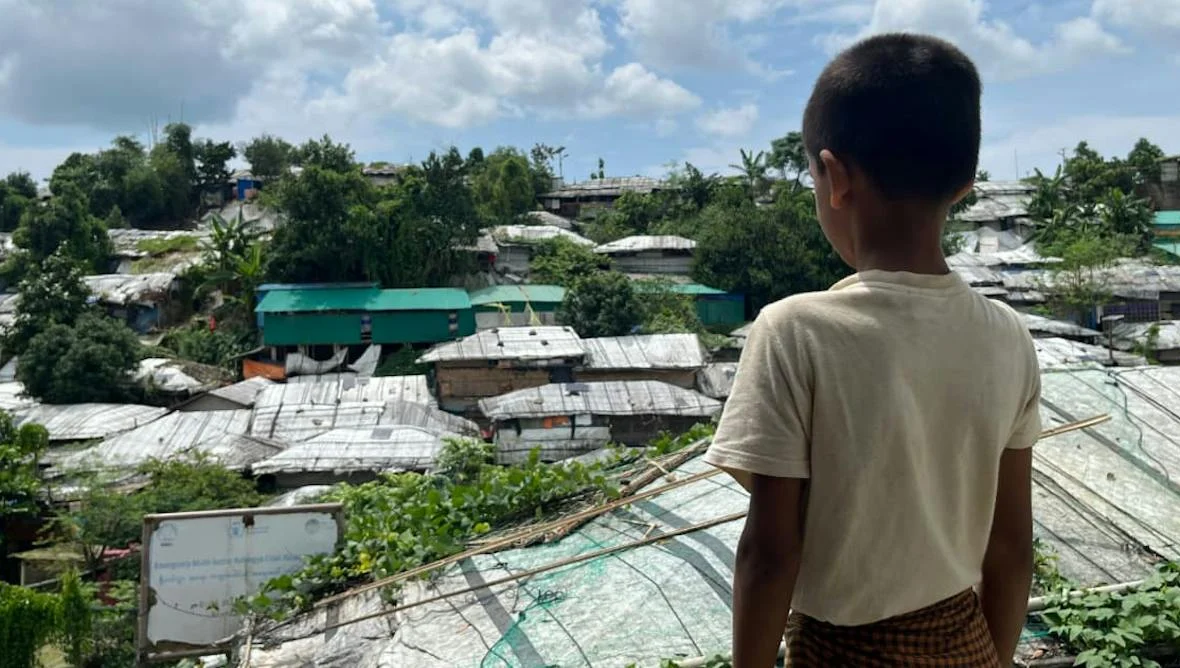
Today, more than 1.2 million Rohingya are in refugee camps in Bangladesh without any concrete prospect to return to Myanmar. Most Rohingya want to return, but not without conditions that would ensure their safety. The most crucial condition is the guarantee of citizenship rights.
Since Myanmar stripped the Rohingya of their citizenship in 1982, they have been living under apartheid-like conditions. Among many discriminatory policies imposed on Rohingya life, the Rohingya faced restrictions on movement, education and health care while families were restricted to a two-child limit. Returning to Myanmar just to face the same conditions of life is not an option for many Rohingya.
The repatriation conundrum
It’s unlikely, however, that Myanmar will agree to grant citizenship to the Rohingya.
Since the 2021 coup d’état that ousted leader Aung San Suu Kyi and her National League for Democracy, the military has had sole control of the government.
Earlier this year, Min Aung Hlaing, the architect of the Rohingya genocide who had been commander-in-chief of the Myanmar Forces since 2011, stepped down from his role and was subsequently elected president by a military-dominated parliament. This makes the prospect of a safe and dignified repatriation of the Rohingya to Myanmar a near impossibility.
The Myanmar military and government aren’t the only entities complicating the return of the Rohingya. Since late 2023, vast swaths of Rakhine state, where most Rohingya resided until 2017, have been under control of the Arakan army.
The army is the largest and most powerful non-state armed group in the country and it is vying for the independence of the Arakan region, where Rakhine is located. The Arakan army is openly hostile to the Rohingya, and those residing in the territory it controls are facing many of the same restrictions that were previously imposed by the state.
The enforcement deficit
The ICJ established Myanmar’s responsibility for the genocide, and consequently ordered it to provide reparations and compensation, with details still to be decided.
But, in practice, there is little the court can do to compel Myanmar to take accountability and pursue justice if it refuses to do so. The ICJ has no independent enforcement mechanism; it only relies on states’ willingness to obey international law.
Only the United Nations Security Council could decide to take coercive action against Myanmar, but China and Russia, which both hold veto power, are likely to oppose it.
The two states have provided Min Aung Hlaing’s regime with political, diplomatic and military support over the years. Each also has its own issues with international human rights law, namely Russia’s war in Ukraine and China’s treatment of the Uyghurs.
How the ruling might help the Rohingya
The ICJ ruling has brought much-needed attention to the plight of the Rohingya. Renewed interest in the Rohingya crisis is expected to draw donations that could help alleviate some of the more pressing needs.
Funding for the refugee camps has dwindled in the aftermath of the COVID-19 pandemic and the dismantlement of the U.S. Agency for International Development (USAID). Currently, the Rohingya in Bangladesh only receive US$7-$12 per person per month in food assistance.
Combined with the lack of income-generating opportunities, the cuts to food rations are frequently identified by refugees as the most severe challenge they face in the camps.
More attention could also result in stronger political pressure, not just on Myanmar but also on its regional partners. Malaysia, for example, began deporting refugees back to Myanmar in September 2026.
Since the government continues to deny access to international agencies for the refugees, including the United Nations High Commissioner for Refugees, it could not be verified whether these returns were voluntary, as Malaysia claimed.
It’s unlikely the Rohingya, who make up the majority of Myanmar refugees in Malaysia, are returning of their own free will. International pressure could force Malaysia to stop the deportations and avoid causing further harm to its already vulnerable Rohingya refugee community.
Not ‘illegal immigrants’
Finally, the most immediate benefit of the ruling is that, for the first time, there is a formal recognition of the Rohingya as a distinct people. The ruling directly contradicts Myanmar’s assertions that the Rohingya are “illegal immigrants from Bangladesh” who have no legitimate claim to rights and land in Rakhine.
The ICJ ruling clearly affirms that the atrocities the Rohingya have suffered are indeed genocide, and while it doesn’t guarantee justice for the Rohingya, it’s a necessary precondition that opens the path to restorative justice.