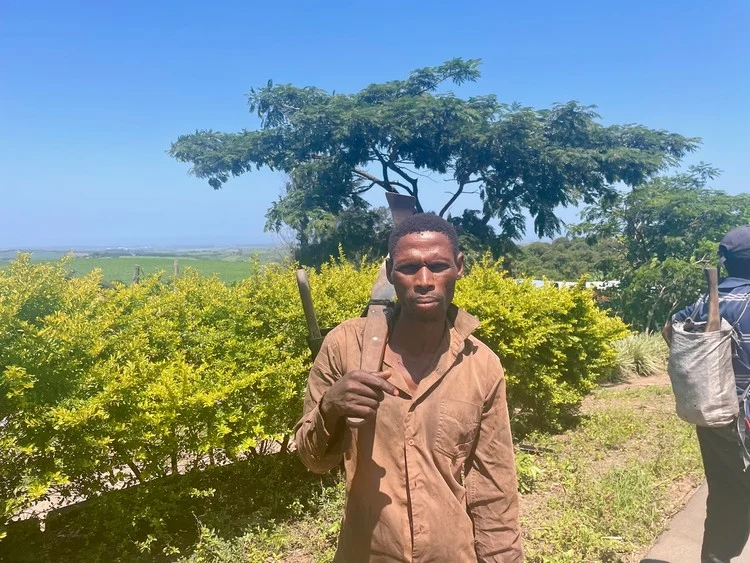
Sugarcane cutter Chinikhaya Deyi on his way home after his employer cut his contract short. This follows an announcement by Tongaat Hulett that growers cease further sugarcane deliveries. Photos: Joseph Bracken
- Tongaat Hulett announced on Wednesday that it would wind down operations because an additional R350-million in funding approved by the Industrial Development Corporation had not been made available.
- Growers say they are already under financial pressure from delayed payments and lost harvests, while uncertainty over income could also delay planting and fertilising for next season.
- Tongaat Hulett says it will continue paying growers from available cash as funds come in, while efforts to secure the IDC funding continue.

Sugarcane growers and their workers face an uncertain future after Tongaat Hulett announced on Wednesday that it will be winding down operations because R350-million in expected funding had not been made available.
Tongaat Hulett said that last month the Industrial Development Corporation (IDC) board approved an additional R350-million in funds as a lifeline for the company to continue operations during its ongoing business rescue.
The IDC told Moneyweb that its planned R4.5-billion stake in Tongaat Hulett was contingent on certain conditions which have not yet been fulfilled by the Vision Group. (GroundUp has sent questions to comment from the IDC on the R350-million will be added when received.)
Tongaat Hulett, which is based north of Durban and runs three mills on the KwaZulu-Natal north coast – Maidstone, Amatikulu and Felixton – requested that growers cease further sugarcane deliveries.
The decision will affect about 18,000 growers.
Annus horribilis
It has been a turbulent year for growers, according to Pratish Sharma, a large-scale grower in the Maidstone area in Tongaat.
At the beginning of the year, growers found out Tongaat Hulett faced provisional liquidation. The company then managed to escape liquidation in April after the IDC agreed to give it R200-million in funding.
However, in August, Tongaat Hulett’s operations were severely affected when workers went on strike to demand higher wages. During this period, sugarcane deliveries had to almost completely shut down.
The halt in deliveries meant harvesting had to be delayed, and sugarcane already cut was at risk of drying out and rotting, said Sharma. The longer sugarcane is left in the ground, the more susceptible it is to pests, such as yellow sugarcane aphids.
Almost 30% of Sharma’s crop will not be harvested this year, he said.
Growers are already under financial stress because of delayed payments by Tongaat Hulett caused by cash flow problems.
“They weren’t able to pay us in full in October. That money came through in instalments throughout November,” said Sharma.
Growers were also recently notified that some payments for November will be delayed, with large-scale growers only receiving a portion of what they are owed at the end of the month, said Sharma.
“This is devastating news and has far-reaching consequences for the farmers. The uncertainty about the payments is really unsettling,” said Siyabonga Madlala, chairperson of the South African Farmers Development Association.
The association has asked the company for an urgent intervention on the wind-down, he said.
Due to reduced income, planting and fertilising, which growers normally do this time of year, will be delayed and might compromise next year’s harvest, said Sharma.
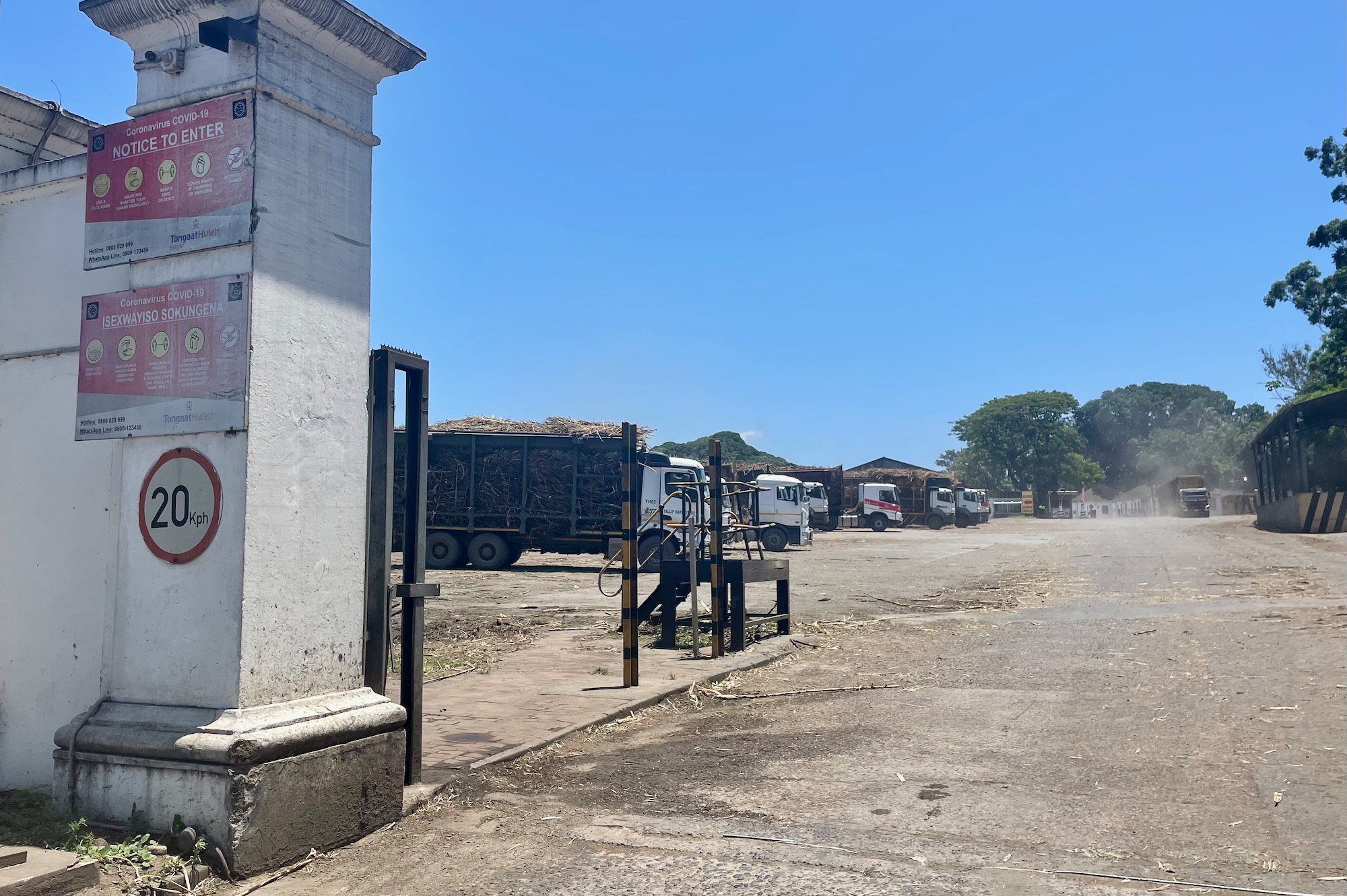
Trucks with full loads of sugarcane wait inside the parking area at the Tongaat Hulett mill.
Ripple effect
Chinikhaya Deyi, a cane cutter in Tongaat, told GroundUp that he and all the other cutters on the farm where he was working were notified on Wednesday that Thursday would be their last day.
The cutters spent their last day loading trucks with cane they cut the day before and were then sent home early, he said.
Deyi, who comes from the Eastern Cape, said he has been working as a cutter in Tongaat for more than eight years, earning R1,000 to R2,000 every two weeks, depending on how much work he could get.
“I sometimes earn less money because we don’t work when it is raining, and they pay us according to the work we have done. We get paid into our hands. They don’t pay us through the bank,” said Deyi.
It’s not only growers and cutters that are affected, said Sharma. Independent contractors, such as those who hire out machinery, rely heavily on the industry, he said.
“It’s a huge disaster for the economic ecosystem here,” said Sharma.
Factory workers have not been told how the wind-down will affect them, said a Tongaat Hulett employee, who asked to remain anonymous.
“We have not been told anything for now, but we know that if the growers are being stopped from bringing cane into the millers that we won’t be able to manufacture sugar.”
Uncertain future
Tongaat Hulett has been updating growers on the steps it is taking and has assured them that efforts to secure IDC funding have not stopped, said Sharma.
“As the requested R350-million interim funding has not been made available, Tongaat Hulett can no longer confirm the payment timetable previously communicated to growers,” said Janke Tolmay, the media contact for Tongaat Hulett.
The company will continue to pay the growers with available cash resources as funds become available, said Tolmay. “The timing and amount of those payments will depend on the availability of funding and other cash receipts.”
Tongaat Hulett does not think it would be responsible to publish payment timetables until funding is certain, said Tolmay. Efforts to secure the IDC funding will continue, she said.
© 2026 GroundUp. This article is published under the GroundUp Republication Licence Version 1.0. Email [email protected] to request permission to republish.