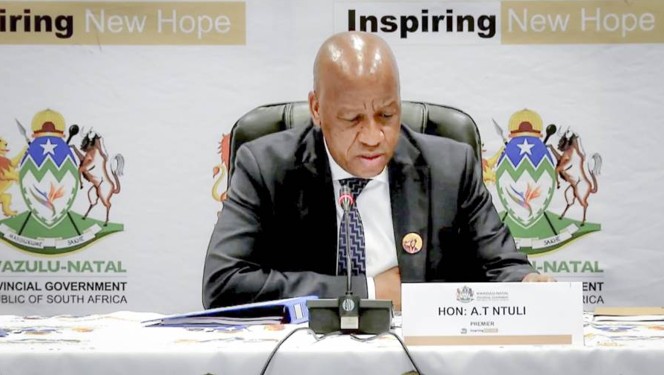
KwaZulu-Natal Premier Thamsanqa Ntuli has called for government, business, organised labour and academia to break down institutional silos and work together with urgency to tackle the province’s unemployment crisis.
Ntuli made the call during a meeting of the KwaZulu-Natal Economic Council, held on Friday at the Archie Gumede Conference Centre in Durban.
Ntuli presided over the meeting, which brought together Members of the Executive Council (MECs), organised labour, academics, captains of industry and other stakeholders to discuss interventions aimed at growing the provincial economy, creating employment and improving the lives and livelihoods of KwaZulu-Natal people.
The Premier said the scale and complexity of unemployment requires a coordinated response rather than fragmented interventions by institutions working independently.
He urged the Economic Council to strengthen collaboration among its social partners and develop practical interventions that could expand economic opportunities and improve the livelihoods of people across the province.
“The war against unemployment can only be won by dismantling silos and ensuring that government and the private sector work together towards shared economic objectives,” Ntuli said.
He also called on academics to produce empirical research that could help government in developing evidence-based interventions to address unemployment and respond to economic uncertainty.
Ntuli said research should go beyond academic analysis and translate into practical policy solutions that could inform investment, skills development, economic planning and employment creation.
Discussions at the meeting focused on a range of economic challenges facing the province, including unemployment, rising living costs and the impact of global developments on households and businesses.
Participants noted that geopolitical tensions, including ongoing tensions between the United States and Iran, are contributing to volatility in fuel prices, with knock-on effects on transport and food costs.
Ntuli said such developments demonstrate how events beyond South Africa’s borders can have direct consequences for local economies and households.
In his opening address, the Premier reflected on the 25th anniversary of the 11 September 2001 terrorist attacks on the Twin Towers in New York, noting the far-reaching economic consequences of the tragedy.
He said the events illustrate how geopolitical developments in one part of the world can have profound and lasting consequences well beyond national borders.
“Twenty-five years later, geopolitics continues to influence economies and the livelihoods of ordinary people, often placing additional pressure on households already confronting unemployment and economic hardship.
“Global instability cannot be viewed in isolation from the challenges experienced by communities in KwaZulu-Natal, as changes in fuel, transport, food and other costs ultimately affect disposable income and economic opportunity,” Ntuli said.
Against this backdrop, he stressed the importance of building greater resilience in the provincial economy through coordinated planning and partnerships among government, labour, business and academia.
The KwaZulu-Natal Economic Council acts as a permanent stakeholder forum and strategic platform to shape inclusive, sustainable, and transformative economic development in the province. – SAnews.gov.za
Source: Original report at SAnews.gov.za.