

The polluted Rietvlei River winds through Ekurhuleni before entering Rietvlei Dam in Tshwane. Photos: Seth Thorne
- Because of sewage and heavy industrial pollution in the Rietvlei River in Ekurhuleni, a water treatment plant for residents in the east of Tshwane has not been operational for a year.
- The Department of Water and Sanitation has laid criminal charges against Ekurhuleni and its municipal wastewater treatment company.
- A water management expert describes the sewage crisis as “an existential threat”.
Rietvlei Nature Reserve in south-east Pretoria is a precious spot for Tshwane families, birders and weekend cyclists. With highveld grassland and wetland, it is home to blesbok, zebra and hundreds of bird species.
The Rietvlei Dam was built in 1934 alongside a water treatment plant designed to provide 18-million litres a day to the eastern parts of the capital city. Its design capacity was increased in 1988 to 40-million litres a day.
It once supplied about 5% of the water used by the City of Tshwane, home to over four million people and the country’s administrative capital, Pretoria. But the water treatment plant has not been operating for the past year.
Industrial, urban and sewage pollution in the Rietvlei River, which feeds the reserve’s wetlands and then the dam, has made it impossible to treat the water, the Department of Water and Sanitation (DWS) was told during an oversight visit on 8 October. City officials said they only expect the plant to be operational around March or April 2027.
DWS is reportedly anticipating more prolonged water outages between now and March 2027 as Gauteng faces a heightened risk of a hotter, drier summer, with a high likelihood of heatwaves, due to the 2026/27 El Niño.
Gauteng’s big cities are already using far more water than their allocations from bulk supplier Rand Water (RW). October 2026 data from RW shows Tshwane is using around 120-million litres above its daily water consumption target of 752-million litres.
In the 2024/25 financial year, Tshwane recorded no income for about 39% of its water – a distribution loss of over 135-billion litres.
The City has been unable to meet contractual water supply agreements with Thembisile Hani Local Municipality in Mpumalanga.
Furthermore, alternative water sources that could provide relief across Gauteng have been polluted for years.
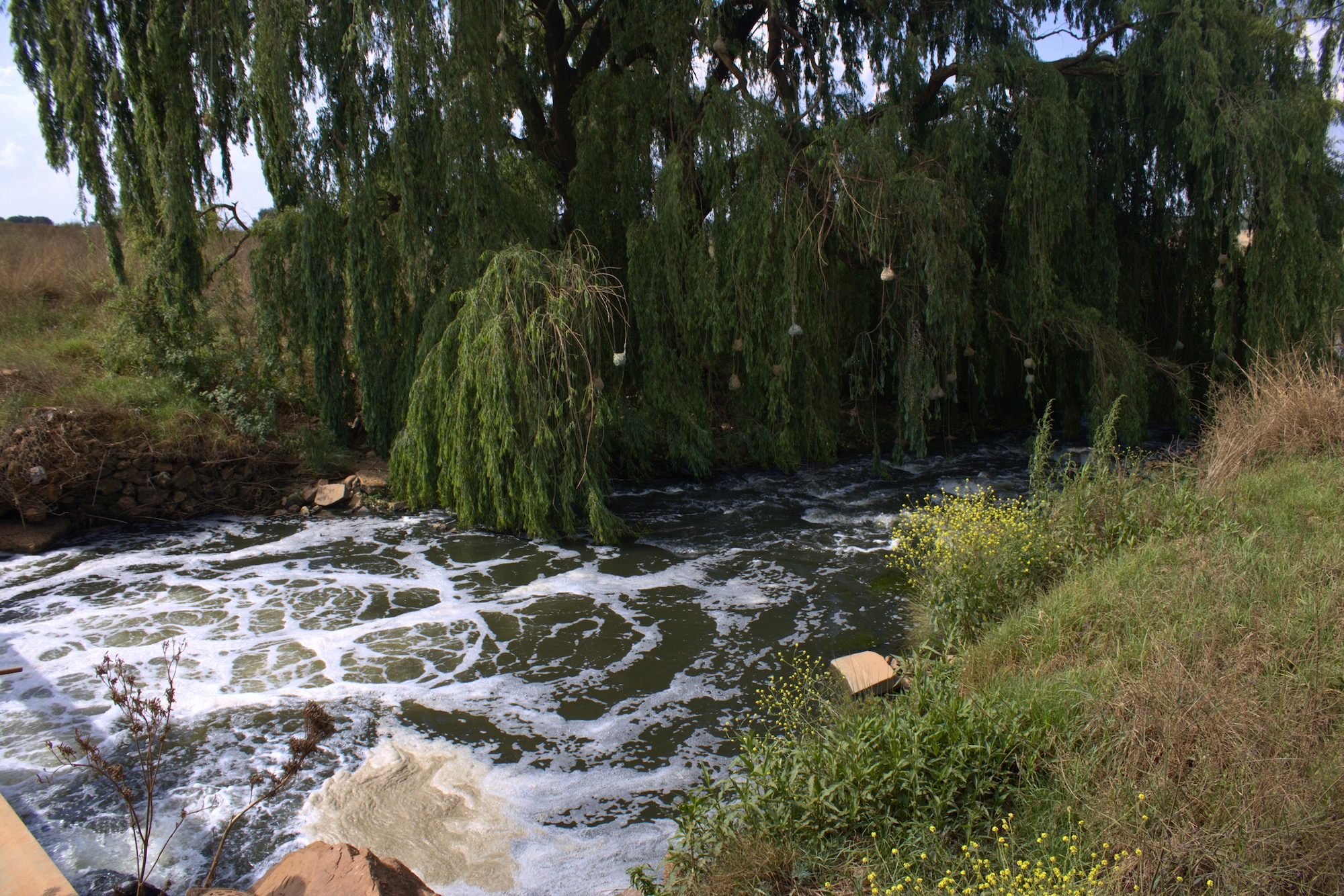
Weaver birds make their nest in a willow tree above the foaming and stinking Rietvlei River.
Criminal charges
The water from the Rietvlei Dam forms part of the Limpopo River basin. On 8 October, Victor Nkuna, representing the Limpopo-Olifants Catchment Management Agency (LOCMA), a DWS entity, filed criminal charges against the City of Ekurhuleni and the Ekurhuleni Water Care Company (ERWAT).
DWS deputy minister Jack Bloom was present at the Olifantsfontein police station when the charges were filed. He said the charges stemmed from an August 2025 directive, which has not been fully complied with.
He said poor-quality effluent continues to be discharged from the Hartebeestfontein Wastewater Treatment Works (WWTW) into the Rietvlei River.
Coupled with this are polluting industries and a lack of by-law enforcement by Ekurhuleni to stop the pollution, as well as some under-performing sewage pump stations. Bloom said “criminal charges are a last resort for accountability after other measures have failed”.
He said the water from the Rietvlei treatment plant is vital, because Rand Water is already over its abstraction limit and “we are about to have an El Niño season”.
The Hartebeestfontein WWTW receives waste from households in Ekurhuleni’s Kempton Park area and industries in Isando and Spartan.
It discharges what should be fully treated effluent into the Rietvlei River, which winds northwards to the dam in Tshwane. The water then eventually drains towards the Crocodile River, under the oversight mandate of LOCMA.
GroundUp conducted a water test of the Rietvlei several kilometres downstream from the WWTW’s discharge point. Using citizen-science screening kits, we tested for E. coli and other faecal coliform bacteria. The first test was an AquaScreen, a rapid screen for bacteria, including coliforms, which occur naturally in the environment and in the intestines of warm-blooded animals. Water that turns black within 36 hours indicates coliforms. Ours turned tar-black in a couple of hours.
Next was a Petrifilm test, which indicates the concentration of E. coli and other coliforms. High E. coli levels indicate unsafe faecal contamination. Our results showed heavy bacterial growth. We also saw oils and other industrial waste.
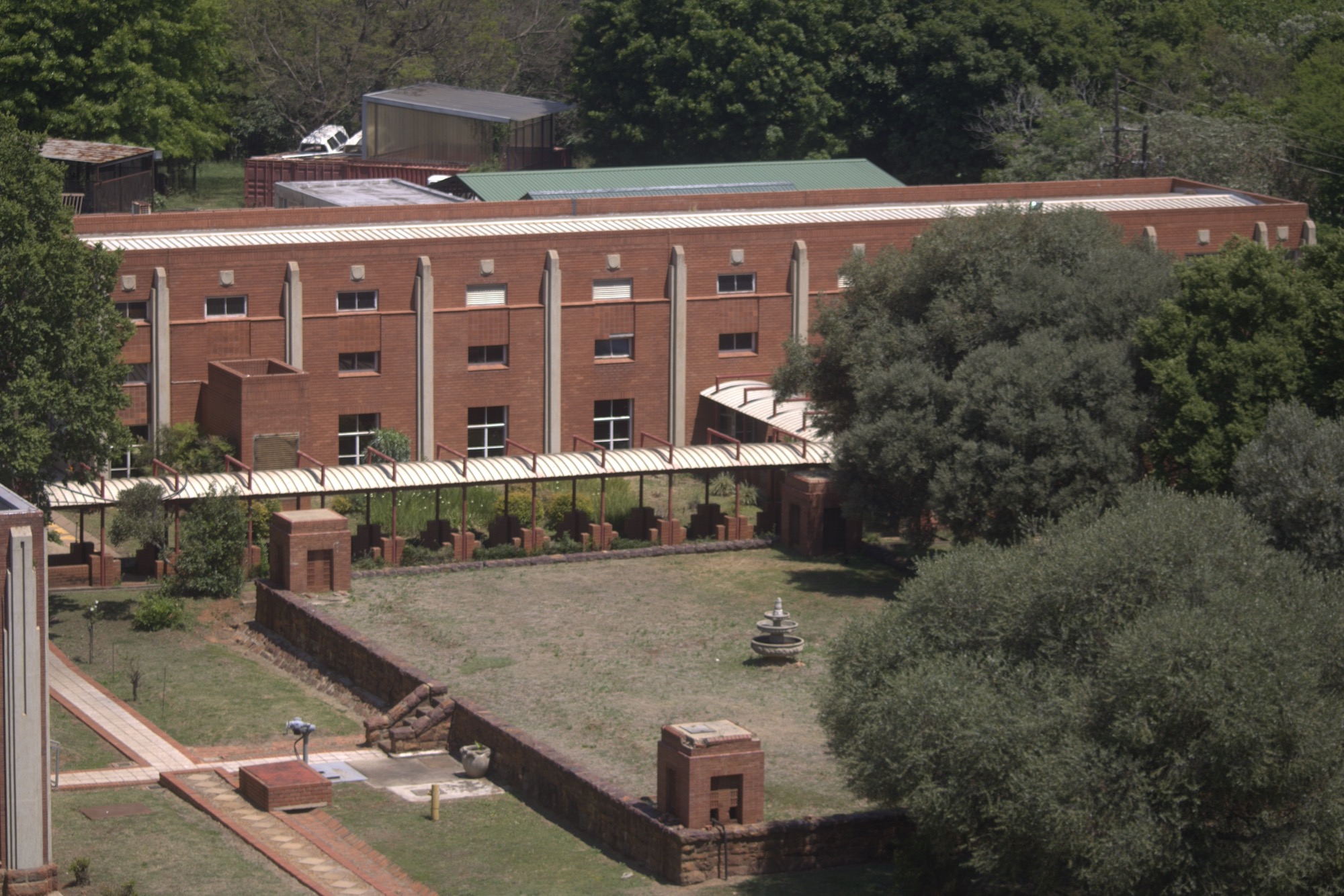
The Rietvlei water treatment works once supplied around 5% of Tshwane’s water, but has been idle for a year.
Criminal charges debated
After receiving the directive, ERWAT improved its effluent compliance performance score from 32% in August 2025 to 84% in September 2026, according to its progress reports. The improvement was noted by DWS.
Ekurhuleni mayco member for operations and maintenance, Nomadlozi Nkosi, said the City and ERWAT have been “cracking down on the wrongfulness”. She said warnings had been issued to companies that are serial polluters, and the metro would be “acting soon”.
Ekurhuleni water and sanitation department head Thokozani Maseko said there had been a marked improvement, but vandalism and illegal dumping remained an issue they “have been addressing”.
Alana Potter, sanitation specialist at the South African Local Government Association (SALGA), said the issue was complex and penalising a WWTW that is actively fixing its performance is “counterproductive”.
ERWAT manager Mpho Makgatha said the plant’s biggest challenge is that the plant is not designed to deal with pollution from high levels of oils, fats and lubricants. This type of pollution causes equipment failures.
Potter said laying charges against those taking all possible corrective measures may create a “chilling effect”, making skilled engineers and professionals reluctant to work for local governments.
Makgatha said the Hartebeestfontein plant has met three of the four directive requirements, with effluent compliance increasing. He acknowledged there needs to be a budget for rehabilitating the river, but this must be done in collaboration with Tshwane.
One city’s pollution becomes another city’s water crisis
While noting some operational improvements at the plant, LOCMA’s Nkuna said industrial waste continues to impact the quality of water discharged.
Bloom said ERWAT and Ekurhuleni are “still not compliant”. “They are still discharging pollutants into our waterway and that is the factual case. Ekurhuleni also has a responsibility to rehabilitate the damage they caused and enforce by-laws on polluters,” he said.
“One city’s pollution becomes another city’s water crisis,” he said.
Bloom said Tshwane should also be held accountable for its own three treatment plants where criminal charges have previously been laid over pollution, as should the polluting industries.
Samuel Mashimbi, founder of EnviroCare Thembisa, was at the Olifantsfontein police station when the charges against the municipality were laid. With the non-profit’s focus on protecting water resources, Mashimbi welcomed the action.
“We are very worried about the raw sewage spillages by the city and the pollution of water due to it,” said Mashimbi. He said many spillages have been “going on for years”.
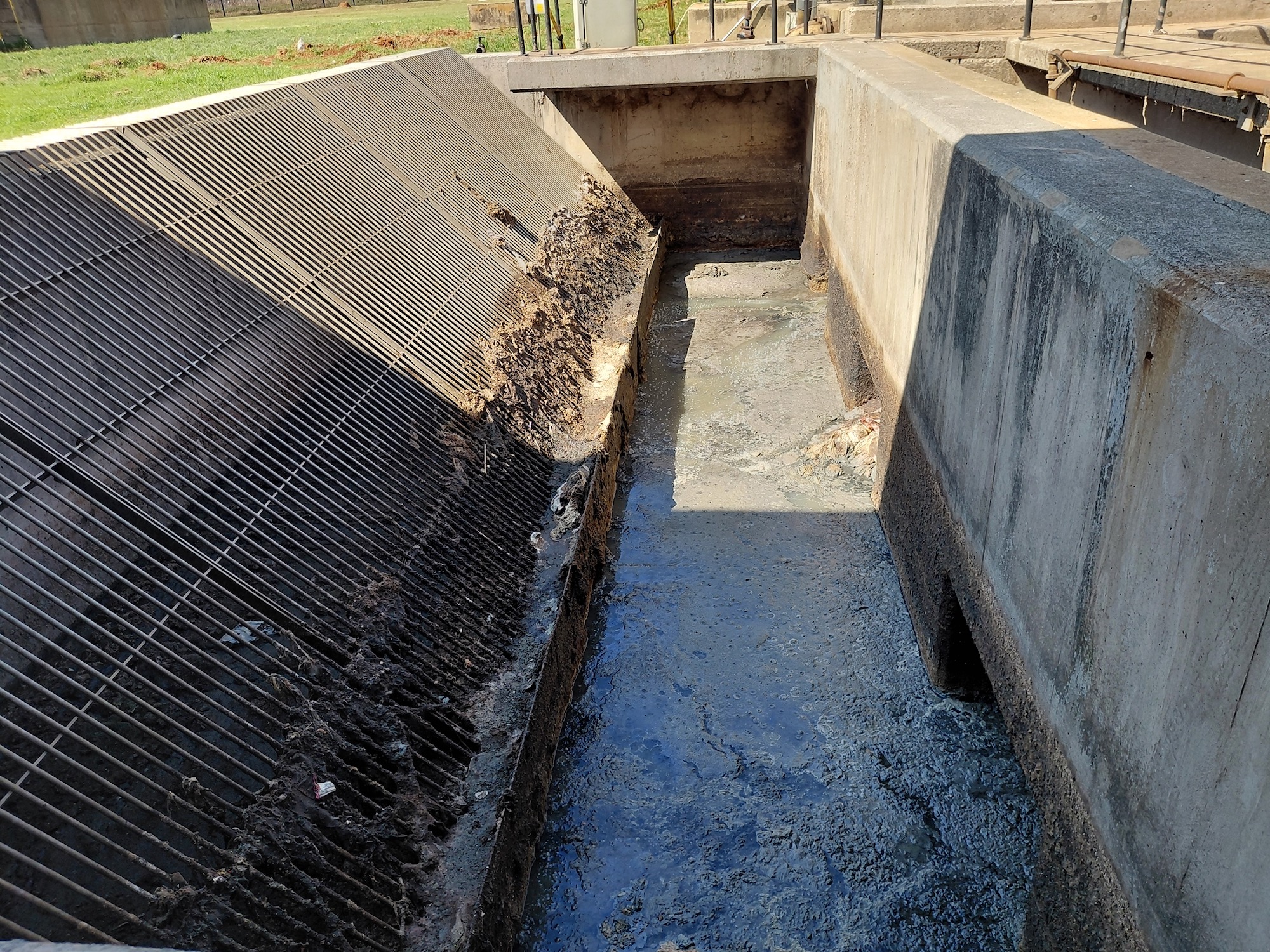
Sludge compliance has remained a problem at the Hartebeestfontein WWTW in Ekurhuleni.
Sanitation and water security
Water management expert Dr Anthony Turton said South Africa’s water system is built on an “indirect reuse model” whereby treated sewage flows back into rivers and dams, and from there it enters drinking-water plants.
Those plants were designed for water that already meets certain quality standards.
“None were designed to convert raw sewage into potable water, which is what they are now being asked to do,” Turton told GroundUp.
The 2025 Green Drop report found 47% of treatment plants in the country are in a critical state.
Turton said the risk to water security is severe. Because effluent is recycled, anything short of near-total compliance for wastewater plants is unacceptable, he said.
“In my professional opinion, the sewage crisis is what will destroy water security in South Africa. It is an existential threat to the national economy,” he said.
The City of Tshwane had not responded to our questions at the time of publication. Comments will be added if received.
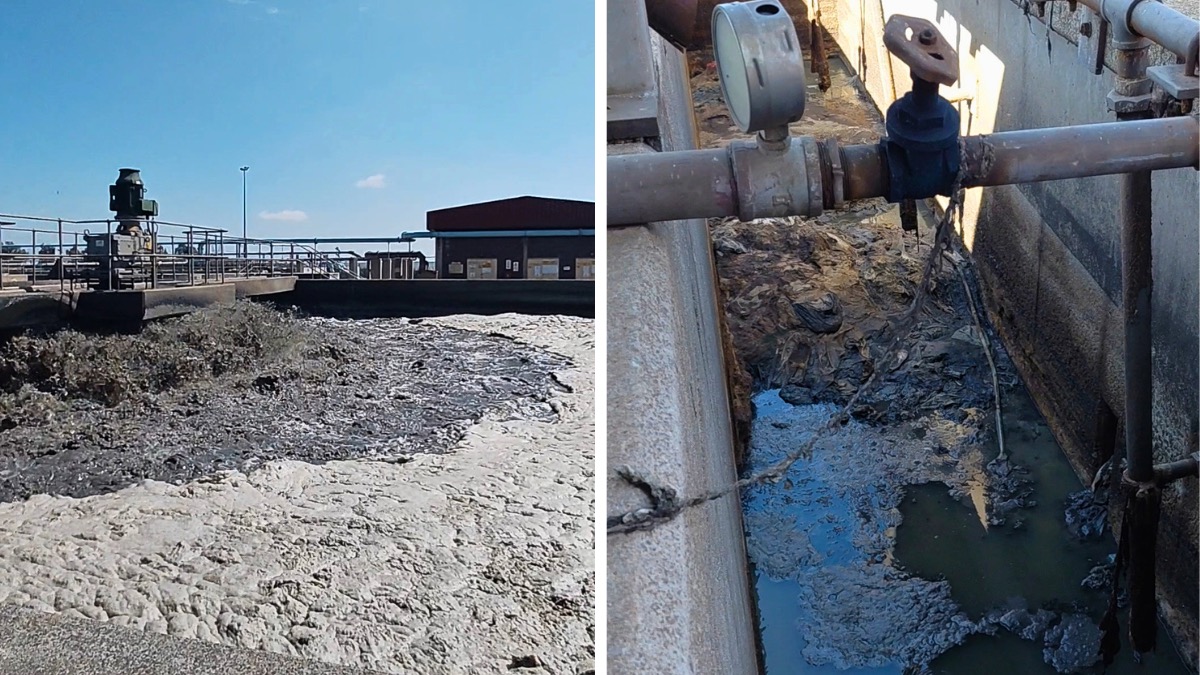
Surrounding industries dump oils and other substances that Hartebeestfontein WWTW in Ekurhuleni is not equipped to handle, causing operational failures.


