

A fire swept through Siyahlala informal settlement in Dunoon, Cape Town, on 4 October, gutting about 20 homes and displacing about 100 people. Photo: Peter Luhanga
- A court-directed mediation process began in June 2013 to relocate families in Siyahlala informal settlement, built partly on railway tracks in Dunoon, Cape Town. The City of Cape Town says mediation continues under a supervising judge.
- Meanwhile fires are frequent in the settlement, with dozens of people displaced.
- Transnet says trains stopped using the line in February 2018, and an estimated 336,000 tonnes of freight a year were shifted to road transport.
- The Western Cape government says a draft agreement provides for 500 houses in Killarney Gardens, but it has yet to be finalised through the courts.
When a fire swept through Siyahlala on 4 October, gutting about 20 homes and displacing about 100 people, ward councillor Bulelwa Mayende (ANC) demanded to know what had become of the plan to relocate the residents.
Thirteen years ago, the Western Cape High Court had directed that there be a mediation process between the City of Cape Town, Transnet and the residents to be relocated. A number of families were living on the railway reserve and train tracks. The settlement has further expanded and some shacks are double-storey structures that their owners rent out.
Mayende, who took office this year, said the October fire was the second in three months. She says she has not been presented with any plans from the City to relieve the overcrowding in the area, and she wants the City to explain what is happening with the mediation process.
City fire and rescue service spokesperson Mark Bosch said firefighters had struggled to reach the blaze and they had to use extended hoses and wear breathing apparatus. One firefighter suffered an electric shock.
Zwelethu Dyasi and his cousin, Namzi Bomvana, lost their double-storey shack in the fire. They had been renting out its ten rooms, five on each floor, at R400 per room per month.
“I am left with only the clothes I am wearing,” said Dyasi. He also lost his identity document and matric certificate. Bomvana said she too had lost everything.
Mayco member for human settlements Carl Pophaim said, “The physical characteristics of the settlement, including high density, constrained access and its proximity to the railway reserve, create particular challenges for service provision.”
Pophaim said some work to install services needed Transnet’s permission.
According to Transnet, the last count (it did not give a date when) recorded 520 dwellings. Transnet said that number has since increased substantially.
“Transnet has been unable to conduct an updated count because of reported violent incidents that have restricted access to the site. The organisation is concerned about the expansion of structures within the railway reserve and the associated safety risks,” Transnet said.
It said trains had stopped using the line in February 2018 because of the encroachment on the tracks. As a result, Transnet estimates that about 336,000 tonnes of freight has had to be diverted annually to road transport.
“Approximately two metres of track were cut and removed. The line was previously used to transport waste [to the Vissershok landfill],” it said.
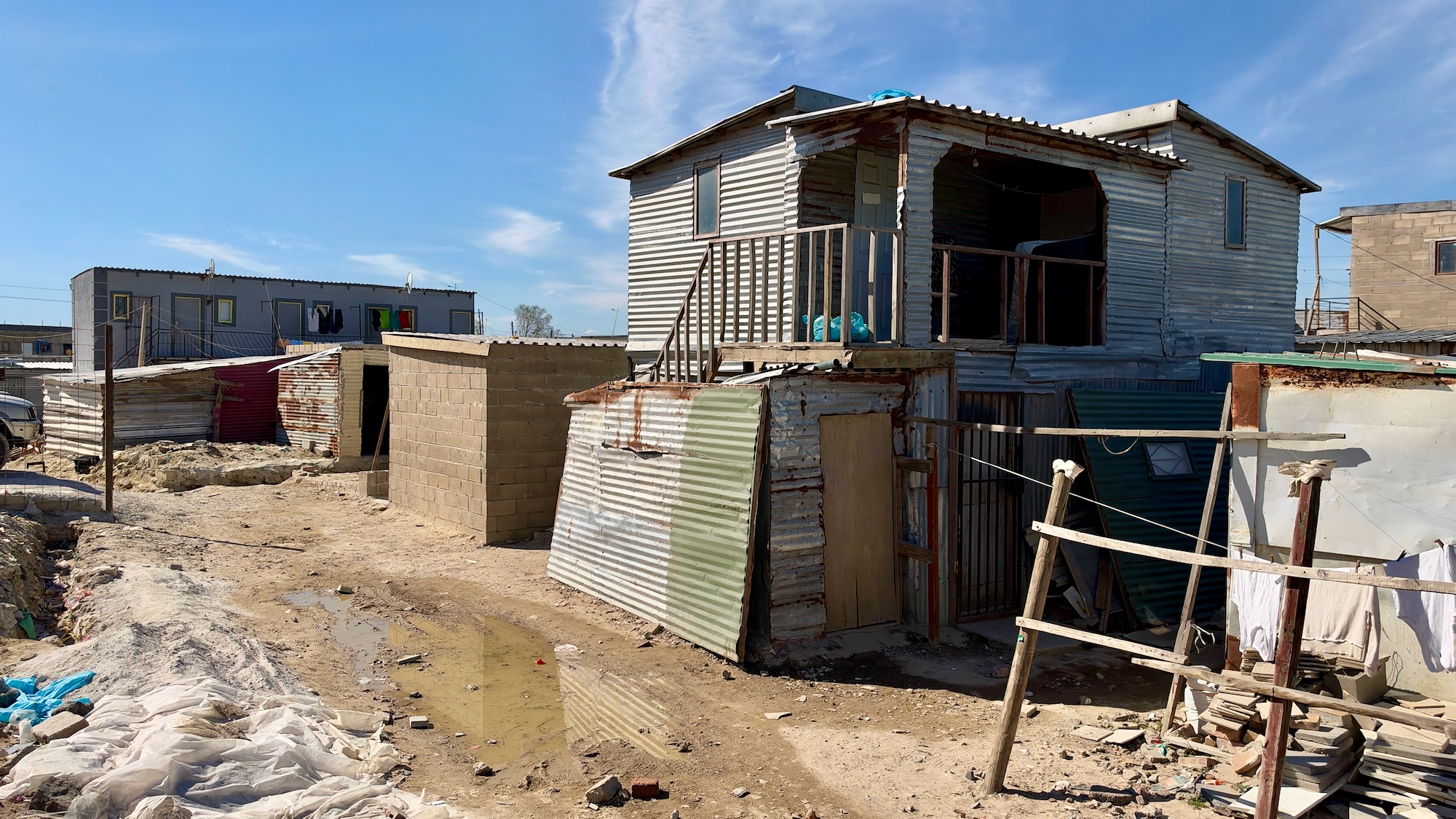
Double-storey shacks and brick homes occupy the railway tracks in Siyahlala, Dunoon, where residents have built rooms to earn income. Photo: Peter Luhanga.
13 years of mediation
The court-supervised mediation began in June 2013 after Transnet sought to evict the residents. Former ward 104 councillor Lubabalo Makeleni (ANC), who served two terms until 2021, said eight community leaders had participated alongside the City and Transnet.
In March 2018, we reported that Transnet spokesperson Mike Asefovitz said a mediation agreement had been signed the previous month.
Makeleni said at the time that 239 families named in the original eviction application were to be moved.
He now says that signed document was a draft. It had been returned to the parties several times for clarification, but no final agreement had been signed when he left office in 2021.
The settlement has grown massively during the years of negotiations.
Makeleni said the prospect of relocation to housing had attracted “opportunists”. With the arrival of additional land occupiers, resettlement plans had been disrupted.
Transnet says its eviction proceedings, initiated on safety grounds, remain on hold, pending mediation. It attributes implementation delays to disagreements within the community and says it is pursuing further legal avenues after earlier efforts failed.
Transnet says it has fulfilled its obligations to provide land for relocation and has prepared the site by clearing dunes. A boundary wall remains outstanding because of continued occupation at the site.
City spokesperson Luthando Tyalibongo says mediation has continued under a supervising judge. However, he says “the City is unable to comment on the matters raised at this stage, as they form part of ongoing litigation currently before the court”.
Discussions, negotiations and proposals exchanged during mediation were confidential, he said. The City remained committed to participating “in good faith” and would provide further information should it become appropriate and legally permissible to do so.
Western Cape Premier Alan Winde’s spokesperson Regan Thaw said the provincial infrastructure department had never been a party to the court proceedings and had played only a limited role in the mediation. The parties had asked it to provide additional land for alternative accommodation.
Neither the City nor Transnet named the supervising judge or supplied GroundUp with the court orders and mediation agreement we requested.
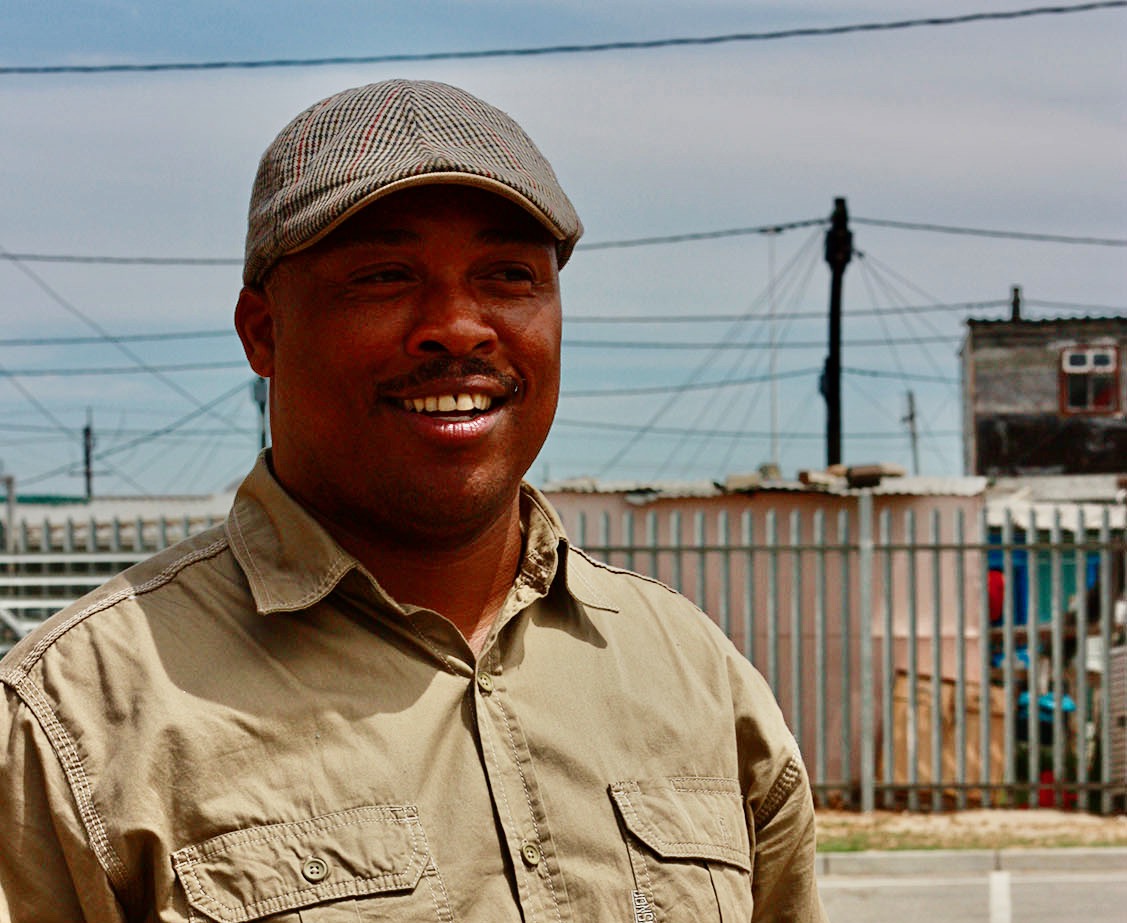
Former ward 104 councillor Lubabalo Makeleni said further occupation of the railway tracks disrupted plans to relocate Siyahlala residents. Archive photo: Steve Kretzmann.
Left in limbo
Makeleni said finding an alternative site had proved contentious. A proposal for Kensington was abandoned after residents objected to losing open space for their children.
The City rejected his suggestion of Wolwerivier, because the land lacked services, he said.
Killarney Gardens, however, remains part of the relocation proposal. Thaw said it was agreed that the provincial department of infrastructure would allow for 500 houses to be allocated to residents of Siyahlala within the Killarney Gardens development.
“A draft agreement was prepared to outline this agreement, but it is yet to be finalised through the courts,” said Thaw.
He said the department’s last engagement with the City on Siyahlala was earlier this year. It was agreed that the Killarney land would be transferred to the municipality to address outstanding commitments to Siyahlala and honour commitments to the larger Doornbach and Dunoon areas.
The City would now plan, fund, design and build the homes while the land is transferred, Thaw said.
Land use rights remained in place for 1,500 housing opportunities, and civil services for these opportunities had been installed, Thaw said.
He said the department had not been involved in identifying or assessing any other land for Siyahlala residents. The City had undertaken that work as part of the court proceedings.
Makeleni said households identified through mediation had been intended to receive priority at Killarney Gardens, alongside elderly residents and residents with disabilities from Dunoon and surrounding informal settlements.
None of the parties gave GroundUp a timeline.
Meanwhile conditions remain dire in the settlement. Some homes are surrounded by stagnant water. There is no formal electricity and sanitation is lacking. Water barely trickles from the communal taps. The risk of fire is ever present.
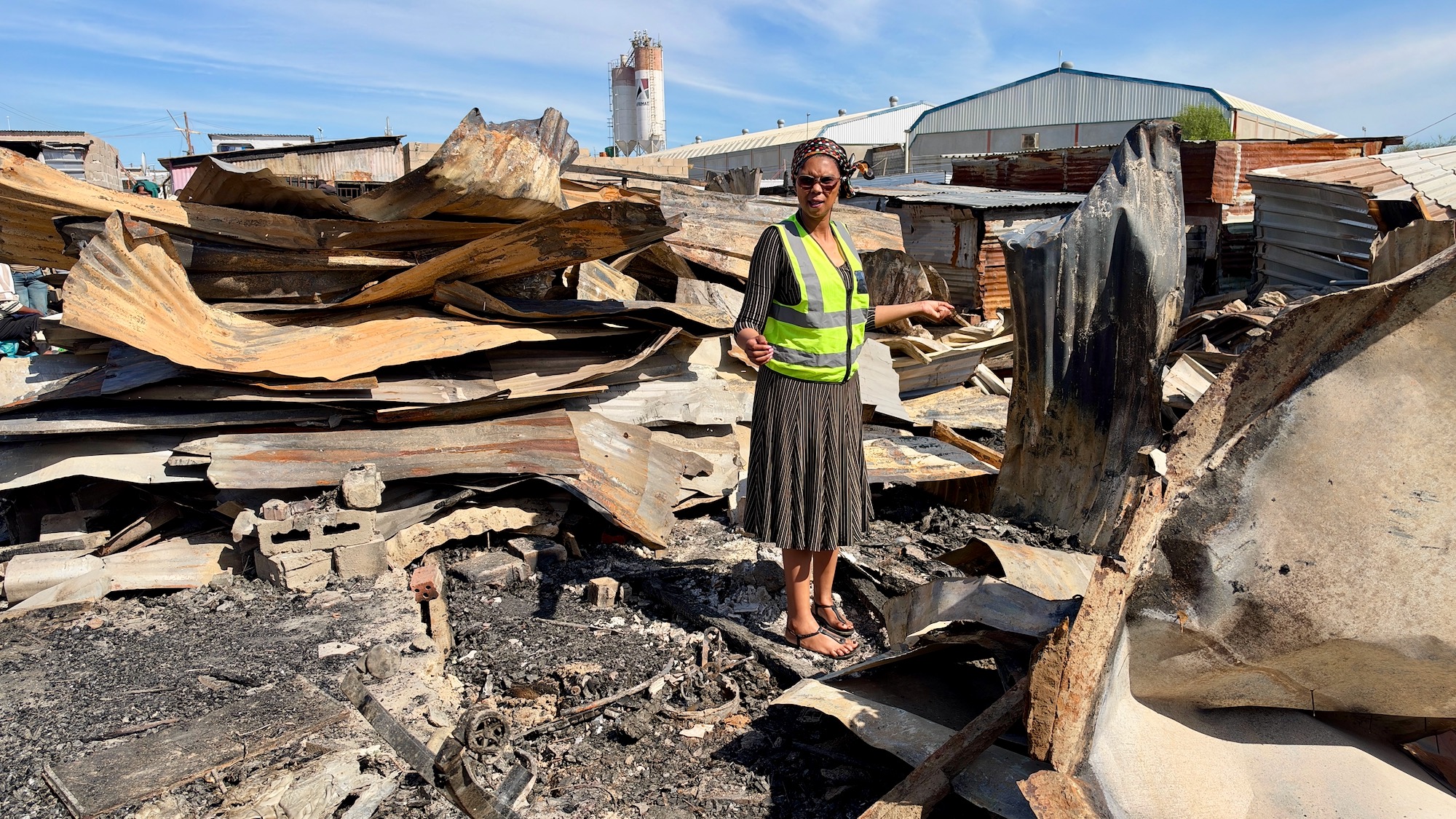
Ward 104 councillor Bulelwa Mayende in Siyahlala on 4 October after a fire displaced about 100 residents. She said the City had not presented her with a plan to ease overcrowding. Photo: Peter Luhanga.


