The number of gastrointestinal illness cases linked to contaminated water in the Bronkhorstspruit area of the City of Tshwane Metropolitan Municipality has risen from the previously reported 408 to 833.
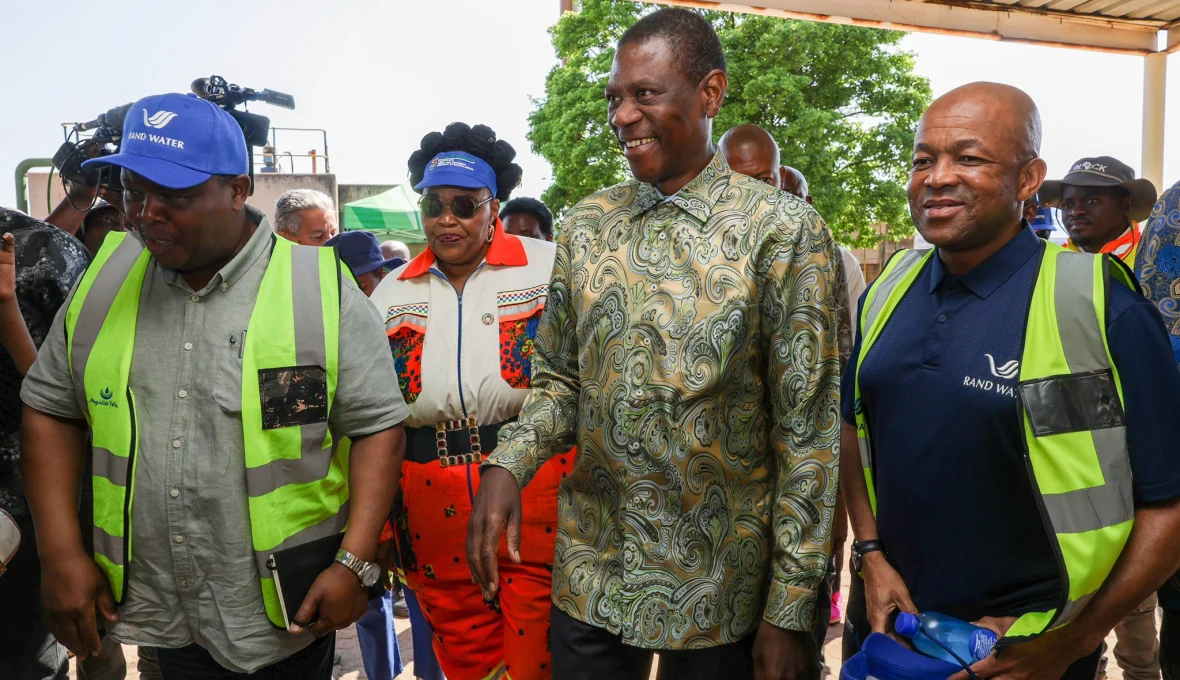
Minister of Water and Sanitation Pemmy Majodina disclosed the revised figure on Monday during a visit to the city by the Inter-Ministerial Committee (IMC) on Water and Sanitation, chaired by Deputy President Paul Mashatile.
“As you know, we have shut down the water treatment works. However, when a plant is shut down, some water may already have been processed and distributed. We believe this may have contributed to the number of cases.
“When we last briefed you, the number stood at 408. As of today, the number have risen to 833. Another factor is that, even after the plant was shut down and water tankers were deployed, some residents continued using water they had stored in containers,” the Minister said.
No critical cases or deaths have been reported so far.
Majodina said four water pumps have now been installed at the at the Bronkhorstspruit Water Treatment Plant.
“We are working to restore Phase 1 at the plant. The plant has two phases, and we will not rehabilitate the entire facility at once.
“We have instructed Rand Water to begin with Phase 1 and ensure that any water supplied when operations resume is safe. In the meantime, arrangements must be made with the municipality to provide alternative water supplies,” she said.
Government is also auditing water treatment works to assess their condition, with particular attention to Gauteng because of its large population and unreliable water supply in some areas.
“Without an audit, we cannot properly assess the condition of these facilities,” the Minister said.
Referring to the country’s ageing water infrastructure, she said at least R400 billion is needed to repair the system.
“That is why we have called on the private sector to partner with municipalities. Many municipalities lack the necessary technology. We also want to ensure that municipalities, particularly in Gauteng, allocate a portion of their resources to maintaining infrastructure. Infrastructure that is not maintained will eventually fail and cause problems,” Majodina said.
Addressing concerns about chlorine supplies at the Bronkhorstspruit treatment plant, the Minister assured residents that there were sufficient stocks for the next six to seven weeks.
“Rand Water, working with Tshwane, has assured us that additional supplies will be procured before stocks run low,” she said.
The City of Tshwane is providing free drinking water through tankers during this period. However, the Minister warned that tankers are not an ideal long-term solution.
“I have always said they should be used for emergencies, and this is one such emergency. Where possible, reliance on tankers should not extend beyond two or three months. It is costly for municipalities and inconvenient for residents, who must find out where the tankers are located,” Majodina said.
She said no link had been established between the water supply challenges in Hammanskraal and those in Bronkhorstspruit.
Multidisciplinary team intervention
The Deputy President said Rand Water is leading a multidisciplinary team that is intervening at the plant on behalf of the national department and in collaboration with the municipality.
“Rand Water will take a few weeks to resolve the problem. We cannot give a specific timeframe, but work has already begun. As you have heard, the plant has been shut down so that repairs and cleaning can take place. Arrangements have been made for residents to obtain water from alternative sources,” Mashatile said.
He stressed that the government must intensify efforts to prevent further cases of diarrhoea and gastrointestinal illness. -SAnews.gov.za
Source: Original report at SAnews.gov.za.