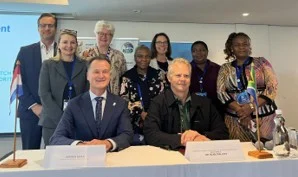
South Africa and the Netherlands have reaffirmed their commitment to strengthening water management in South Africa with the signing of a Declaration of Intent to advance the Blue Deal partnership into Phase III.
Signed in Cape Town on Thursday, the declaration which covers the period 2027-2030, builds on the achievements of Phase II and sets the foundation for the next phase of collaboration between the Department of Water and Sanitation (DWS) and the Dutch Water Authorities (Unie van Waterschappen).
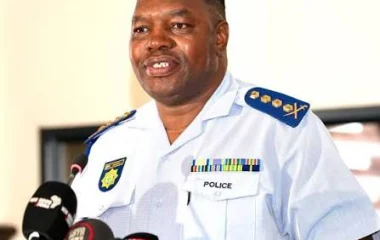
The declaration was signed by Water and Sanitation Director-General, Dr Sean Phillips and Dutch Water Authorities President Jeroen Haan, reaffirming both parties’ intention to continue working together to strengthen water management capacity and support sustainable water resource management in South Africa.
Delivering the keynote address, Phillips said the focus was on consolidating the proposed work packages for Phase III and establishing a sound foundation for the Multi-Annual Plan that will guide implementation from 2027 to 2030.
“Following the Steering Committee’s endorsement of the programme’s Phase III strategic direction on 7 October 2026, today’s focus is to ensure that the proposed Catchment Management Agencies (CMAs) work packages translate that direction into practical activities, clear responsibilities and targeted institutional support – whilst ensuring that Phase II learnings and momentum are taken forward.
“In South Africa, the Blue Deal supports national water-sector priorities, including the National Water Action Plan,” Phillips said.
Previous phases of the partnership have supported skills development, community-based water monitoring and technical knowledge exchange. Reported achievements include monitoring activities such as river clean-ups, citizen science and youth action and the protection of biodiversity at the Klipdrift River, Palmiet River and Industrial Road Stream in Grabouw.
Other achievements include an educational exhibition highlighting the Vredefort Dome, and the development of Sisterhood in Water. This South African platform promotes women’s leadership in the water sector.
Developed in collaboration with the World Water Academy, the Sisterhood in Water platform also offers a digital mentorship network to support professional development and knowledge-sharing.
“Through Phases I and II, our local projects within Crocodile River, Vredefort Dome/Parys, Blesbokspruit, Msunduzi River and Theewaterskloof have developed excellent partnerships, practical experience and valuable shared learning among municipalities, communities and other partners. These relationships and lessons provide an important foundation for Phase III,” Phillips said.
Projects in Theewaterskloof, Vredefort Dome, Blesbokspruit and the Msunduzi–uMngeni catchment area, from Phase 2, will offer practical examples and learning opportunities to strengthen water management and improve water quality going into the next phase.
Phase 3 will focus on strengthening CMAs through tailored support to improve institutional viability, develop and implement catchment management strategies, strengthen information systems and encourage inclusive stakeholder participation.
CMAs will play a key role in guiding the transition of relevant local initiatives in collaboration with their partners. The partnership aims to embed skills, knowledge and systems within South African institutions to support sustainable improvements in water-resource management.
Although each CMA will set objectives and projects suited to its specific circumstances, the next phase will focus on four interconnected priorities, including:
• Financial and organisational viability, including sound governance and sustainable institutional arrangements.
• Catchment Management Strategies that guide planning and action.
• Data, information, monitoring and digital systems to support evidence-based decisions.
• Stakeholder management, participation and collaboration across institutions, municipalities, water users and communities.
Phillips said that through Phase III, the partnership aims to build on progress from previous years, strengthen institutional capacity and promote local ownership to support more effective and sustainable water-resource management in South Africa. – SAnews.gov.za
Source: Original report at SAnews.gov.za.