South Africa’s World Heritage properties tell stories that reach from the earliest chapters of human evolution to the struggle for democracy. Others protect remarkable mountain landscapes, coastal habitats and evidence of life on an ancient planet. This guide introduces ten properties and explains what makes each distinctive, with practical points to consider before making a trip.
How we selected these 10
EBNewsDaily selected a geographical and thematic mix from UNESCO’s list of properties associated with South Africa. The numbered entries are an editorial selection, not a scored ranking. This guide is based on desk research; we have not personally visited or tested every site. UNESCO’s property descriptions and country list were checked on 3 November 2026. Inclusion is not paid placement. Some properties cross borders or consist of several separate places; inscription does not itself guarantee public access.
At a glance
| Property | Where | Why explore it |
|---|---|---|
| Fossil Hominid Sites | Gauteng and other provinces | Evidence of human evolution |
| Nelson Mandela Legacy Sites | Multiple provinces | Liberation and reconciliation |
| Mapungubwe | Limpopo | An early southern African kingdom |
| Richtersveld | Northern Cape | Nama pastoral heritage |
| ǂKhomani Cultural Landscape | Northern Cape | San cultural heritage and the Kalahari |
| Barberton Makhonjwa Mountains | Mpumalanga | Ancient rocks and early Earth |
| Cape Floral Region | South-western South Africa | Fynbos and plant diversity |
| iSimangaliso – Maputo | KwaZulu-Natal and Mozambique | Coastal and wetland ecosystems |
| Vredefort Dome | Free State and North West | Meteorite-impact geology |
| Maloti-Drakensberg Park | KwaZulu-Natal and Lesotho | Mountains and San rock art |
1. Fossil Hominid Sites of South Africa
The Cradle of Humankind is a familiar gateway to a much broader scientific story. UNESCO’s serial property includes the Sterkfontein area, Makapan Valley and the Taung Skull Fossil Site. The Taung skull, discovered in 1924, belongs to Australopithecus africanus; other deposits have helped researchers investigate early hominins, animals and changing environments. Together, the sites are a reminder that evidence of human origins is spread across different landscapes and discoveries, not contained in a single cave. For a visit, choose a specific centre or guided experience and check its latest access arrangements rather than assuming every scientific site is open to visitors. UNESCO property details.
2. Human Rights, Liberation and Reconciliation: Nelson Mandela Legacy Sites
This serial property connects fourteen places associated with South Africa’s twentieth-century struggle for human rights, liberation and reconciliation. UNESCO includes the Union Buildings in Pretoria, the Sharpeville sites and the Great Place at Mqhekezweni among its components. Seen together, they bring government, community memory and Mandela’s early life into a wider account of the struggle against apartheid. The places are geographically dispersed and have different purposes, so this is not one attraction with a single entrance or ticket. Decide which component you want to understand, then verify its access and visitor arrangements directly. Approach memorial spaces with the respect due to the people and events they commemorate. Read UNESCO’s account.
3. Mapungubwe Cultural Landscape
At South Africa’s northern border near the meeting of the Limpopo and Shashe rivers, Mapungubwe preserves evidence of an influential precolonial kingdom. UNESCO describes palace and settlement remains alongside earlier capital sites, allowing researchers to trace changing social and political organisation over centuries. It is a compelling choice for a traveller interested in African history as well as a savannah landscape. Avoid treating the archaeological setting as simply a backdrop for wildlife viewing: interpretation of the settlements is central to its significance. Check the relevant park operator’s current information about guided heritage experiences, access and accommodation before committing to a route. Explore the UNESCO listing.
4. Richtersveld Cultural and Botanical Landscape
The Richtersveld Cultural and Botanical Landscape in the Northern Cape is a communally owned and managed mountain desert landscape. Its heritage is tied to the seasonal pastoral practices of Nama communities, including movement between grazing areas and the knowledge associated with plants and places. UNESCO also describes the portable rush-mat houses used by pastoralists. This is living cultural heritage rather than a landscape whose significance belongs only to the past. Visitors should distinguish the cultural landscape from other areas carrying the Richtersveld name, make arrangements with the relevant local authorities or community tourism providers, and plan carefully for remote travel and weather. UNESCO explains the cultural landscape.
5. ǂKhomani Cultural Landscape
On the northern border near Botswana and Namibia, the ǂKhomani Cultural Landscape overlaps the Kalahari Gemsbok National Park. UNESCO recognises evidence of human occupation from the Stone Age to the present and the relationship of ǂKhomani San communities with the desert environment. Knowledge of plants, place and survival is part of the meaning of the landscape. It offers an opportunity to think about the Kalahari as a cultural landscape as well as a wildlife destination. Research community-led experiences and park entry requirements independently, and do not assume that all cultural places are publicly accessible or appropriate to visit without local guidance. Read about the ǂKhomani landscape.
6. Barberton Makhonjwa Mountains
The mountains around Barberton contain rocks that help scientists examine conditions on the early Earth. UNESCO says the property includes a substantial part of the Barberton Greenstone Belt, with volcanic and sedimentary rocks dating from about 3.6 to 3.25 billion years ago. Those geological layers offer evidence relevant to volcanism, meteorite impacts and the environments in which early life emerged. For readers who enjoy landscapes as well as science, the appeal is learning to see the scenery as a record of deep time. Before travelling, check road conditions, access and any guided geotrail arrangements with a current local operator; mountain conditions and available services can change. See the UNESCO geology overview.
7. Cape Floral Region Protected Areas
The Cape Floral Region property brings together protected areas across the south-western part of South Africa. UNESCO highlights the region’s remarkable plant diversity and the many species found nowhere else, including plants associated with fynbos. The listing includes national parks, nature reserves, wilderness areas and mountain catchments; it is a network of places rather than a single garden. It is especially rewarding for visitors who like to compare habitats and learn why conservation matters. Pick an individual reserve or trail that fits your group, then check its operator’s current access, fire and weather notices. Stay on permitted routes and leave plants undisturbed. UNESCO’s property profile.
8. iSimangaliso Wetland Park – Maputo National Park
This transboundary World Heritage property links protected coastal environments in South Africa and Mozambique. UNESCO describes an unusually varied combination of reefs, beaches, dunes, lakes, wetlands and savannah. These different habitats support wildlife ranging from waterbirds to marine species, although no sighting is guaranteed. The scale of the area makes a carefully chosen base more useful than trying to cover everything in one day. Decide whether your priority is a coastal outing, wetlands or a wildlife drive, and use the relevant park authority’s current information for gate access and activity rules. Crossing an international border requires separate travel planning. Read the transboundary listing.
9. Vredefort Dome
Vredefort Dome preserves part of a much larger meteorite-impact structure south-west of Johannesburg. UNESCO describes the roughly two-billion-year-old structure as a source of geological evidence about a major event in Earth’s history. Its significance can be hard to appreciate as a single view: erosion and the immense scale mean that the landscape needs interpretation. That makes it a good option for a geology-minded day or weekend trip with a knowledgeable guide. Check access to the exact location before setting out, as parts of the wider area include private land. Do not collect rocks or enter restricted property without the relevant permission. Discover the impact story.
10. Maloti-Drakensberg Park
This cross-border property combines South Africa’s uKhahlamba Drakensberg National Park with Sehlathebe National Park in Lesotho. It is recognised for both natural and cultural heritage: mountain habitats and dramatic rock formations sit alongside a concentration of San rock paintings in caves and shelters. The art carries meaning beyond its visual appeal, so use authorised routes and guides and never touch rock surfaces. Hikers should select a route suited to their group, check the forecast and local trail advice, and make separate arrangements for any international crossing. A short, well-planned visit can still offer a meaningful introduction to the mountains. UNESCO’s park description.
Before you choose
Choose a specific visitor centre, trail or component before making bookings. Several properties are vast or dispersed, and some contain working communities, archaeological sites or protected land. Check official access, current closures, weather, mobility requirements and any permit or guided-tour rules. Heritage status is not a promise that every component is open to the public. For transboundary properties, confirm border formalities and travel documents separately.
Sources and updates
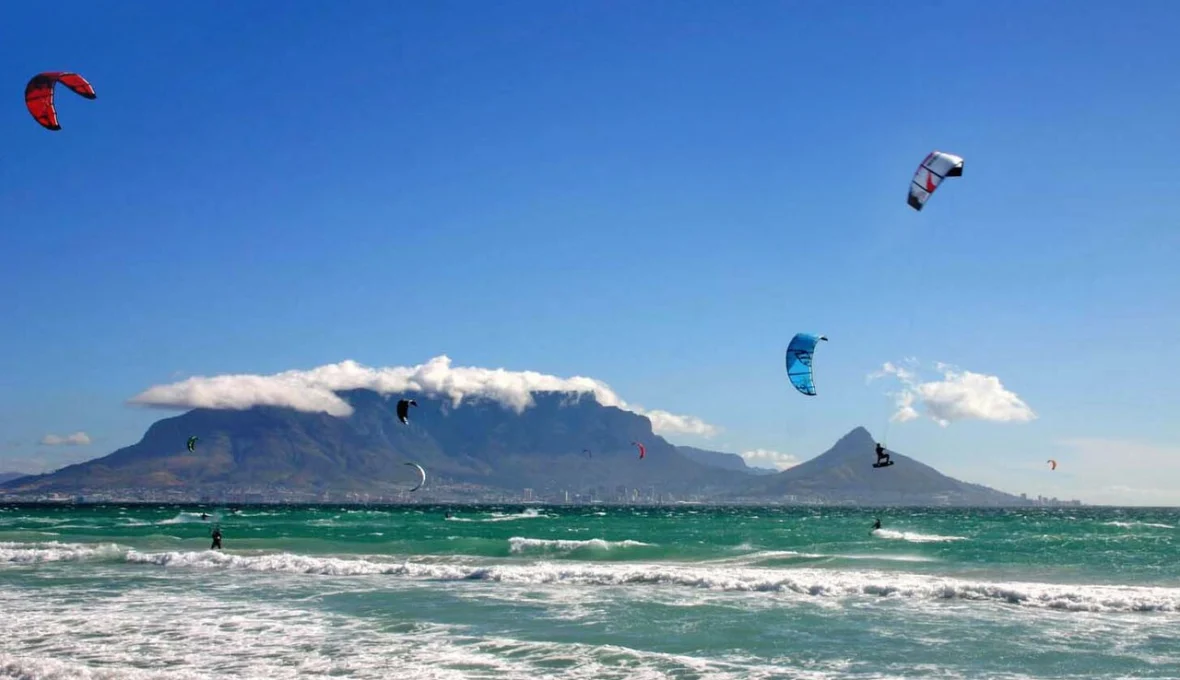
Research checked on 3 November 2026. UNESCO’s South Africa World Heritage list and the individual property pages linked above informed this guide. Consult the relevant site managers for current visitor information. Featured image: Table Mountain, December 2009. Photo: Charles J. Sharp / Wikimedia Commons, CC BY-SA 4.0; resized from the original.