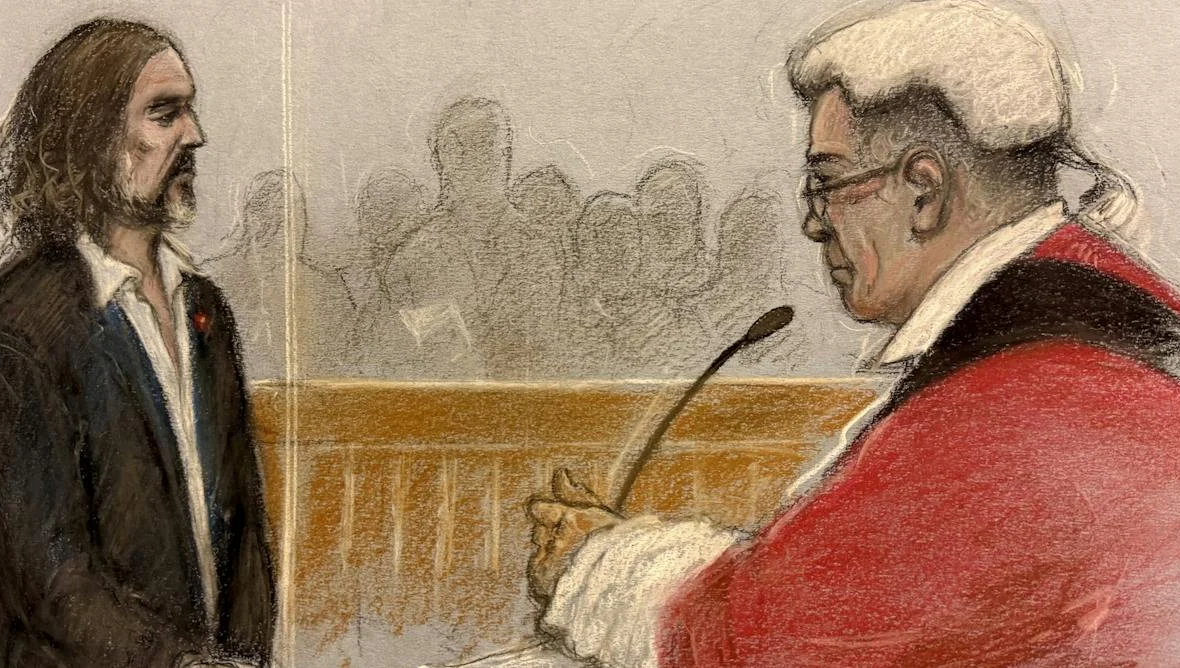
British comedian and actor Russell Brand has been found guilty of one count of rape and three counts of sexual assault, related to multiple victims, after a four-week trial in London.
He was acquitted on three other charges.
The offences for which Brand was convicted occurred nearly two decades ago.
Meanwhile, United Kingdom police are investigating further allegations of rape made by two other women.
For the six women who came forward to report their experiences, the verdict marks the culmination of a long and undoubtedly difficult journey through the criminal legal system.
Much of the public attention will now likely turn to Brand himself: his sentence, his public reputation and whether he will seek to appeal.
But we should also be asking what this verdict means for victim-survivors of sexual violence.
Sexual violence is common but justice is rare
Though the Brand case occurred in the UK, the rates of sexual violence and trends in justice outcomes are very similar there as they are in Australia. Unfortunately, when we examine those trends, we see justice in response to sexual violence is incredibly rare.
In Australia, one in five women has experienced sexual assault since the age of 15. Yet only about 8% report it to police. Of these, very few proceed to court.
Of those who do report, about one in four do so in the first year after the assault. For most, however, it takes several years before reporting to police. Often this is because of:
- shame or embarrassment
- a feeling police won’t be able to do anything
- fearing they won’t be believed
- fearing repercussions from the perpetrator.
For the few who do have their day in court, it is widely recognised that legal processes can cause further harm, or a “second violence” which can exacerbate trauma through:
- legal processes of repeatedly providing accounts of what occurred
- intense cross-examination
- a lack of dignity.
Justice remains rare, yet is it really justice when the legal process is itself so often the source of further harm to victim-survivors?
Consent is active, specific and can be withdrawn any time
One of the wider and more positive implications of the Brand verdict is it reinforces some fundamental principles of sexual consent.
In Australia, and similarly in the UK, consent means active and free agreement. Consent can be given for some acts and not others, and it can be withdrawn at any time – including during an otherwise consensual sexual encounter.
This was a clear takeaway from the Brand conviction.
In one instance, the victim-survivor had initially agreed to sexual activity with him, but described how he subsequently violated her boundaries and continued despite her asking him to stop.
The jury’s verdict affirms a person’s right to determine what sexual activity they want to engage in, and their right to withdraw consent at any time.
Yet, persistent attitudes and “rape myths” surrounding men’s sexual entitlement have long undermined these core principles of consent. Often it is victim-survivors who are blamed.
Celebrity and social power can further reinforce such dynamics, particularly where influential men are surrounded by institutions and peers willing to excuse or minimise harmful behaviour.
Fame and status should never diminish anyone’s right to bodily autonomy.
Perpetrator accountability is vital
For survivors of sexual violence, a guilty verdict can offer a profoundly important form of justice: recognition that a wrong has been committed and the person responsible is held accountable.
Yet we should perhaps be cautious about assuming a criminal conviction, and incarceration of the perpetrator, will always bring closure and healing for survivors.
The consequences of sexual violence can persist long after criminal proceedings conclude. Survivors may continue to experience the emotional, relational and practical impacts of their experiences, including the additional distress associated with pursuing justice.
And it is important to recognise the absence of a guilty verdict does not mean the absence of any harm.
Accountability takes many forms. Some victim-survivors seek criminal accountability of the perpetrator, while others may seek recognition through other means, including restorative justice processes.
Perpetrator accountability can also take the form of apology and a commitment to positive change. Unfortunately, this form of accountability is rarely seen.
More needs to change
Brand’s conviction is arguably a significant moment of accountability and recognition. For many victim-survivors watching, it may offer some reassurance that even powerful men can be held accountable for their use of violence.
But it is important to recognise that one high-profile conviction cannot undo the injustice many survivors experience.
We need justice systems that are more accessible and trauma-responsive, as well as institutions that are willing to confront sexual violence. We need wider community change to ensure sexual violence is taken seriously, and that survivors are not blamed and shamed for another person’s use of harm. And we need greater emphasis on genuine perpetrator accountability, through recognition of harm caused and a commitment to change.
The women involved in this case have been deservedly praised for their courage. It is no small burden they have carried to seek justice.
Ultimately, though, we should be working towards legal systems and a society where survivors do not have to demonstrate extraordinary courage simply to be heard and supported.
The National Sexual Assault, Family and Domestic Violence Counselling Line – 1800 RESPECT (1800 737 732) – is available 24 hours a day, seven days a week for any Australian who has experienced, or is at risk of, family and domestic violence and/or sexual assault.