By Lerato Kodisang, Health-e News
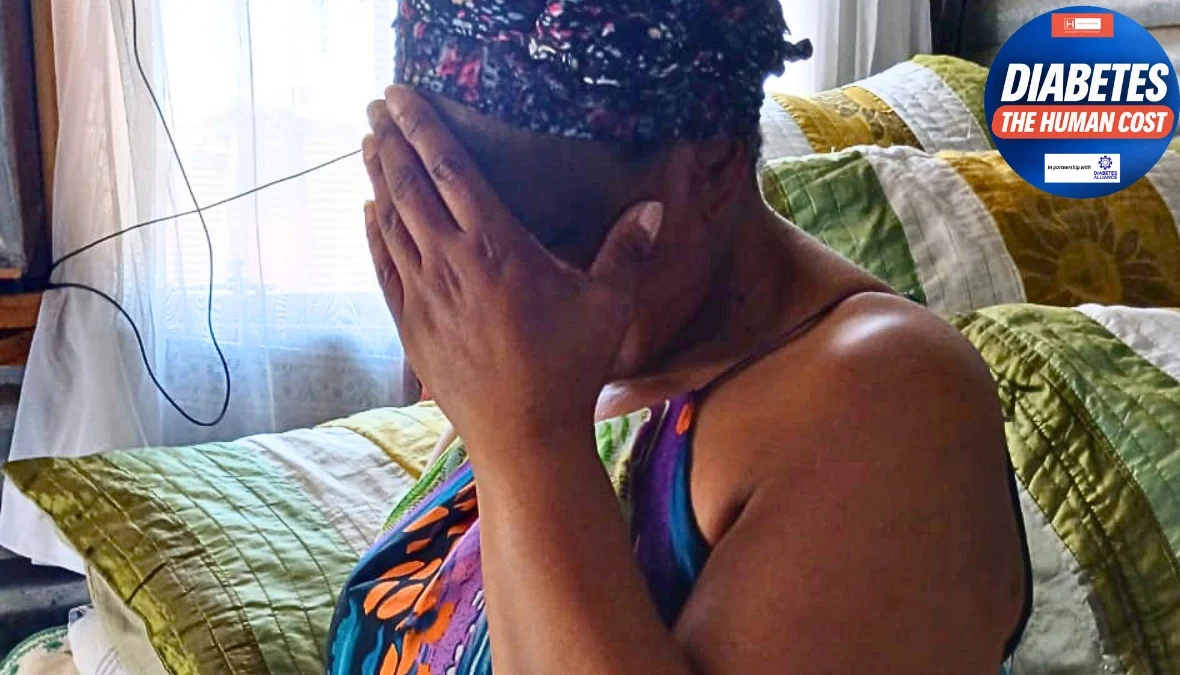
A 60-year-old woman from Meriting informal settlement in Lenasia South fears losing her remaining eyesight after developing eye complications associated with diabetes.
Ayanda Ndlovu*, who has Type 2 diabetes, lost sight in her right eye after her vision deteriorated while waiting for specialist care between 2022 and 2024. Her vision in her left eye continues to worsen while she waits for cataract surgery at St John’s Eye Hospital at Chris Hani Baragwanath Academic Hospital.
“It has been two years since I have waited for surgery to save my left eye. The right eye has lost vision completely. I wish the processes from the hospital can be quicker before I lose my remaining sight,” she says.
Ndlovu* was diagnosed with bilateral diabetic retinopathy in 2022, a complication of diabetes that weakens the blood vessels in the retina and can lead to vision loss in both eyes. In 2024, doctors also discovered a cataract affecting the vision in her left eye, a condition more common in people with diabetes.
High blood sugar during pregnancy
Ndlovu was first diagnosed with high blood sugar in 2002 at Mayibuye Clinic in Tembisa while she was pregnant.
“I found out that I was diabetic in 2002 during my antenatal check-ups. Nurses who were treating me at the time said it might be because of pregnancy and continued to monitor the diabetes as I attended antenatal treatment.”
Her blood sugar remained high after giving birth in 2003, and she continued receiving diabetes treatment. By 2013, healthcare workers prescribed insulin and metformin, medicines prescribed to treat Type 2 diabetes.
In 2019, Ndlovu* was hospitalised for three weeks at Tembisa Hospital after healthcare workers struggled to control her blood sugar levels. She says her eyesight began deteriorating around this period.
Losing sight in her right eye while waiting for treatment
Ndlovu* says she returned to Mayibuye Clinic in early 2020 because of her worsening eyesight. She was referred back to Tembisa Hospital for specialist eye treatment.
She says she attended numerous hospital appointments over two years without receiving a diagnosis.
“I went to a private doctor to consult because the waiting at Tembisa Hospital was getting too long and I was racing against [losing] my vision. I consulted with the ophthalmologist twice in April 2022 and I was diagnosed with bilateral diabetic retinopathy.”
Ndlovu* was unable to afford private healthcare and returned to Tembisa Hospital.
She was referred to Steve Biko Academic Hospital in 2023, where she attended several appointments, but the facility was unable to perform specialised eye surgery. In 2024, she was referred to St John’s Eye Hospital at Chris Hani Baragwanath Academic Hospital for surgery.
“It was already too late for my right eye because I lost sight completely.”
Waiting for cataract surgery
Ndlovu has been waiting for cataract surgery on her left eye at St John’s Eye Hospital since 2024. The procedure involves removing the eye’s cloudy natural lens and replacing it with an artificial intraocular lens.
“Every time I have to go for my surgery there’s always something, from waiting for the correct lens size, lenses being unavailable, or no theatre equipment. I cannot see, I am not even sure if my remaining sight will be restored,” she says.
Vision loss caused by cataracts can be reversed with cataract surgery but will not reverse vision loss caused by other underlying eye diseases.
Ndlovu’s* next follow-up appointment for cataract surgery is scheduled for March next year, but no date has been confirmed for the procedure yet.
In October, the Gauteng Department of Health conducted a cataract surgery drive to reduce waiting lists for patients needing operations. It is unclear why Ndlovu*, who has been waiting for surgery since 2024, was not included in the initiative.
Ndlovu* says her right eye remains painful even after she lost sight in that eye. “At times I get painkillers from the hospital but it’s usually not enough to cover until the next hospital visit. So we just buy over-the-counter painkillers.”
Losing her independence
Ndlovu* now relies on her son and caregiver, Nomsa Mbatha*, to help with everyday chores at home and to accompany her to hospital appointments.
“She tries to do her laundry, clean the yard and cook, but she is failing. She is dependent on us, and I try my level best to support her,” Mbatha says. “Her son is unemployed, but he is discouraged to find work far from home, just to support her and extend his help.”
“The only help I need is the outstanding surgery so I can at least see with my left eye,” says Ndlovu.*
Importance of eyecare in diabetes patients
Dr Wezi Gloria Maphenduka, an ophthalmologist and head of the clinical unit at Charlotte Maxeke Academic Hospital and the University of Witwatersrand, says bilateral diabetic retinopathy can develop without noticeable symptoms and eventually cause permanent vision loss.
She adds that pregnant women with diabetes should be closely monitored and treated because retinopathy can worsen during this period.
“More than 90% of diabetes-related vision loss can be prevented or delayed through early detection, timely treatment, and good control of blood glucose, blood pressure, and cholesterol levels.”
The Gauteng Department of Health was approached for comment on delays in accessing specialised eye treatment and surgery in public hospitals in the province. The department acknowledged receiving the questions but was unable to respond by the time of publication.
Warning signs of diabetes-related eye problems
*Ayanda Ndlovu requested that her real name and that of her caregiver be withheld out of fear of stigma within the Meriting community.