Durban’s appeal reaches beyond the shoreline. The city and its surrounding eThekwini region offer botanical gardens, museums, a working harbour, coastal forests and an inland landscape of hills. These ten ideas help first-time visitors and locals plan different days out instead of trying to fit the whole region into one trip.
How we selected these 10
EBNewsDaily chose a mix of outdoor, cultural and family experiences in greater Durban using Durban Tourism, eThekwini and attraction operators as sources. The numbered entries organise an editorial selection; they are not a scored ranking. This is desk research and does not claim personal visits. Information was checked on 3 November 2026. No placement was purchased. Confirm current opening arrangements, beach safety and access directly before travelling.
At a glance
| Experience | Area | What to expect |
|---|---|---|
| Durban Botanic Gardens | Berea | Historic garden and plant collections |
| Golden Mile promenade | Central beachfront | Seafront walk and beaches |
| uShaka Marine World | Point | Marine and family attractions |
| Moses Mabhida Stadium | Stamford Hill | Stadium architecture and activities |
| KwaMuhle Museum | Central Durban | Apartheid-era local history |
| Victoria Street Market | Central Durban | Market shopping and food culture |
| Natural Science Museum | City centre | Natural-history collections |
| uMhlanga Lagoon Nature Reserve | uMhlanga | Coastal forest and lagoon |
| Krantzkloof Nature Reserve | Kloof | Gorges and walking routes |
| Valley of 1000 Hills | Inland west | Scenery and local experiences |
1. Durban Botanic Gardens
On the Berea, the Durban Botanic Gardens offer a green counterpoint to a busy beachfront itinerary. Durban Tourism identifies the garden, established in 1849, as Africa’s oldest surviving botanic garden and highlights its role in plant conservation and education. Visitors can take an unhurried look at the collections or simply use the setting for a slower outdoor visit. Allow time for the gardens themselves instead of treating them only as a convenient photo stop. Check the garden’s current visitor rules, event arrangements and accessibility before setting out; concerts and other special programmes may operate differently from an ordinary visit. Durban Tourism garden information.
2. Golden Mile promenade
The Golden Mile is Durban’s well-known beachfront promenade, connecting a series of beaches and public spaces along the coast. It is a useful option for a walk, cycling outing or a look at the city’s relationship with the sea without committing to a single indoor attraction. Choose the stretch that fits your group and the time of day, and plan your return transport before setting off. Beach access and water quality can change; a place on a tourism map is not proof that swimming is permitted on your visit. Check eThekwini’s latest beach status and obey signs and lifeguard directions. Explore the central beaches.
3. uShaka Marine World
At the Point end of the beachfront, uShaka Marine World brings marine-themed attractions and leisure activities together in one precinct. It is worth considering for families who want to build a day around a specific ticketed experience rather than a sequence of short stops. The different activities are not necessarily covered by the same admission, and availability may vary with maintenance, weather or the day’s programme. Consult the operator’s current rates and times before buying, then check which experiences suit your children’s ages and accessibility needs. The neighbouring beach is a separate public environment with its own safety conditions. Check uShaka’s visitor information.
4. Moses Mabhida Stadium
Moses Mabhida Stadium is a recognisable Durban landmark whose arch and scale make it interesting even to visitors who are not attending a match. The operator lists stadium experiences and guided tours, providing a way to learn about the venue and its design. For anyone hoping to take a ride or join an adventure activity, confirm that the specific attraction is operating on your planned date: maintenance, weather and event schedules can affect availability. Ask about age, height, mobility and booking requirements rather than assuming every activity has the same conditions. A visit pairs naturally with a nearby beachfront outing. View the stadium’s attractions.
5. KwaMuhle Museum
KwaMuhle Museum offers an important perspective on Durban’s twentieth-century history. Durban Tourism describes the building as the former home of the city’s native administration department, associated with the system of labour control and apartheid. The museum turns that setting into a place to examine the experiences of Black residents under those policies. It is a worthwhile stop for readers who want more than a list of landmarks: allow time to read and reflect, and consider how the building’s former purpose informs what is displayed. Confirm current access, guided programmes and any closures with the museum before making a dedicated trip. Read about KwaMuhle.
6. Victoria Street Market and the Indian District
Durban Tourism identifies Victoria Street Market and the surrounding Indian District among central Durban’s visitor highlights. A market visit can offer a lively contrast to a museum or garden, with the opportunity to explore goods, food traditions and the area’s commercial life. Come with a clear plan for transport and enough time to browse rather than expecting every stall to offer the same products or accept the same payment method. Ask before photographing people or individual stalls, and use ordinary city-centre precautions with valuables. Check trading arrangements directly if you are travelling for a particular shop or meal. See Durban Tourism’s city guide.
7. Durban Natural Science Museum
The Durban Natural Science Museum gives a city-centre itinerary a different focus: the natural world, its history and scientific collections. eThekwini describes the museum as part of its cultural services and lists research and educational activities associated with its collections. It can be a useful choice for families, learners and anyone who enjoys looking closely at specimens and the questions they help scientists investigate. Exhibitions and access may change, so contact the museum before travelling for a particular display. Pair it with another central stop only after checking opening arrangements and the time needed to get between them. eThekwini museum information.
8. uMhlanga Lagoon Nature Reserve
North of central Durban, the uMhlanga Lagoon area provides a change of pace from the urban beachfront. Durban Tourism describes a nature trail through coastal forest and boardwalk sections around the Ohlanga River. It suits visitors interested in a relatively contained nature outing, but surfaces and access can change after heavy rain or maintenance. Check the present route condition, opening arrangements and mobility suitability before starting, and carry water and sun protection. Keep to permitted paths, leave plants and wildlife undisturbed and follow any local notices around the lagoon and beach. Plan transport separately from a central Durban itinerary. Durban Tourism nature-trail information.
9. Krantzkloof Nature Reserve
Inland at Kloof, Krantzkloof offers gorge scenery, indigenous vegetation and marked walks, according to Durban Tourism. It is a stronger choice for a group seeking a nature outing than for someone expecting a flat waterfront stroll. Routes differ in effort, and rain can change the condition of paths and river crossings. Ask the reserve which entrance and trail are currently available, what permits or fees apply, and whether the route suits the least experienced person in your group. Carry water, suitable footwear and a charged phone, and tell someone your route and expected return time. Wildlife sightings should never be assumed. Krantzkloof visitor details.
10. Valley of 1000 Hills
West of Durban, the Valley of 1000 Hills changes the landscape from sea and city to rolling inland scenery. Durban Tourism presents the wider area as a destination for nature and adventure experiences, rather than a single attraction with one entrance. That distinction matters when planning: choose a specific viewpoint, community experience or operator, and check the journey and booking arrangements for that venue. Allow time for the drive and ask about accessibility, weather and what a quoted activity includes. Where an experience involves local communities, look for operators who explain clearly how the visit is organised and respect the people and places involved. Explore Durban’s regional guide.
Before you choose
Group stops by area: the city centre, uMhlanga, Kloof and the Valley of 1000 Hills are separate outings when travel time is considered. Check beach status before entering the water, attraction notices before booking and reserve conditions after rain. Arrange transport, check local safety advice and confirm fees directly.
Sources and updates
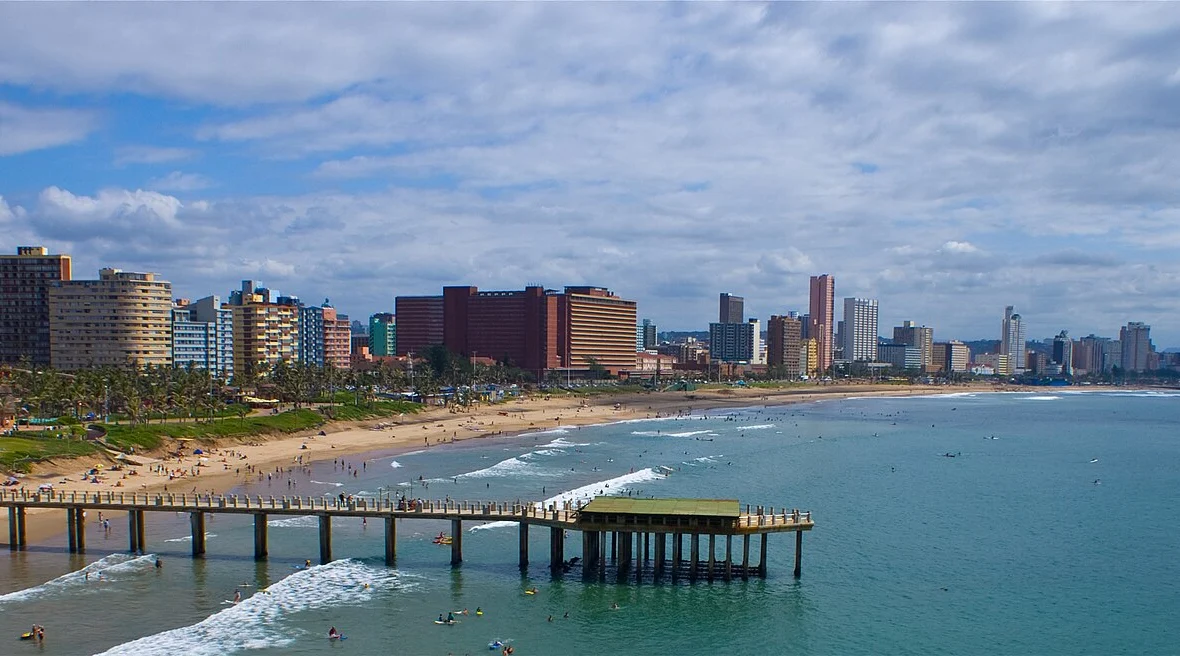
Checked on 3 November 2026 using the official sources linked above, including Durban Tourism and eThekwini’s cultural information. Featured image: Durban beachfront in 2008, an archive photograph by Steve Roetz / Wikimedia Commons, CC BY 2.0; resized from the original.