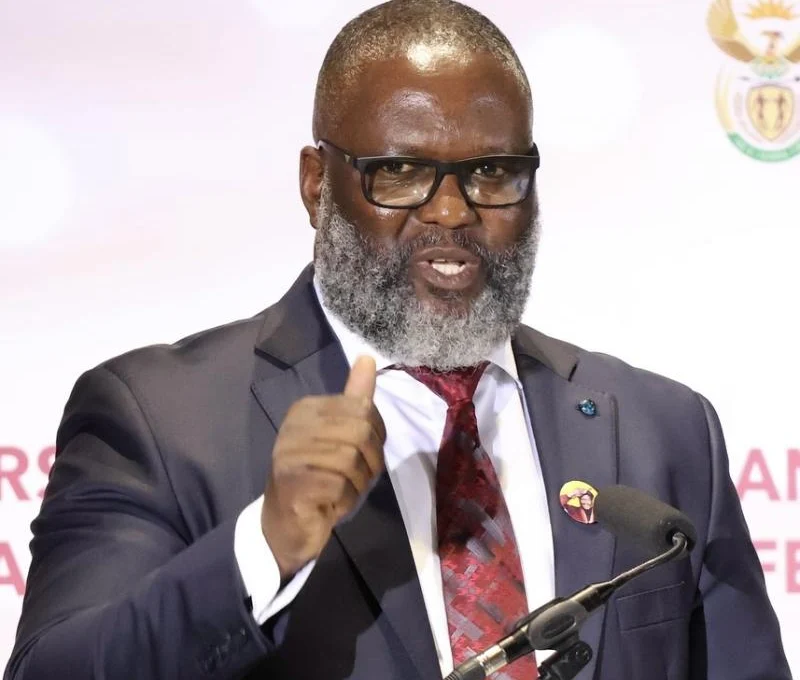
Public Service and Administration Minister Mzamo Buthelezi has emphasised the importance of building capable State institutions to navigate the challenges and opportunities facing Africa’s economies amid global disruptions.
“We convene at a defining moment for our continent and the global economy, where the world is experiencing profound shifts in geopolitical relations, international trade, technological advancement, climate patterns and the global distribution of economic power,” said Buthelezi on Monday.
Speaking at the 2026 Economic Governance School programme held in Centurion, Buthelezi outlined how these shifts directly impact the cost of living, public finances, investment, employment, and the delivery of essential services.
The Minister said the theme of the ongoing Economic Governance School — Strengthening Adaptive State Capability for Inclusive Growth in an Era of Global Disruptions — poses a pivotal question.
“Do our institutions possess the leadership, institutional competence and administrative capability to respond effectively to a changing world while delivering on the developmental aspirations of our people,” the Minister said.
Since its 2020 inception, the Economic Governance School has grown into a significant platform for leadership development, bringing together senior public officials from multiple African countries to exchange ideas and enhance economic governance.
The programme has recorded 272 participant attendances, spreading to bilateral and trilateral collaborations across the continent.
“This progression is significant. It demonstrates our recognition that Africa’s developmental challenges cannot be addressed through isolated national responses. Our economies are interconnected, our vulnerabilities increasingly shared, and our opportunities considerably greater when pursued through regional cooperation,” Buthelezi said.
For South Africa, advancing the priorities of the seventh administration requires practical State capability.
“Our national programme of action is anchored on three strategic priorities: driving inclusive economic growth and job creation; reducing poverty and addressing the high cost of living, and building a capable, ethical and developmental State,” he said.
Buthelezi acknowledged the current economic constraints, with a revised growth projection of 1.2% for 2026, but stressed the need for sustained institutional performance rather than mere policy announcements.
“Our citizens do not experience government through policy documents. They experience it through the availability of water, reliable electricity, functioning roads, accessible healthcare, quality education, employment opportunities and the responsiveness of public institutions,” he said.
Buthelezi said building a capable State is not an administrative objective separate from economic development.
He emphasised that public service should be viewed as a strategic instrument for translating developmental priorities into effective action, especially in areas like infrastructure, revenue mobilisation, industrial development, and digital transformation.
Buthelezi noted the imperative of adapting governance to face uncertainties in geopolitics, climate change, and rapid technological change, particularly artificial intelligence.
“Our institutions must become more anticipatory, responsive and capable of adjusting to emerging circumstances without losing sight of long-term developmental objectives,” he said.
The Minister stressed the importance of integrated government and whole-of-society approaches to address complex development challenges effectively.
Over the coming days, the school will focus on key areas such as the green economy, industrialisation, African Continental Free Trade Area, revenue mobilisation, digital transformation, and strengthening State capability through innovation and productivity.
“These themes should not be treated as separate technical discussions. They are different dimensions of one overarching objective: building States that can make sound economic choices, mobilise resources, respond to disruption and translate development strategies into measurable outcomes,” Buthelezi said.
He expressed gratitude to the National School of Government, partners, participating countries, experts, and delegates.
“Africa’s development ambitions require more than resources and policy commitments. They require capable institutions, visionary and accountable leadership, professional public services and a sustained commitment to implementation.” – SAnews.gov.za
Source: Original report at SAnews.gov.za.