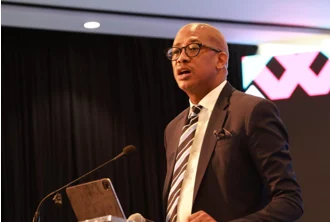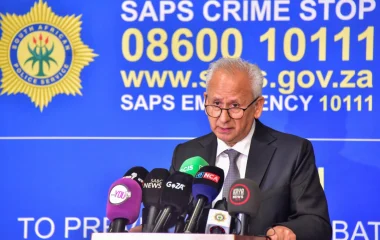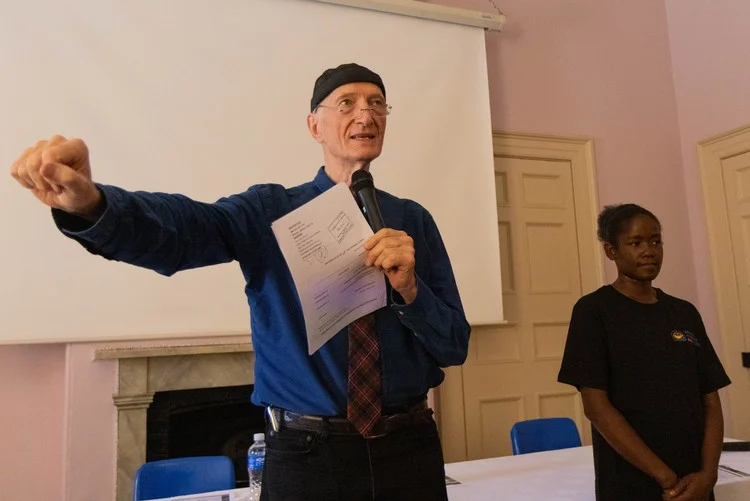
Retired Judge Edwin Cameron speaking at the official launch of the South African Bail Fund in Cape Town on Friday. Photos: Liezl Human
- The South African Bail Fund officially launched on Friday.
- Since its pilot started in May, the fund has helped 330 detainees who could not afford bail.
- It is estimated that thousands of remand detainees are stuck in prison simply because they cannot afford to pay bail set at R1,000 or less.
- If they can’t afford to pay their bail, they are kept in prison. It costs the state about R463 per person per day to keep them there.
The South African Bail Fund (SABF) officially launched on Friday after several months of running a pilot project at Pollsmoor and Goodwood prisons. Since May, the project has helped pay the bail of 330 detainees who could not afford it.
Thousands of remand detainees are stuck in prison simply because they cannot afford to pay bail set at R1,000 or less. A remand detainee is someone who is incarcerated but has not been sentenced. If they can’t afford to pay their bail, they are kept in prison. It costs the state about R463 per person per day to keep them there.
The fund was launched at an event in Cape Town attended by Correctional Services Minister Pieter Groenewald, officials from his department and the Judicial Inspectorate for Correctional Services (JICS), members of Parliament’s Portfolio Committee on Correctional Services, University of Cape Town law students and former remand detainees.
People who had their bail paid by the SABF told attendees how they had spent months at Pollsmoor or Goodwood prisons because they could not afford bail.
Theo Sandisa Mtlaka, from Khayelitsha, spent almost four months at Pollsmoor after he was arrested for theft and could not afford bail of R1,000. His case is still ongoing.
Mtlaka said he now has an opportunity to turn his life around.
Some detainees, like Ravona Solomon, spent several months in jail, only to have their cases later withdrawn. In some cases, former remand detainees spent more time in prison before they were sentenced than their actual sentence.
Former remand detainees also spoke about poor conditions and overcrowding in prison.
Chad, a 33-year-old Belhar resident, said he struggled to access his mental health medication in jail. He said he was treated badly in prison.
Now, the SABF is still supporting him with his ongoing court case and helping him find a job.
“It means more than what I can explain,” he said.
Jody-Lee Fredericks, SABF director, said many of the detainees’ relatives whom the fund contacted were pensioners or could not afford the bail.
“No one should be behind bars because they cannot afford bail,” she said.
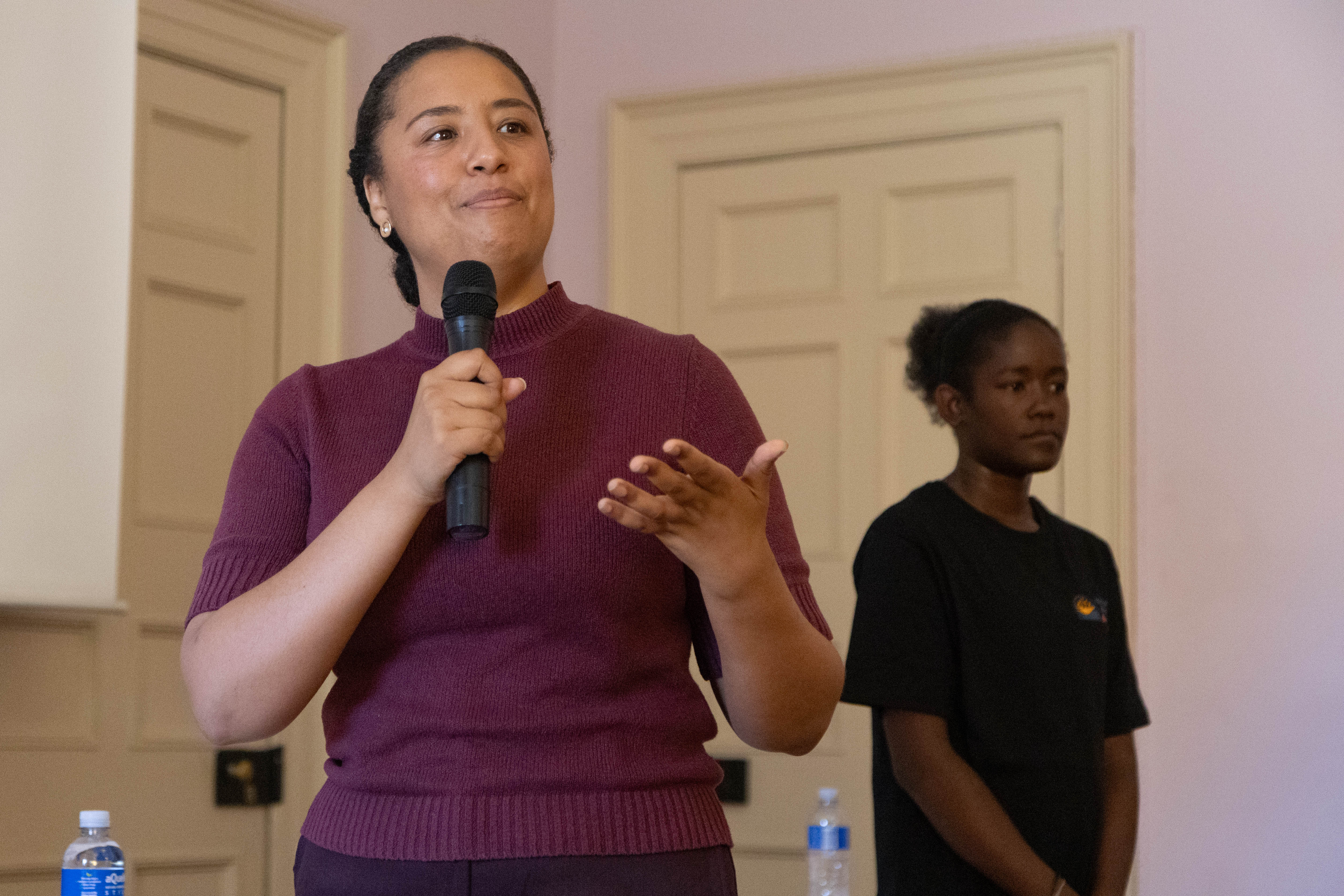
Jody-Lee Fredericks, South African Bail Fund director, and former detainee Rabia Welcome at the launch of the fund.
Fredericks said that a third of the remand detainees they helped had been charged with possession of drugs.
“They are being sent to prison for an addiction issue,” she said.
Judge Edwin Cameron, former inspecting judge of prisons, who initiated the pilot project, said, “There are many things wrong with our criminal system, the administration of justice, with our carceral system … The Bail Fund is a small intervention … It’s not a grand repair.”
The fund is completely donor-funded, with one of its main funders being the Millennium Trust.
Sambeso Sani, of JICS, said, “There is a critical difference between being granted bail and actually being able to afford and secure one’s release.”
“Justice must be accessible to all, regardless of a person’s financial circumstances,” said Sani, adding that the fund also has the potential to reduce the overcrowding challenges faced by South Africa’s prisons.
According to a parliamentary reply from March 2026, Western Cape prisons are 70% overcrowded. Pollsmoor Remand Detention Facility A and B are at 308% and 127% capacity, respectively, and the Pollsmoor Female Correctional Centre is at 295% capacity. Goodwood Remand Detention Facility is at 170% capacity.
“When we speak about remand detention, we must remember that we are speaking about people who have not been convicted and who remain in custody while awaiting the finalisation of their cases,” said Sani.
“This distinction is important because it speaks directly to the constitutional principles of human dignity, equality, fairness and the presumption of innocence,” he said.
The SABF is supported by the Millennium Trust, Claude Leon Foundation and the Bertha Foundation.
© 2026 GroundUp. This article is published under the GroundUp Republication Licence Version 1.0. Email [email protected] to request permission to republish.