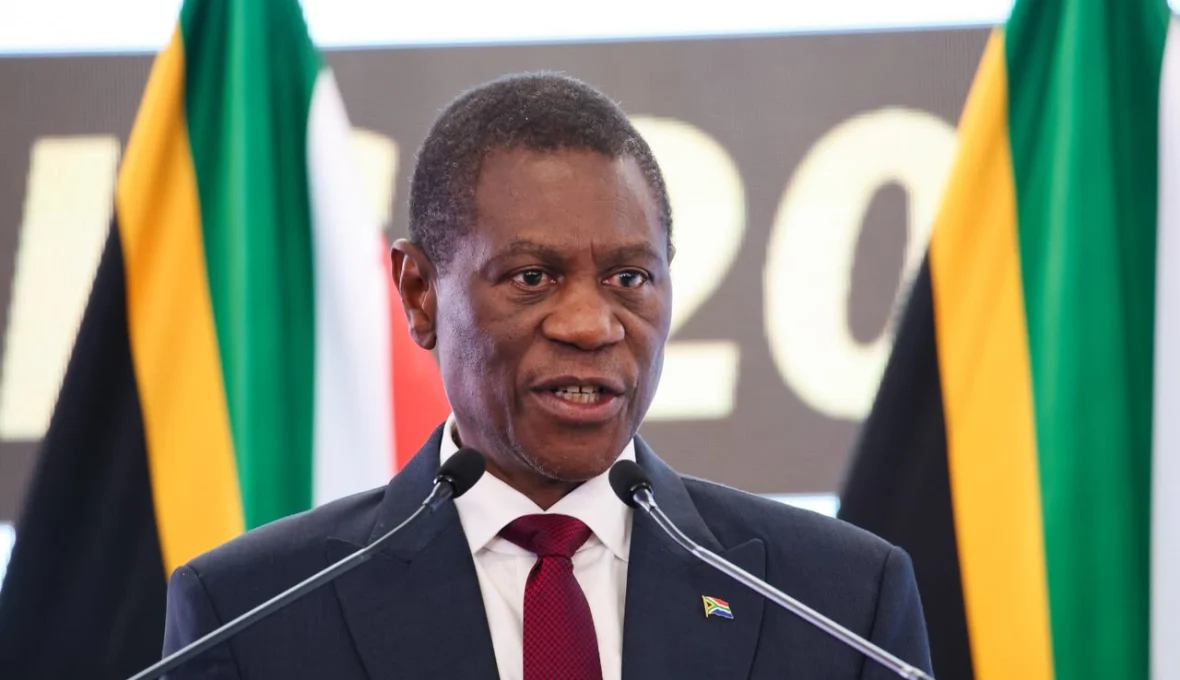
Acting President Paul Mashatile says the fight against gender-based violence and femicide (GBVF) must become a sustained, whole-of-society effort rather than an annual awareness campaign.
Delivering the keynote address at the launch of the 16 Days of Activism for No Violence Against Women and Children in Middelburg, Mpumalanga, on Friday, Mashatile called on men, women, boys and girls to work together to end GBVF, warning that violence against women and children cannot be treated as a private family matter or left to survivors, women’s organisations, courts and the police alone.
The 2026 campaign is being held under the theme: “Letsema: Men, Women, Boys and Girls working together to end Gender-Based Violence and Femicide”.
Mashatile said the theme draws on the South African tradition of communities joining hands to address challenges that individuals or households cannot overcome alone.
“In confronting GBVF, that spirit of collective effort must become our national way of working,” Mashatile said.
Although the annual campaign runs from 25 November to 10 December, Mashatile said the country’s commitment to ending violence must extend beyond the 16 days.
He called for a relentless, 365-day movement in which government, businesses, schools, faith institutions, families and communities take responsibility for preventing violence.
A key part of this effort, he said, is challenging harmful social norms that excuse abuse and encouraging men to become visible and accountable leaders in their homes and communities.
Mashatile noted the National Positive Masculinity Programme, launched by the Department of Women, Youth and Persons with Disabilities in Ermelo on 23 October 2026 under the theme: “Real Men and Boys Build, Protect and Transform”.
He said the programme seeks to promote emotional literacy, responsible citizenship and zero tolerance for abuse.
“True transformation demands that men step forward, not as passive bystanders, but as visible, accountable leaders. When men hold themselves and one another accountable in the streets, boardrooms, taverns, and homes, we break the cycle of silence and teach one another that true strength lies in shielding women and children from harm,” Mashatile said.
He also highlighted the economic circumstances that can make it difficult for survivors to leave abusive situations.
“Poverty and financial dependency strip away choices and force survivors to remain in dangerous environments. True prevention starts with economic independence; this means expanding access to jobs, entrepreneurship, land, and reliable social safety nets so that women and vulnerable groups have the security to walk away from harm and rebuild their lives,” he said.
Mashatile also called on traditional and faith leaders, including elders, young people, civic organisations and neighbours to work together to develop local solutions that make communities safer.
“When every street, village, and ward takes responsibility for safety, violence loses its hiding places.”
Mashatile also urged government and institutions to listen to survivors and recognise their experiences as important in identifying weaknesses in support systems.
He said survivors must not be treated as symbols at public events or expected to relive their trauma to move audiences but should be heard as individuals whose lived knowledge can reveal the strengths and failures of the systems. – SAnews.gov.za
Source: Original report at SAnews.gov.za.