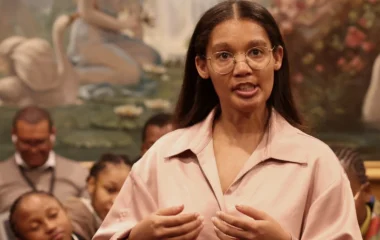
South African child rights advocate Amogelang Mashele has challenged world leaders to move beyond promises and demonstrate concrete action in protecting children from violence, abuse and exploitation.
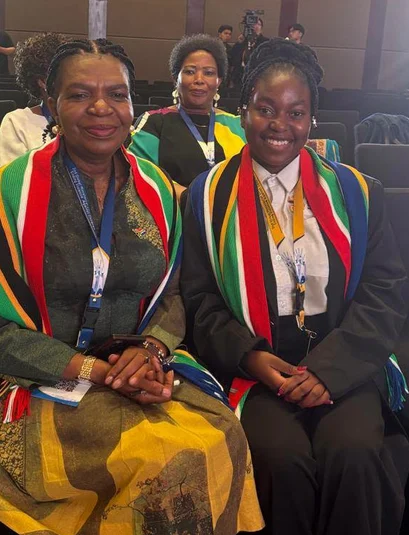
The 15-year-old President of the Nelson Mandela Children’s Parliament delivered the challenge at the 2nd Global Ministerial Conference on Ending Violence Against Children, held in Manila, Philippines, on 18 and 19 November 2026.
Addressing delegates under the theme: “Prevention at Scale: Ending Violence Against Children in, and through, Homes and Schools”, Mashele called for children’s experiences and recommendations to be reflected in government policies, programmes and decisions.
She stressed that children’s participation should extend beyond conferences and consultations, arguing that young people must have a meaningful role in shaping interventions intended to protect them.
“We want to be meaningfully included in decisions affecting our lives. Our participation should not be limited to conferences and seminars. Our voices must be reflected in policies, programmes and national decisions,” she told delegates.
Mashele, who formed part of the South African delegation led by Social Development Minister Dina Pule, brought attention to the multiple forms of violence threatening children’s safety and development across Africa and the rest of the world.
She highlighted the plight of children living amid armed conflict in the Democratic Republic of Congo, Sudan and South Sudan, where displacement, hunger and disrupted education continue to undermine their futures.
For children living in these circumstances, violence and insecurity are not isolated incidents but part of their everyday lives.
She also drew attention to abuse, sexual exploitation, human trafficking, child marriage and bullying, warning that these challenges affect children far beyond conflict zones.
South Africa, she noted, is also grappling with alarming levels of violence against children.
South African Police Service statistics show that 314 children were murdered between April and June 2024, an average of about three every day.
Between October and December 2024, another 273 children were murdered, while 480 survived attempted murder and 2 164 were victims of assault with intent to cause grievous bodily harm.
The figures highlight the scale of the child protection challenge and the need for stronger prevention measures, effective law enforcement and accessible support services for victims.
In the Western Cape, at least 63 children were murdered between April and August 2025, with gang violence identified as a leading cause. Among the victims was Esmine Franke, who was killed by a stray bullet. In Atlantis, 16-year-old Cedric Ross was murdered in August 2025.
Mashele also highlighted the particular vulnerability of children with disabilities, who often face additional barriers in accessing protection, care, and support.
The South African Social Security Agency pays 179 609 Care Dependency Grants every month to caregivers of children who require additional care because of disabilities.
However, a 2024 UNICEF analysis found that only 8 641 children with severe to profound intellectual disabilities were receiving support in special care centres in 2022.
The Department of Social Development is piloting respite care services in Mpumalanga and the Northern Cape, reaching 220 children and their families.
Children on the move, including refugees, asylum seekers, trafficking victims and unaccompanied or separated children, were also identified as requiring particular attention.
South Africa is home to an estimated 642 000 migrant and refugee children, the largest child migrant population on the continent. Many arrive from neighbouring countries, including Zimbabwe, Lesotho, and Mozambique.
Mashele called on African governments to strengthen the implementation of child protection laws and improve their responses to reported cases of abuse.
She urged countries to establish safe, confidential, and child-friendly reporting mechanisms that enable children to report violence without fear, particularly in rural and underserved communities.
She also called for greater investment in education, healthcare, mental health support, and social protection, emphasising that protecting children requires coordinated interventions that address both violence and the conditions that increase their vulnerability.
Placing accountability at the centre of her address, Mashele challenged governments to make their commitments public, establish measurable targets and report regularly on progress in a language children can understand.
She said children must be given opportunities to question leaders and assess whether government interventions were making schools safer, improving access to protection services, and strengthening responses to violence.
Her message comes as governments continue to implement commitments made at the first Global Ministerial Conference on Ending Violence Against Children, held in Bogotá, Colombia, in November 2024.
Representatives from 148 countries attended the Manila conference, where governments announced more than 230 new pledges, bringing the total number of commitments since the first conference to more than 630 from 140 countries.
Mashele challenged delegates to ensure that these commitments translate into tangible improvements in children’s lives.
“Two years after Bogotá, we are not asking for more promises. We are asking for action, accountability and a future free from violence, fear and exploitation.”
In addition to delivering her address, Mashele facilitated a Ministerial dialogue on the role of regional organisations, including the African Union and European Union, in holding member states accountable for preventing and ending violence against children. – SAnews.gov.za
Source: Original report at SAnews.gov.za.