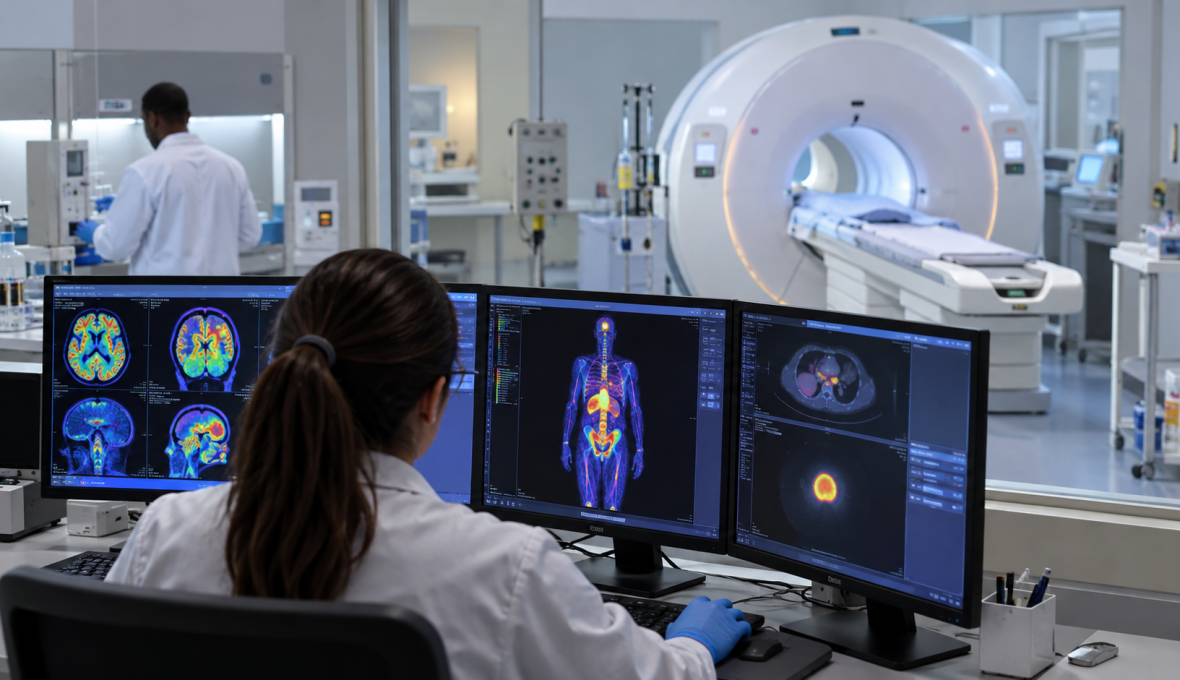
South African researchers are using nuclear medicine to improve how tuberculosis and cancer are detected and treated, with local expertise being presented to international partners at a science forum in China.
Professor Mike Sathekge, president and chief executive of the Nuclear Medicine Research Infrastructure, said South Africa’s experience with a high burden of TB, HIV and cancer had given scientists knowledge that could complement research in countries where those illnesses were less common.
Sathekge, who also heads nuclear medicine at Steve Biko Academic Hospital and the University of Pretoria, was speaking during the High-Level Conference on International Cooperation in Open Science in Shanghai.
Tracking treatment response
Nuclear medicine uses small amounts of radioactive material to examine how organs and tissues are functioning, diagnose disease and deliver targeted treatment.
South African research has helped show that TB lesions in the same patient may respond differently to treatment. Sathekge said that knowledge could help researchers identify biomarkers showing how a patient was responding without relying only on expensive imaging.
The work could also assist doctors in deciding whether a patient needs a longer course of medicine, different treatment or surgery. Researchers are studying how imaging can show whether TB drugs are reaching and working inside lesions.
Earlier cancer detection
Sathekge said similar approaches could strengthen cancer care, particularly where patients are diagnosed after the disease has reached an advanced stage. He argued that medical imaging should form part of healthcare rather than be treated as an optional luxury.
The research is being showcased as South Africa participates as the first African Country of Honour at the Pujiang Innovation Forum. The forum runs from 11 to 14 September and is focused on research partnerships, technology transfer and investment.
The claims about the work and its potential were made by NuMeRI and reported by the Department of Science, Technology and Innovation through the government news service.