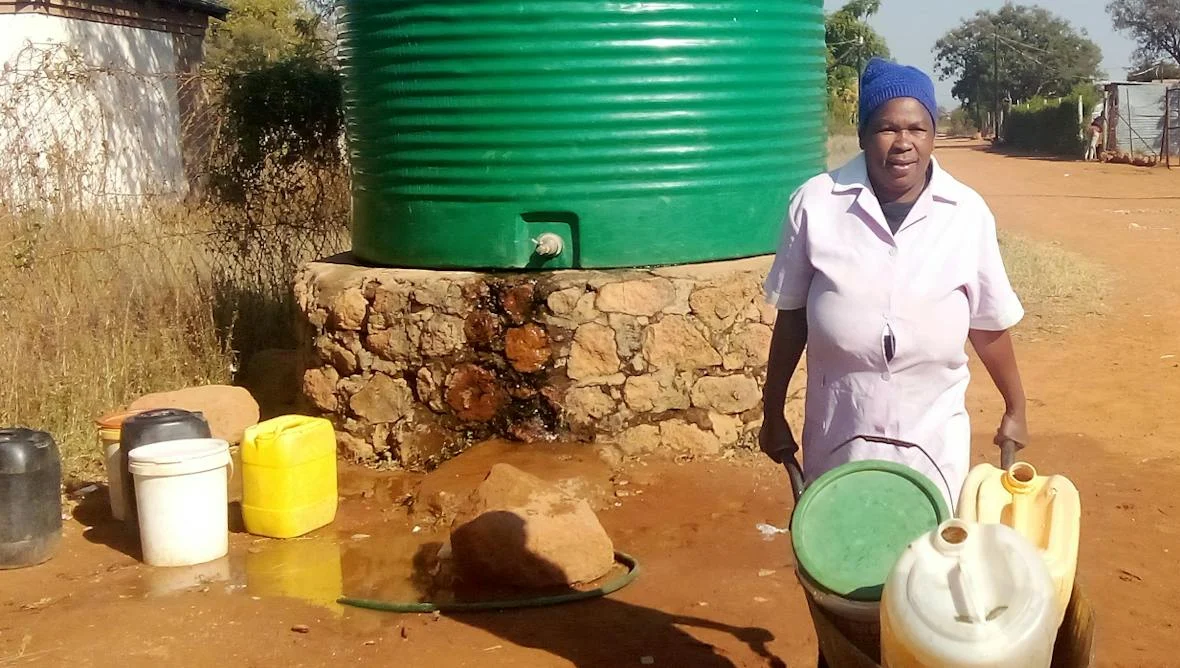
Going without piped water for weeks or even months has become a reality for many South Africans. The residents of Madibeng, meaning “place of water” in Setswana, in the country’s North West province, are no exception.
There are than half a million people living in the area who have had poor water services over the past 15 years. Where emergency water supplies have been brought in, the water is often of poor quality and delivered erratically.
There’ve been regular community protests there over the lack of water. A protest in 2014 turned fatal when police opened fire, killing at least two people, while another later died from injuries sustained during the shooting.
I am a sociologist who researches the politics of water (hydropolitics) and social inequality. I conducted research in the Damonsville, Mothutlung and Mmakau communities in Madibeng which have experienced persistent water supply problems to find out residents’ experiences of municipal water service delivery. The kinds of questions I asked them included how often they experienced water interruptions, how they coped when the taps ran dry, what they thought caused the ongoing problems, how the municipality responded, and who they believed was ultimately responsible for the crisis.
Read more:
South Africa has good water laws but bad services. What’s stopping fair access
My research found that residents constructed a moral evaluation of who was to blame for the ongoing water crisis based on their own daily experiences rather than official explanations. They judged the municipality according to their experiences of poor management, corruption and neglect.
My findings show that to understand the full impact of water service failures, researchers and officials must listen to residents’ accounts of when water is available, whether it is safe and how shortages affect their lives.
Residents blame corruption and neglect – not only broken pipes
Official explanations about the water outages and breakdowns in emergency supplies focused on technical failures such as ageing water pipes, broken pumps and skills shortages.
But my research found that residents formed their own reasons for the water crisis based on what they saw, smelt and waited for outside their front doors. The most common explanation they gave for the state of affairs was corruption.
For example, Andre, who had lived in Damonsville for 30 years, put it plainly:
The money is there … The problem is that they don’t use that money to replace these things … They eat the money, and then we have a water problem.
In Mmakau, Thabo offered much the same explanation:
The people (municipal officials) do not fix the pipes because they eat the money.
In South Africa, “eating the money” refers to government officials who steal public funds to support expensive lifestyles.
Read more:
Water in the dams, but South Africa’s taps are dry: essential reads on a history of bad management
The moral case made by the residents wasn’t built on corruption alone. It also rested on how residents were treated while the water was absent. Felicity, a young graduate raising two nieces in Damonsville, framed it as a basic breach of duty:
Isn’t it the municipality’s main responsibility to provide water and other services at all times?
Others residents pointed to what they saw as evidence of selective neglect. Mmêmogolo Angelica in Mothutlung suggested officials protected their own supply while residents went without. Valery, in Mmakau, described officials as more interested in personal gain than service delivery.
How water was distributed in tankers during the crisis sharpened this sense of unfairness further. Residents watched closely who received water first. Mr Kalle, a Damonsville community leader, noted that certain “priority areas” seemed to receive tankers sooner than others, raising the possibility, in residents’ minds, that political favour shaped who waited and who did not.
Kgothatso went further, describing local politics as manipulative and water provision as a site of exploitation rather than care. When a resource that should be equally available was rationed by criteria no one explained, some residents didn’t distinguish between incompetence and favouritism.
Health added another layer to this moral accounting. Ouma Viola, who had lived in Damonsville for more than 28 years, recounted falling ill along with her parents after drinking tap water, and described having to change stored water every fortnight to stop it discolouring.
Mmêmogolo Angelica from Mothutlung linked tap water to recurring stomachaches.
Residents also cited the municipality’s silence as a source of distress. Cuts arrived, in many accounts, without warning or explanation. Malomê Frank, who had avoided drinking Mothutlung’s tap water for 15 years, described a broader “secrecy” within the municipality that he read as symptomatic of deeper mismanagement.
Where the evidence leads
Corruption and poor management of water services have already been documented in South Africa’s water sector. This information provided the backdrop for residents’ views.
None of this means that Madibeng residents have proved misconduct, and my research does not treat their claims as verified fact. But that is precisely the point. When institutions repeatedly fail and provide few credible explanations for those failures, people construct explanations from what they can observe and experience.
Read more:
South Africa has had lots of rain and most dams are full, but water crisis threat persists
Their verdict is not simply that water fails to arrive. It is that the people entrusted with delivering it have failed them. And for many residents, repeated failure has made explanations based solely on broken infrastructure increasingly difficult to believe, leaving behind a deeper problem of broken trust between residents and the municipality.