Who appears among the richest people in Africa? This guide explains the businesses behind the first ten entries in Forbes’ 2026 annual list and how to read the estimates.
How this list was selected
Order and wealth estimates follow Forbes’ annual 2026 ranking, using its 1 March 2026 valuation snapshot. Forbes’ 2026 Africa list covers African citizens who live on the continent or have their principal business there. That geographic definition excludes some well-known African-born billionaires living and working elsewhere. All figures below are estimated US dollar billions, not cash balances or today’s live values. Company and biographical sources were checked on 3 November 2026. EBNewsDaily has not independently valued these fortunes. No placement was sold.
At a glance
| Position | Name | Estimated US$bn | Business focus |
|---|---|---|---|
| 1 | Aliko Dangote | 28.5 | Manufacturing |
| 2 | Johann Rupert & family | 16.1 | Luxury goods |
| 3 | Abdulsamad Rabiu | 11.2 | Cement and food |
| 4 | Nicky Oppenheimer & family | 10.6 | Diamonds and investments |
| 5 | Nassef Sawiris | 9.6 | Construction and investments |
| 6 | Mike Adenuga | 6.5 | Telecommunications and oil |
| 7 | Naguib Sawiris | 5.6 | Telecommunications and investments |
| 8 | Patrice Motsepe | 4.3 | Mining and investments |
| 9 | Mohamed Mansour | 4 | Diversified businesses |
| 10 | Michiel Le Roux | 3.8 | Banking |
1. Aliko Dangote
Business focus: Manufacturing.
Dangote’s business story centres on industrial production. He founded Dangote Cement and built interests extending into fertiliser and oil refining. Forbes’ profile describes cement operations across several African countries, placing the business in the supply chain behind housing, roads and other construction. This makes his fortune different from one built mainly on an internet platform or a retail brand. The scale of a factory or refinery does not itself establish personal wealth: ownership, borrowing and the value attributed to the businesses matter. The annual estimate in the table is a dated assessment of those interests, rather than the amount of cash available to spend.
Read the company or biographical source
2. Johann Rupert & family
Business focus: Luxury goods.
Rupert founded Richemont in 1988 after a career that included banking and the Rembrandt group. Richemont’s official biography identifies him as its chairman and also describes his leadership connections with Remgro and Reinet. His career links South African business history with an international luxury-goods group. The family designation in the wealth list is worth retaining: it signals that the estimate is presented for the named person and family, rather than necessarily representing a single individual’s separately held assets. Corporate leadership and ownership also differ, so a chairman’s title should not be read as ownership of an entire company.
Read the company or biographical source
3. Abdulsamad Rabiu
Business focus: Cement and food.
Rabiu established BUA in 1988. The group’s own leadership account describes operations spanning cement, food processing, infrastructure and related activities. Cement and food are distinct businesses, but both depend on production capacity, distribution and the ability to serve large markets. His inclusion gives this list another example of wealth associated with industrial activity in Nigeria. Readers following the companies should distinguish the wider group from individual listed businesses, their balance sheets and the interests held by shareholders. A conglomerate’s revenue is not the same as the founder’s personal income or the estimated value of his stake.
Read the company or biographical source
4. Nicky Oppenheimer & family
Business focus: Diamonds and investments.
Oppenheimer’s family history is closely connected with De Beers. Forbes records the sale of the family’s 40% interest to Anglo American in 2012, a transaction that changed the form of wealth long associated with the diamond business. Its profile also describes his later involvement in aviation. The family’s own Oppenheimer Generations organisation represents wider commercial and philanthropic interests. This background illustrates why a wealth list’s industry label can be historical: the sector where a fortune originated need not describe every asset held today. Retaining the family wording and the source date helps avoid a misleadingly simple picture.
Read the company or biographical source
5. Nassef Sawiris
Business focus: Construction and investments.
Sawiris combines an industrial background with investment interests. OCI’s current leadership page lists him as a non-executive director; the company announced in March 2026 that he would move away from the executive-chair role. This is a useful example of why an old biography can be accurate about a career but stale about a present title. His wealth is associated with construction and investments in the Forbes snapshot. The estimate should be read alongside its valuation date, while current corporate announcements establish current responsibilities. A shareholding, a directorship and day-to-day management are separate relationships with a business.
Read the company or biographical source
6. Mike Adenuga
Business focus: Telecommunications and oil.
Adenuga’s fortune is associated with two infrastructure-intensive sectors: telecommunications and oil. Forbes describes Globacom, the mobile network and submarine-cable business, alongside Conoil interests. These businesses connect communications services and energy activity with long-term capital investment. Their customers may encounter a phone brand or a fuel product, while the underlying operations include networks, equipment and other assets. For a reader comparing fortunes, that operating background matters more than treating every billionaire as the same kind of entrepreneur. The estimate remains sensitive to the value of the relevant interests and should not be confused with a company’s sales or a household’s bank balance.
Read the company or biographical source
7. Naguib Sawiris
Business focus: Telecommunications and investments.
Naguib Sawiris built a major telecommunications business and later sold Orascom Telecom in a multibillion-dollar transaction, according to Forbes. The profile describes subsequent investment interests and resort development. His career therefore shows how a fortune can move from the creation of an operating company into a broader portfolio. He is a different person from Nassef Sawiris, who also appears in this list; shared family history does not make their assets interchangeable. Read the names and company affiliations carefully when following business reports. The sector label gives an entry point into the career, rather than a complete inventory of every holding.
Read the company or biographical source
8. Patrice Motsepe
Business focus: Mining and investments.
Motsepe’s career connects law, mining services and ownership in the resources sector. Forbes describes his establishment of African Rainbow Minerals and his later launch of African Rainbow Capital. The two names refer to different businesses and should not be treated as a single company. His wider public profile also extends into African football. For readers interested in the source of a fortune, the important distinction is between a person’s operating roles, investment holdings and other public responsibilities. The wealth estimate here comes from the dated annual list, while current company and sporting appointments require their own up-to-date sources.
Read the company or biographical source
9. Mohamed Mansour
Business focus: Diversified businesses.
Mansour chairs a group whose official biography describes activities including automotive distribution, industrial equipment, consumer businesses, technology and logistics. It also identifies his role at investment firm Man Capital and football-development organisation Right to Dream. The breadth of those interests makes a single industry label only a starting point. His profile shows how distribution and industrial businesses can sit alongside financial and sporting investments within a wider business career. The group, the investment firm and individual portfolio companies each have their own ownership structures; they are not simply equivalent to the personal wealth number attached to their chairman.
Read the company or biographical source
10. Michiel Le Roux
Business focus: Banking.
Le Roux founded Capitec in 2001 after earlier experience at Boland Bank. Forbes describes the South African bank’s focus on the emerging middle-class market and his long association with its board. Banking provides a different route into this wealth list from manufacturing, mining or luxury goods. Deposits held for customers are liabilities of a bank, rather than money that belongs to its founder. A founder’s estimated fortune instead depends on the value of personal holdings and other assets. That distinction is especially useful when reading wealth headlines about businesses that administer large amounts of other people’s money.
Read the company or biographical source
How to interpret wealth estimates
Net worth is an estimate of assets less liabilities. Company revenue, company valuation and a shareholder’s personal wealth are different measures. Share prices, exchange rates, private-company estimates and ownership changes can move a ranking. Compare figures from the same source and date; retain family labels and do not treat an annual snapshot as a live result.
Sources and updates
The ranking source is linked above, with background sources in every profile. The wealth snapshot is 1 March 2026; editorial research was checked 3 November 2026. Current roles may differ from roles at the valuation date, as noted where relevant. These are descriptive business profiles, not investment recommendations.
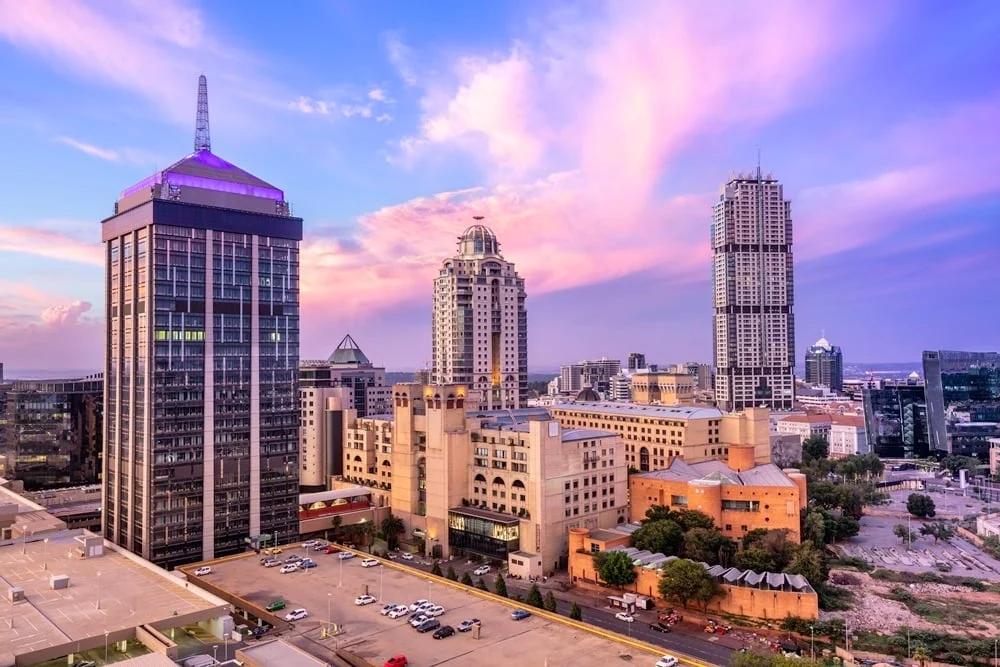
Cover: Sandton skyline, photographed in 2023 by Wikiguy1101, via Wikimedia Commons, CC BY-SA 4.0. General business illustration; web versions may be resized or converted.