Profile at a glance
- Full name
- Fatima Meer: Life, History and Legacy
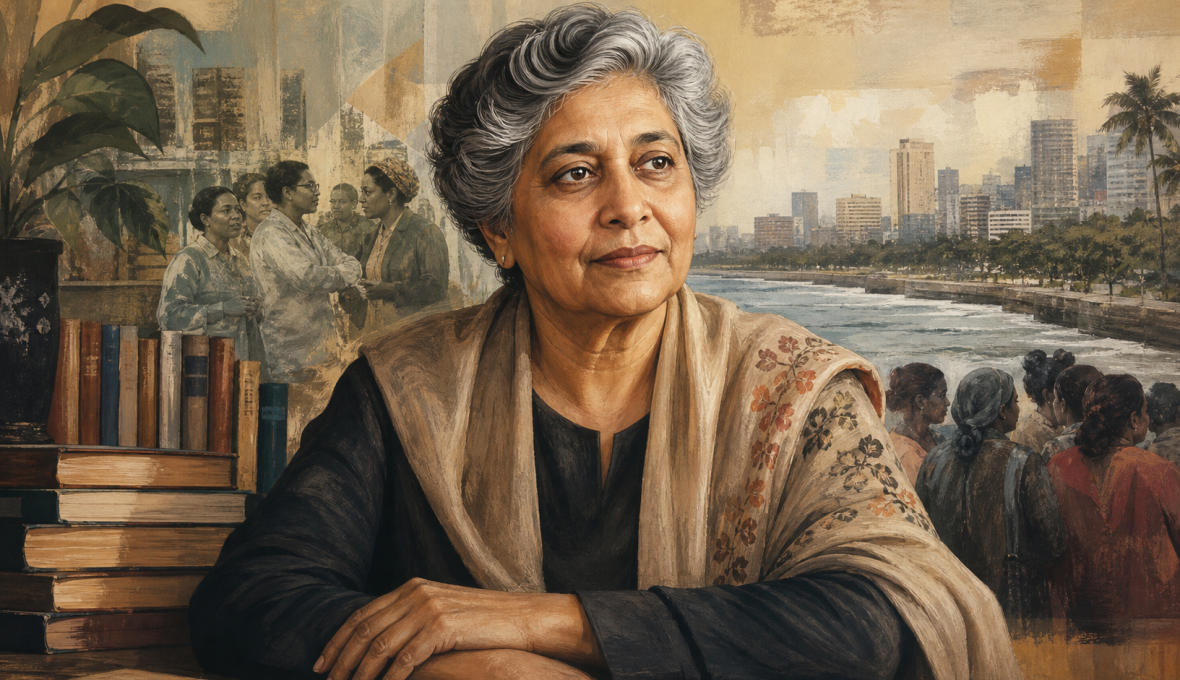
Professor Fatima Meer was a South African sociologist, writer, publisher and anti-apartheid activist whose public life joined scholarship with political organisation. Born in Durban on 12 August 1928, she worked across racial and ideological boundaries while also helping to build institutions led by Black women, students and researchers. Her birth anniversary on 12 August provides a timely reason to revisit a life rooted in KwaZulu-Natal but influential across South Africa.
Who Was Fatima Meer?
Meer was an academic at the University of Natal, a prolific author and an organiser against apartheid. South African History Online describes her as a political leader, academic, publisher, author, human-rights and gender activist, and Gandhian. She became particularly known for research on race, poverty and Indian South African communities, and for a biography of Nelson Mandela written while he was still imprisoned.
Early Life
Fatima Meer was born in Durban’s Grey Street area to Moosa Meer and Rachel Farrel, who took the name Amina after converting to Islam. Her father edited Indian Views, a newspaper that exposed her early to politics, writing and public debate.
She attended Durban Indian Girls’ High School and became involved in political organisation while still young. The 1946 passive resistance campaign against discriminatory land laws shaped her generation of Indian South African activists. Meer later studied at the University of Natal and completed postgraduate work at the University of the Witwatersrand.
In 1950 she married Ismail Meer, a lawyer and activist. Their partnership connected family life, legal work and political organising during decades when apartheid imposed bans, detention and surveillance on opponents.
Rise to Prominence
Meer helped found the Durban and District Women’s League in 1949. She later played a role in the Federation of South African Women, the non-racial organisation associated with the 1956 Women’s March against pass laws.
After the 1949 Durban riots between African and Indian residents, she became involved in efforts to rebuild relationships between communities. This commitment to dialogue remained important in her writing and activism, even when political strategies differed.
Meer joined the University of Natal in 1956 and became one of the first Black women appointed to an academic post at a white South African university. Her teaching and research challenged the apartheid state’s attempt to treat race and inequality as fixed social facts.
Major Achievements
Her academic work included studies of Indian South Africans, family life, poverty and the social effects of racial rule. She established the Institute for Black Research, which supported independent scholarship and community-focused projects at a time when universities and research funding were heavily shaped by apartheid.
Meer also helped establish the Black Women’s Federation in 1975. The organisation created a platform for women working in communities affected by forced removals, poor education and economic exclusion.
As an author and publisher, she produced books and educational material that widened access to Black scholarship. Her biography Higher Than Hope: The Authorized Biography of Nelson Mandela appeared in 1988, before Mandela’s release from prison, and helped international readers understand his political development and family history.
Her practical community work included educational and welfare initiatives. She treated research not as a distant exercise, but as a tool that could help communities describe their own conditions and demand change.
Challenges and Controversies
The apartheid government banned Meer for periods, restricting her movement, public speech and publication. She was detained without trial after the 1976 student uprising and later survived an assassination attempt when her Durban home was petrol-bombed.
Her political relationships were complex. Meer worked in Congress-aligned and Gandhian traditions but also engaged with Black Consciousness activists. She defended non-racial solidarity while taking seriously the need for Black-led institutions. Those overlapping commitments sometimes placed her in debates over strategy, identity and the role of Indians in the wider liberation struggle.
Meer was never simply a ceremonial unity figure. She argued forcefully, criticised organisations she believed were failing poor communities, and sometimes disagreed with allies. A fair account of her legacy should preserve that independence rather than flatten it into a single party narrative.
Role in South African History
Meer connected three fields that apartheid tried to separate: the university, organised politics and community life. Her career demonstrated that scholarship about inequality could be produced with, and not only about, affected communities.
Her work also broadens the geographical story of resistance. Durban and KwaZulu-Natal were central sites of labour, Indian resistance, African nationalism, Black Consciousness and later political violence. Meer’s life shows how these currents met in one city and how women built durable organisations within them.
Later Life and Death
After 1994, Meer continued writing and speaking about poverty, education, race and public ethics. She remained willing to criticise the democratic government when she believed inequality and social need were being neglected.
She died in Durban on 12 March 2010, aged 81. Tributes recognised both her intellectual contribution and her decades of activism.
Legacy
Fatima Meer’s legacy lies in the institutions she helped create, the record she left through books and research, and her insistence that political freedom must be accompanied by social and economic dignity. She belongs in South Africa’s history not only as an associate of famous leaders, but as an organiser and thinker in her own right.
Her story also corrects an archive that can over-centre national presidents and Johannesburg or Cape Town politics. It gives greater weight to a Muslim woman, an Indian South African intellectual and the history of Durban and KwaZulu-Natal.
Did You Know?
- Meer was born in Durban on 12 August 1928.
- She became one of the first Black women appointed to an academic position at a white South African university.
- She founded the Institute for Black Research.
- Her authorised Mandela biography, Higher Than Hope, was published before his release from prison.
- Apartheid authorities banned and detained her, and she survived a petrol-bomb attack on her home.
Related Historical Figures
Meer worked within political networks that included Nelson Mandela, Chief Albert Luthuli and many organisers in the Federation of South African Women. Her engagement with Black Consciousness also places her story alongside Steve Biko and women organisers who built independent Black institutions in the 1970s.