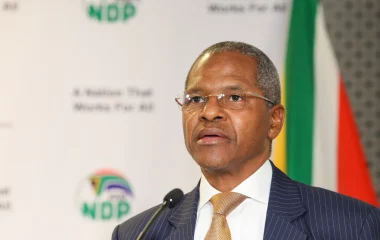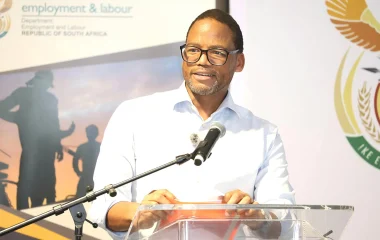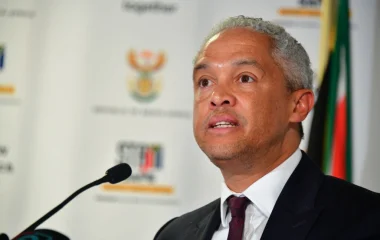
Deputy Minister of Health, Dr Joe Phaahla, has urged Southern African Development Community (SADC) member states to move beyond statements of solidarity and adopt practical instruments to strengthen health systems, secure medical supply chains and address climate-induced health threats.
The Deputy Minister addressed a gala dinner hosted in honour of the SADC Ministers of Health and Ministers Responsible for HIV and AIDS meeting ahead of their regional meeting in Durban, KwaZulu-Natal.
He emphasised that shared regional challenges require collective solutions rather than isolated national responses.
“The strength of our region has always rested on this understanding that we are stronger together.
“And I’m sure this is what we will be emphasising as the [Executive] Secretary reminded us of how we dealt with other epidemics, including just a few years ago, the issue of the COVID-19 pandemic,” Phaahla said.
The Joint Meeting of Southern African Development Community (SADC) Ministers of Health and Ministers responsible for HIV/AIDS kicked off on Monday.
He noted that lessons from the pandemic highlighted the urgency of practical collaboration, particularly in pooled pharmaceutical procurement, local manufacturing and disease surveillance.
“We will not succeed by competing against each other, but we must look at the strengths of each of our countries as a region [and] also continental.
“With all of these challenges with limited resources, we can specialise even in the areas of surveillance, whether it’s about water surveillance [or] environmental surveillance, there are things which might be much stronger being done by one country better than the other,” Phaahla stated.
The Deputy Minister highlighted that SADC countries are confronting overlapping pressures.
“Our countries are confronting multiple and interconnected pressures. Infectious diseases…HIV and AIDS, which remain a major challenge, tuberculosis, malaria remain a major challenge, but also climate change with its related shocks, food insecurity.
“Floods…are a major headache especially in this part of our country. But today we’re not agonising about floods, we’re agonising about the El Nino, the drought…where communities are struggling to find water. This climate change is extreme. One time we’re worried about floods, the next time we’re worried about the drought,” he explained.
Beyond epidemiological and environmental threats, Phaahla warned that the broader global health environment is shifting, placing health systems under heightened financial strain.
“Development assistance is under pressure. Competition for resources is intensified.
“Supply chains remain vulnerable, [while] the cost of living and cost of building resilient health systems is also rising, with rising fuel costs because of matters out of our control,” he said.
To navigate these realities, the Deputy Minister called on SADC health leaders to abandon a “business as usual” approach during their deliberations.
“We cannot continue to approach these issues – the challenges that are regional in nature – as though they are exclusive to one country and not just national problems. We must respond to them nationally, but also regionally.
“We cannot speak of health security while remaining dependent on fragile supply chains. And we cannot aspire to universal health coverage if the financing of essential services remains uncertain and unsustainable,” he said. – SAnews.gov.za
Source: Original report at SAnews.gov.za.