South Africa’s national parks protect much more than familiar safari scenes. This shortlist includes mountain landscapes, coastal forests, wetlands, desert flowers and major sites of human history. Use it to choose the kind of trip you want, then plan around the particular park’s routes, seasons and facilities.
How we selected these 10
These ten editorial selections draw on SANParks’ official park, activity and visitor-information pages, checked on 2 November 2026. We selected for contrasting landscapes and visitor experiences across several provinces, rather than visitor totals, paid placements or a numerical league table. The guide is based on desk research and does not claim that we visited or tested every park. Descriptions are starting points for planning; current notifications take precedence over older general visitor information.
At a glance
| Selection | Area | Why consider it |
|---|---|---|
| 1. Kruger National Park | Mpumalanga and Limpopo | A large self-drive wildlife landscape |
| 2. Addo Elephant National Park | Eastern Cape | Elephants and a wider conservation story |
| 3. Golden Gate Highlands National Park | Free State, near Clarens | Sandstone cliffs and mountain scenery |
| 4. Mapungubwe National Park | Limpopo | Cultural history and river landscapes |
| 5. Garden Route National Park | Western and Eastern Cape sections | Forests, rivers and a varied coastline |
| 6. Augrabies Falls National Park | Northern Cape | The Orange River and dramatic geology |
| 7. Mountain Zebra National Park | Eastern Cape, near Cradock | Open country and a conservation focus |
| 8. Namaqua National Park | Northern Cape | Seasonal flowers and arid-land diversity |
| 9. West Coast National Park | Western Cape, near Langebaan | A lagoon, birding and coastal habitats |
| 10. Table Mountain National Park | Cape Peninsula, Western Cape | An urban-edge mountain and coastal park |
1. Kruger National Park
Kruger’s scale is part of both its appeal and its planning challenge. SANParks describes public rest camps, self-drive opportunities, guided activities and cultural heritage alongside the park’s wildlife. It is a strong option for people who want to spend several days getting to know a particular part of a park, rather than chase an impossible full-park checklist. Decide on a region and realistic driving distances before booking camps. A patient visit can include birds, vegetation and archaeological context as well as mammals. No route or length of stay guarantees a particular sighting.
Plan your visit: Check gate and camp notices, including current Skukuza access maintenance information. SANParks identifies Kruger as a malaria area; use its visitor guidance and seek travel-health advice appropriate to your circumstances.
Official information and current visitor details ↗
2. Addo Elephant National Park
Addo’s name draws attention to elephants, but a good visit should leave room for the wider ecological story. SANParks describes a range of mammals and different habitats within the expanded park. This is an option for visitors who want a wildlife trip in the Eastern Cape and are willing to let the day unfold at the pace of observation. Do not measure success only by a list of large animals. The park’s conservation work also involves less conspicuous species and the relationships between plants, herbivores and predators. Look closely and drive within the rules.
Plan your visit: Plan around the section and gate you will actually use. Confirm self-drive and guided activity arrangements separately, and follow the rule that visitors leave vehicles only in designated areas.
Official information and current visitor details ↗
3. Golden Gate Highlands National Park
Golden Gate is a reminder that a national-park trip need not centre on a safari drive. Its sandstone cliffs, mountain setting and walking opportunities offer a landscape-led experience in the northeastern Free State. SANParks also lists birding and the Basotho Cultural Village among the park’s attractions. Choose the activities that match your interests rather than trying to turn one short stay into every possible outing. The changing light on the rock formations can reward a slower pace. Plan for the conditions of a highland environment, not just the appearance of a sunny photograph.
Plan your visit: Check the chosen trail and activity arrangements directly. SANParks’ current notifications list the Glen Reenen filling station as closed until further notice, so organise fuel before entering the park.
Official information and current visitor details ↗
4. Mapungubwe National Park
Mapungubwe stands out for the relationship between a significant African cultural landscape and a wildlife environment. SANParks explains the kingdom associated with Mapungubwe Hill and the setting around the Limpopo and Shashe rivers. A trip can therefore be built around heritage and landscape as much as animal observation. Choose it when you want time to understand a place rather than simply pass through viewpoints. Current facility notices are especially important here, because the interpretation and accommodation components of a visit can be affected separately by renovation work.
Plan your visit: SANParks announced the museum’s closure for renovations from 30 October 2026. Check its reopening and camp notices before booking. The park also carries a malaria alert; consult official guidance and appropriate travel-health advice.
Official information and current visitor details ↗
5. Garden Route National Park
Garden Route National Park spans the distinct Tsitsikamma, Wilderness and Knysna areas, so it should not be approached as one compact attraction with a single entrance. Its forests, rivers, lakes and coastal environments support different kinds of visits. Choose a section and a few relevant activities first, then work out travel and accommodation. It suits people who want walking, birding and landscape variety rather than a conventional game-viewing itinerary. The fragmented geography is an advantage when planned well, but it can create unrealistic expectations if the whole park is treated as a one-day stop.
Plan your visit: Check notices for the precise trail or section. The official page flags a rerouting of the Harkerville Coastal Trail and conservation-fee arrangements at certain forest gates; do not rely on an old free-access description.
Official information and current visitor details ↗
6. Augrabies Falls National Park
Augrabies offers a very different focal point from a mammal-led safari: the Orange River, waterfall and gorge. SANParks describes viewpoints that reveal the scale of the river landscape, with arid-adapted wildlife and vegetation adding context around it. It is a useful choice for travellers interested in geology, photography or a scenic stop that can become a longer stay. The water’s appearance changes with conditions, so do not build a booking around a single dramatic image seen online. The landscape has value in more than one season or level of flow.
Plan your visit: Check which viewpoints and routes are open, and stay behind protective barriers. Plan walks for the conditions and your group’s ability; a short distance in an exposed arid setting can still require careful preparation.
Official information and current visitor details ↗
7. Mountain Zebra National Park
Mountain Zebra protects the Bankberg landscape of uplands, valleys and open plains, with Cape mountain zebra central to its conservation identity. It offers an alternative to denser bush environments for visitors who enjoy a sense of space and the opportunity to observe animals within the wider terrain. SANParks lists self-drive and guided activities, giving travellers different ways to structure their time. Choose it for the overall landscape and conservation story, rather than expecting every species listed by the park to appear on one drive. A focused stay can leave room for both observation and rest.
Plan your visit: Confirm route and vehicle requirements for the activity you choose. Guided experiences require their own availability checks, and a published list of activities should not be read as a guarantee of a departure on every day.
Official information and current visitor details ↗
8. Namaqua National Park
Namaqua is closely associated with its spring flower displays, but timing and conditions matter. SANParks describes the semi-desert Succulent Karoo setting and the usual early-August and September flowering period. This is a trip to plan around current reports, not a promise that a familiar carpet-of-flowers photograph can be reproduced whenever you arrive. Outside that seasonal focus, an interest in arid landscapes and plant adaptation gives the park another dimension. Choose the area and route carefully, since a broad park description does not establish that every road suits every vehicle.
Plan your visit: November is not the usual peak flower-viewing period described by SANParks. For a flower-focused trip, consult current reports nearer the season and confirm route, vehicle and accommodation requirements before booking.
Official information and current visitor details ↗
9. West Coast National Park
The Langebaan Lagoon is the focal point of West Coast National Park, with wetlands, dunes and coastal vegetation adding different habitats around it. It suits travellers whose idea of a good park day includes bird hides, a carefully chosen walk or a quiet time looking across water. The setting also supports recreational activities, but these are governed by specific zones and permissions. Choose your destination within the park rather than assuming every shoreline has the same rules. Seasonal flowers are one attraction among several, so the visit can have a clear purpose beyond a single display.
Plan your visit: Check the current park map and permitted activity zones. Confirm access and conditions for the beach, bird hide or trail you intend to use, and do not assume all lagoon areas are open to the public.
Official information and current visitor details ↗
10. Table Mountain National Park
Table Mountain National Park brings protected mountain and coastal environments into close contact with Cape Town. Its attractions include Table Mountain, Cape Point, Boulders and other distinct areas, so it is best understood as a collection of places to plan for rather than one gate-and-loop visit. That variety gives visitors choices, from managed viewing areas to demanding mountain routes. The proximity of the city must not be mistaken for easy terrain. SANParks specifically warns about changeable mountain weather, challenging hikes and visitor safety. Match the activity to your preparation and ability.
Plan your visit: Use current SANParks route and safety information, and check weather and closures close to departure. Cableway, park entry and optional activities have separate operators or ticket conditions; confirm precisely what you are buying.
Official information and current visitor details ↗
Before you choose
Start with your desired experience and the distance you can realistically travel. Confirm the correct gate, route conditions, vehicle requirements, accommodation and activity bookings through SANParks. Gate hours and conservation fees are distinct from accommodation and optional activities. Pack for the environment and stay within the park’s rules; sightings and seasonal flower displays cannot be guaranteed. For Kruger and Mapungubwe, consult the official malaria information and an appropriate travel-health professional before travelling. Check current park notifications again close to departure.
Sources and updates
Official information checked on 2 November 2026. The source for each profile is linked immediately below it. This is an editorial selection based on published information, not a firsthand review or a measured ranking. Prices are omitted because tariffs and visitor categories can change; confirm them with the operator before booking. No placement in this guide was sold.
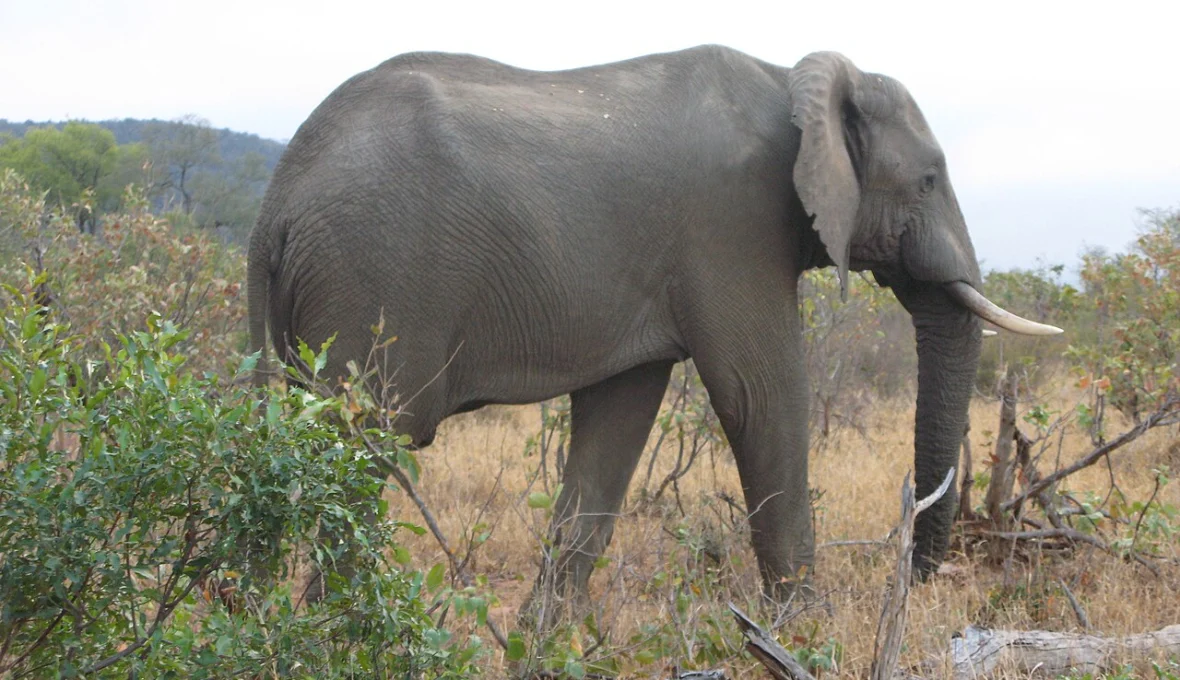
Cover photograph: An African elephant in Kruger National Park, photographed in November 2006. Archive photograph. Photo: Marcmiquel / Wikimedia Commons, CC BY-SA 4.0. Used under that licence; the site may crop the display to fit its cards.