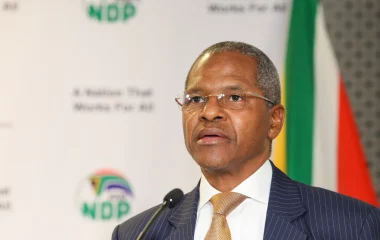
Cooperative Governance and Traditional Affairs (CoGTA) Minister, Velenkosini Hlabisa, has urged all stakeholders in the local government sphere to play a proactive role in supporting municipalities, particularly those facing coalition negotiations.
This as newly elected councillors move to formualte municipal councils, following the 2026 Local Government Elections.
The Minister made the call during a Special Minister and Members of Executive Councils (MINMEC) meeting held on Tuesday, aimed at considering the Guidelines for Stable Coalitions in Local Government to help municipalities navigate coalition arrangements and promote stability in the new term.
“As a sector, we must play a proactive role in supporting municipalities throughout this process, particularly those where no political party has secured an outright majority and where negotiations between political parties may result in deadlocks or delays in constituting councils,” Hlabisa stated.
The meeting brought together CoGTA leadership, representatives of the National House of Traditional and Khoi-San Leaders, provincial MECs responsible for local government and executives from the South African Local Government Association (SALGA), the Municipal Demarcation Board and CoGTA’s national and provincial structures.
The special MINMEC followed a technical MINMEC meeting held on Monday, where the draft guidelines were considered and technical inputs made before the revised document was presented to the political meeting for consideration and approval.
Hlabisa commended the CoGTA sector for its work ahead of and during the 2026 Local Government Elections, noting that preparations and coordination across government helped municipalities prepare for the democratic process.
Navigating hung councils
Following the conclusion of the elections on 4 November 2026, the immediate priority is to ensure that newly elected municipal councils are constituted within the prescribed legislative and constitutional timeframes.
The election results have produced several hung councils, where no single political party secured an outright majority – requiring political parties to negotiate coalition arrangements or other forms of cooperation to establish governing majorities.
The Minister said these circumstances require political maturity and a shared commitment to ensuring that coalition arrangements promote stability, accountability and continuity in municipal governance.
Interim measures
Hlabisa noted that the Local Government: Municipal Structures Amendment Bill of 2026, commonly known as the Municipal Coalitions Bill, is still undergoing parliamentary processes and is therefore not yet available to provide the intended legislative framework for managing coalition arrangements in local government.
The newly approved guidelines will serve as an interim framework to assist political parties and municipalities in negotiating coalition agreements, managing disagreements and establishing stable governance structures while the legislative process continues.
The guidelines seek to address challenges experienced in municipalities where unstable coalitions have resulted in frequent changes in political leadership, delays in decision-making and disruptions to municipal administration.
Hlabisa highlighted that in the past, unstable coalitions have led to poor governance, when “the power relations between parties in a coalition change, leading to the frequent, and sometimes opportunistic, removal and election of speakers and mayors.”
Furthermore, delays in electing officials or filling vacancies may result in a power vacuum.
“A dysfunctional council inevitably affects the operations of the administration, which negatively impacts service delivery to residents.
“To this effect, the Guidelines for Stable Coalitions aim to assist coalition governments in councils to provide stable and effective leadership, resulting in a more effective administration that provides uninterrupted services to residents,” the Minister said.
Statutory timelines
The meeting was informed that the Electoral Commission of South Africa is expected to officially publish the election results in the Government Gazette this week.
The publication triggers the statutory 14-day period within which metropolitan and local municipal councils must be constituted.
According to the timelines outlined at the meeting, this process will run from 12 to 26 November 2026.
The constitution of district municipal councils will follow once all local municipal councils within the respective districts have been constituted. District councils cannot be established before the constitution of their respective local councils.
Hlabisa urged political parties and municipalities to ensure that the process is completed within the prescribed timeframes, warning that delays could undermine municipal governance and service delivery.
He said where municipalities fail to constitute their councils within the stipulated period, the matter must be addressed in accordance with the applicable legislative provisions and procedures.
“After the constitution of these councils, CoGTA, together with provincial governments and other sector stakeholders, will continue providing consistent support, guidance and oversight to municipalities throughout the new term,” he said.
This support will be particularly important for municipalities with hung councils and those previously classified as dysfunctional or experiencing significant governance and administrative challenges.
The Minister reiterated that political arrangements should not undermine municipal administration, interrupt service delivery, or compromise municipalities’ ability to fulfil their constitutional obligations.
He called on provincial MECs to remain available to municipalities throughout the council-constitution process and encouraged political parties to use the guidelines to adopt a common approach towards stable, functional, and accountable local government. – SAnews.gov.za
Source: Original report at SAnews.gov.za.