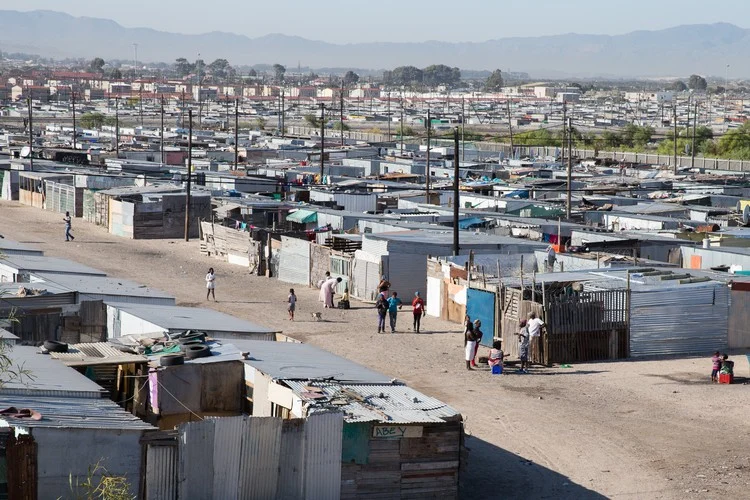
Blikkiesdorp in Delft was built by the City of Cape Town in 2007 as a temporary home for people evicted in the city. Many are still there nearly two decades later. Archive photo: Ashraf Hendricks
- The SA Human Rights Commission has gone to court to stop the City of Cape Town from finalising the sales of 49 municipal properties auctioned in February.
- It says the City sold the land without considering the need for affordable housing, and attached no conditions requiring buyers to build affordable housing.
- Mayor Geordin Hill-Lewis calls the case “electioneering” and says the City will oppose it.
The South African Human Rights Commission (SAHRC) has accused the City of Cape Town of failing to consider the pressing need for affordable and social housing when it auctioned off 49 municipal-owned properties earlier this year.
The SAHRC has applied to the Western Cape High Court for an interdict to stop any further steps in the sale and transfer of the properties until the court has reviewed the City’s decisions. It wants the court to declare that the decisions to sell the properties “are unconstitutional, unlawful, irrational, and/or invalid”, set them aside, and send the matter back to the City for reconsideration.
Mayor Geordin Hill-Lewis said the City will oppose the application.
In an affidavit filed on 5 October, SAHRC commissioner Philile Ntuli says the commission became aware of the planned auction in January.  It was concerned that the City had not imposed enforceable conditions requiring affordable or social housing, and that the public participation it had relied upon for most of the properties was outdated. For one property, public participation took place in 2010, 16 years ago.
On 29 January, the commission asked the City for information about the properties, the legal basis for selling them, and any assessment of the impact on housing and spatial planning.
The City replied on 12 February that it had complied with the Municipal Finance Management Act and the Municipal Asset Transfer Regulations. It said its line departments, including human settlements, had been consulted and none had asked to keep any of the properties for municipal use.
The commission says the reply “did not adequately address” its concerns, and one of the two web links the City supplied was dead.
On 20 February, representatives of the commission met the mayor online. According to the affidavit, he said the City “envisaged that the land would ultimately be utilised for housing development” and that the City does not have the money to deliver affordable housing, but the private sector does.
But the mayor also told the commission that “no formal conditions of sale would be attached to the auction requiring the land to be used for affordable housing or any specific housing development”, the affidavit says.
On 22 February, the commission asked him to postpone the auction.
In a letter two days later, he declined, citing “reputational and fiscal damage” to the City.
He denied promising that the land would be used for affordable housing, and said buyers would “logically only erect and then offer accommodation which is affordable to persons who are resident (or aspire to be resident) in those areas”.
Attaching conditions of sale would be detrimental to market enthusiasm, he wrote, according to the affidavit.
Other attempts to stop the auction had already failed. On 24 February, the Western Cape High Court dismissed attempts to block the release of the properties, TimesLIVE reported.
After the auction
The auction went ahead on 26 February, but the sales are not final. In April, Speaker Felicity Purchase told the commission that due diligence on the properties had not been completed and no timeline could be given.
The City’s Immovable Property Adjudication Committee will give the final approval for each sale.
Only three high-value sales need a final vote by council: Good Hope Centre, the “truck stop” property in Epping, and a property in Century City.
The Speaker refused to put the commission’s concerns before the council, because the commission had not commented during the public participation period.
Ntuli says the commission wants all the transfers halted because once transferred a “review may be rendered ineffective”.
She says, “Municipally owned land is not merely a financial asset to be lightly disposed of”. If the City’s record shows it complied with its obligations, the commission will consider withdrawing the case.
In a statement on 29 October, Hill-Lewis said the application “appears more like electioneering coming a week before elections”.
“The SAHRC is behaving like a political party, not a credible Chapter 9 organisation,” he said. The local government elections took place on 4 November.
He said the 49 sites “include 28 residential-zoned properties to serve the local demand for housing” in areas including Mitchells Plain, Maitland, Goodwood, Kraaifontein, Somerset West and Durbanville.
Commercial and industrial sites would create jobs in areas such as Atlantis, Delft and Parow. Land sales have raised R628-million this term, which goes back into services and infrastructure, he said.
“Rather than have state land lie idle, the City is leveraging land for economic development, social good and affordable residential opportunities,” he said.
The City has until early December to file its answering papers. A court date is yet to be determined.
© 2026 GroundUp. This article is published under the GroundUp Republication Licence Version 1.0. Email [email protected] to request permission to republish.