Johannesburg’s history cannot be told by one building or one famous name. These ten selections move between family homes, political memory, art, science and transport. Use the guide to build a thoughtful visit around a subject you care about, with enough time to listen and read rather than rush through ten stops.
How we selected these 10
We considered a range of public-facing Johannesburg museums and heritage experiences, drawing on the institutions’ own websites, Wits University, DITSONG and City of Johannesburg information. We selected for a distinct subject and an identifiable visitor offering, not online popularity or paid placement. The sequence is editorial, not a measured league table. This guide is based on desk research, with official source information checked on 2 November 2026; it does not claim personal visits or reviews.
At a glance
| Selection | Area | Why consider it |
|---|---|---|
| 1. Apartheid Museum | Ormonde | The broader history of apartheid |
| 2. Constitution Hill | Braamfontein | Prison history and constitutional democracy |
| 3. Mandela House | Orlando West, Soweto | Personal history in a family home |
| 4. Hector Pieterson Memorial and Museum | Orlando West, Soweto | Remembering the 1976 uprising |
| 5. Origins Centre | Wits, Braamfontein | Human origins, rock art and symbolism |
| 6. Wits Art Museum | Braamfontein | African art and changing exhibitions |
| 7. DITSONG National Museum of Military History | Saxonwold | Material history of conflict |
| 8. James Hall Museum of Transport | La Rochelle | How the city moved |
| 9. Liliesleaf | Rivonia | The underground movement and Rivonia history |
| 10. Sci-Bono Discovery Centre | Newtown | An interactive science contrast |
1. Apartheid Museum
Start here if you need a national framework for Johannesburg’s many struggle landmarks. The museum traces the apartheid system and its eventual dismantling, while temporary exhibitions can add a particular person or movement to that account. Its value is the opportunity to examine a sustained narrative instead of collecting isolated historical facts. The subject is demanding; plan a visit when your group can concentrate and discuss what it has seen. For international visitors, it can also supply context that makes a later trip to Soweto or Constitution Hill more meaningful.
Plan your visit: Allow a substantial part of the day. The museum has announced a closure for 4 November 2026. Confirm current opening days and exhibitions on the official website before travelling.
Official information and current visitor details ↗
2. Constitution Hill
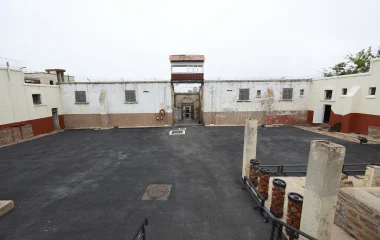
Constitution Hill invites a comparison between the treatment of people under earlier systems of power and the rights protected by the Constitutional Court today. The former prison buildings are central to that experience, rather than simply scenery around the court. Choose it for an outing that connects the physical city with questions of justice and citizenship. A guided interpretation is especially helpful when different members of a group arrive with different levels of historical knowledge. Treat the prison precinct and court as related but distinct visitor experiences, with their own practical arrangements.
Plan your visit: Read the official tour descriptions and choose the appropriate length. Confirm the court’s access arrangements separately, and reserve group tours when required rather than relying on walk-in availability.
Official information and current visitor details ↗
3. Mandela House
The modest scale of Mandela House helps shift attention from a world-famous public figure to family life and the domestic setting of political history. The museum preserves and presents the Mandela family legacy at the Vilakazi Street address. This is a place to value detail, interpretation and context; it is not a large museum whose importance can be measured in floor area. It works well for a visitor already familiar with the national story who now wants to understand one household within it. A considered local itinerary can connect the visit with other Soweto heritage sites.
Plan your visit: Bring an accepted cashless payment method and check holiday closures. Agree transport and any guide arrangements beforehand, and confirm whether the museum admission is included in a wider tour booking.
Official information and current visitor details ↗
4. Hector Pieterson Memorial and Museum
This museum and memorial place the 1976 student uprising within the neighbourhood where the history unfolded. City information describes the connection between the museum’s location and the gathering of students protesting the imposition of Afrikaans in schooling. Choose this experience to understand youth resistance and public memory, with the memorial approached as a place of remembrance. It also provides an important perspective alongside a visit to Mandela House: the story of change involves communities and young people as well as widely recognised leaders. Allow space for questions rather than treating the stop as a photograph alone.
Plan your visit: Confirm the museum’s current admission and hours directly. The memorial and museum are related spaces, but access to one should not be treated as proof that all exhibitions are open.
Official information and current visitor details ↗
5. Origins Centre
Origins Centre widens the historical lens far beyond Johannesburg’s mining era. Its exhibitions explore human origins, technology, art, symbolism and southern African rock-art traditions. That makes it a useful contrast to a day focused on twentieth-century politics. The interest lies in how knowledge and meaning are interpreted, not only in the age of the objects on display. Visitors with an interest in archaeology, art or education can approach the same material from different directions. The Wits setting also connects the museum to an active research and teaching environment.
Plan your visit: Wits asks visitors to bring identification for campus security. Check the appropriate entrance, parking and guided-tour arrangements on the current visitor page, especially if arriving with a group or by e-hailing.
Official information and current visitor details ↗
6. Wits Art Museum
Wits Art Museum is dedicated to African art, with historical and contemporary works represented in its collections and exhibition programme. It is worth choosing when you want the day to include artistic practice as well as political or social history. The exhibitions are the experience, so consult the current programme before deciding whether a particular subject suits your interests. Avoid assuming that everything in a museum’s collection is permanently on display. A smaller, attentive visit can be more rewarding than attempting to see an imagined checklist of famous works.
Plan your visit: Check WAM’s current public opening days and holiday closures. Enquire about tours for school, university or other organised groups, and confirm which exhibitions are available during your planned visit.
Official information and current visitor details ↗
7. DITSONG National Museum of Military History
This institution preserves South African military history through its museum collections and historical interpretation. It adds a different set of objects and questions to a Johannesburg museum itinerary: how conflicts are remembered, what institutions choose to preserve, and how material evidence is explained to later generations. It suits visitors interested in military equipment and history, but the experience need not be limited to technical enthusiasts. Read the interpretation alongside the objects and ask whose experiences are represented. Approach the visit as an opportunity to examine history, rather than romanticise warfare.
Plan your visit: Use the DITSONG visitor page for current admission and access. School groups should arrange their booking with the museum, and visitors should ask about any specific collection or facility before travelling for it.
Official information and current visitor details ↗
8. James Hall Museum of Transport
Transport history gives everyday objects a place in the story of Johannesburg. The James Hall collection includes animal-drawn vehicles, bicycles, motor vehicles, buses, trams and fire engines. The attraction is seeing different forms of mobility together, which can prompt useful conversations about how streets and working lives changed. It is a good option for a mixed-age group with an interest in machines, design or the history of the city. A museum display is not a ride experience, so set expectations accordingly and look for the stories attached to the vehicles.
Plan your visit: The museum’s website describes group tours by booking. Confirm current public access directly, particularly if a school or club needs a guide, accessibility support or time with a specialist collection.
Official information and current visitor details ↗
9. Liliesleaf
Liliesleaf’s significance comes from its role as a clandestine base of the liberation movement and the 1963 police raid associated with the Rivonia Trial. Its exhibitions locate that political history in a site where people worked and organised. It is worth considering if you want to move beyond a general account of apartheid into the circumstances of underground resistance. The physical setting can help make an abstract timeline more concrete. As with other struggle sites, a careful visit should distinguish the events at the property from the later proceedings and broader national history.
Plan your visit: The official site states that Liliesleaf has been operational since 2022. Confirm the current visitor and tour arrangements before travelling, rather than relying on older online reports about its closure.
Official information and current visitor details ↗
10. Sci-Bono Discovery Centre
Sci-Bono is a science discovery centre rather than a conventional history museum, and that distinction is part of why it belongs in this wider museum-and-heritage itinerary. Interactive exhibits give visitors a different way to learn after a morning of reading historical material. Its maths, science, engineering and technology focus makes it a useful choice for families and school groups. The experience rewards participation and questions. Check the current programme carefully, because past travelling exhibitions remain searchable online and should not be confused with what is available during your visit.
Plan your visit: Confirm general admission separately from workshops or special activities. For a school group, ask about curriculum-linked programmes, group size and booking requirements so the visit fits the learners’ needs.
Official information and current visitor details ↗
Before you choose
Plan by area: Soweto, Braamfontein, Newtown, Ormonde, Saxonwold and Rivonia are not one compact museum precinct. A good starting itinerary pairs two related experiences and leaves time to travel and reflect. Check the latest admissions, tour availability and holiday closures directly with each institution. Some material deals with violence and oppression, so consider your group’s age and interests. Do not assume a displayed collection, special exhibition or guided programme is available every day.
Sources and updates
Official information checked on 2 November 2026. The source for each profile is linked immediately below it. This is an editorial selection based on published information, not a firsthand review or a measured ranking. Prices are omitted because tariffs and visitor categories can change; confirm them with the operator before booking. No placement in this guide was sold.
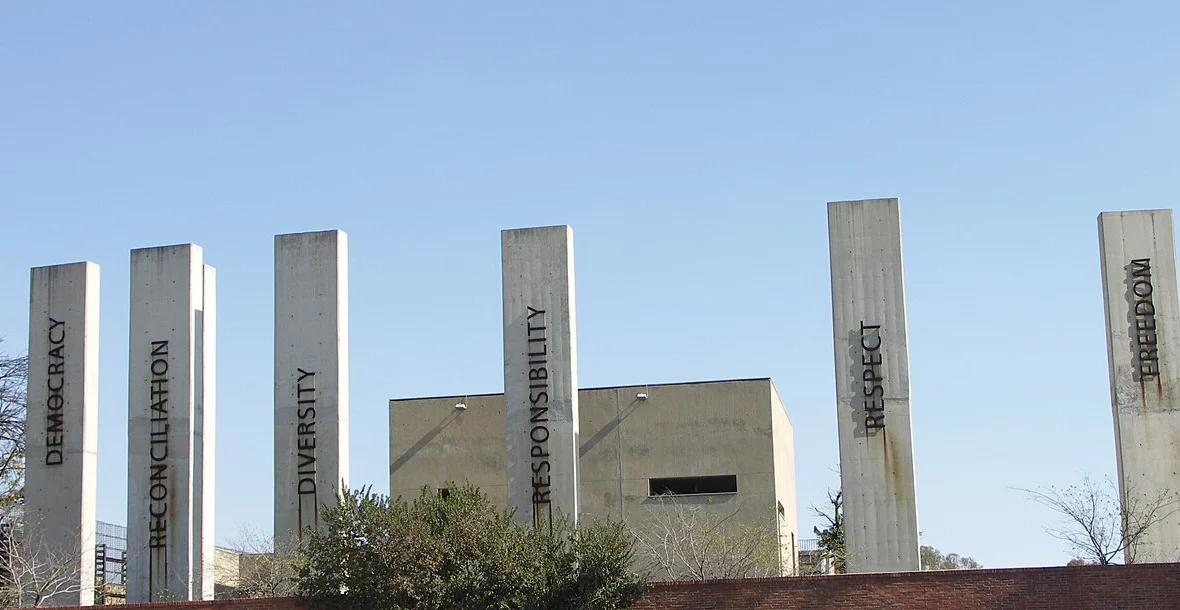
Cover photograph: The Apartheid Museum in Johannesburg, photographed in May 2008. Archive photograph. Photo: NJR ZA / Wikimedia Commons, CC BY-SA 3.0. Used under that licence; the site may crop the display to fit its cards.