For decades, competing global development models have shaped sub-Saharan Africa’s agricultural landscape. Traditional western donors, such as the Norwegian Agency for Development Cooperation (Norad), have promoted climate-smart agricultural systems such as conservation agriculture, working through non-governmental organisations. Emerging donors, such as China, champion commercial, market-driven models through private-sector contract farming. They tend to focus on high-yielding export cash crops such as cotton.
Zambia is a good place for studying these dynamics. Donor aid remains critical. The country’s agricultural investment needs exceed the financial resources available from government budgets, domestic financial institutions and private investors. In 2024, the government budget allocation to agriculture, fisheries and livestock was ZMW 13.83 billion (US$528 million), which was 7.8% of the national budget. In the same year, the country received US$108 million in international development financing for its agricultural sector.
As food systems and development researchers at the University of Zambia, we set out to examine whether the origin of aid matters to the outcome. Does it influence whether a rural family has enough food to eat, or do local socio-ecological realities and farming practices matter more?
The role of agriculture is hugely important in Zambia. The agricultural sector accounts for 60% of total national employment. About 70% of the population relies on agriculture for its livelihoods, income and household food security.
Our study examined how top-down foreign aid approaches interact with agrarian realities in eastern Zambia. We aimed to disentangle the relative impacts of donor affiliation (Norwegian versus Chinese aid) and farming systems (conservation agriculture versus conventional farming) on household food security. Conservation agriculture is characterised by minimal soil disturbance, permanent soil cover, and crop rotations that include legumes. Conventional agriculture involves ploughing or ridging and may focus on growing a single crop in the same field for a long time.

Our research produced four main findings:
-
localised farming practices drive household food security and resilience, far outweighing donor identity
-
conservation agriculture achieves better food security outcomes than conventional agriculture
-
low crop diversity makes farmers vulnerable
-
food insecurity remained deeply structural, affecting women-headed households most.
We concluded from our findings that sustainable agrarian transitions require interventions that address systemic inequalities, particularly in relation to women, and empower locally adapted, ecologically diverse farming systems such as mixed farming systems.
Local farming practices outweigh donor identity
For our study we surveyed over 545 smallholder households in Chipata and Mambwe districts. Eastern Zambia has a variety of climate regions, and both models – the Norwegian-backed conservation projects and Chinese-backed contract farming – operate there.
Read more:
Are Chinese investors grabbing Zambian land? Study finds that’s a myth
We started studying the projects in 2014, as part of a project examining donor aid effectiveness in Zambia and Malawi, and continued engaging with the question over the years. We asked farmers about their farming practices, their households, and their food security. In these communities, men are seen as the primary landowners and household heads. About half the households reported that they had not had enough food in the past 12 months.
We report four key findings.
Local farming systems override donor identity
After controlling for farming practices and geographic context, we found that donor affiliation made little difference to food security outcomes. Smallholder conservation agriculture improved food security outcomes by minimising climate risk and increasing crop yields. In contrast, donor aid projects tend to focus on predefined goals that rarely account for local environmental and socio-cultural conditions.
Conservation agriculture drives resilience
Farmers who adopted conservation agriculture achieved better food security outcomes than those using conventional agriculture. Conservation agriculture households consumed a broader range of foods from different food groups, such as carbohydrates, animal proteins, plant proteins, dairy, vegetables and fruits.
Conservation agriculture also proved vital for bridging the lean season. This is the period before harvest, between December and March, when farming households run out of grains from the previous harvest. Where farmers got help to prepare land earlier, they also harvested earlier (nine days before conventional farmers).
Export monocultures are risky
Donors that wanted commercial outcomes created new vulnerabilities. Chinese-backed initiatives, focused primarily on cotton contract farming, provided input loans in exchange for exclusive crop sales. While this model created market opportunities, it also reduced crop diversity. Households under Chinese-backed projects cultivated an average of 2.98 crops, compared with 3.63 under Norwegian-backed programmes that emphasised crop diversification. In drought-prone areas, tying farmers to a single export crop without supporting food crops or agroforestry stripped households of their traditional ecological safety nets.
Structural inequities and blind spots remain
Across all sample groups, female-headed households recorded lower dietary diversity and held fewer assets such as fruit trees and livestock. Cultural norms and patriarchal land tenure systems restrict women’s access to fertile land, extension services and agricultural labour.
When female farmers adopted conservation agriculture despite these barriers, their self-reported food security improved.
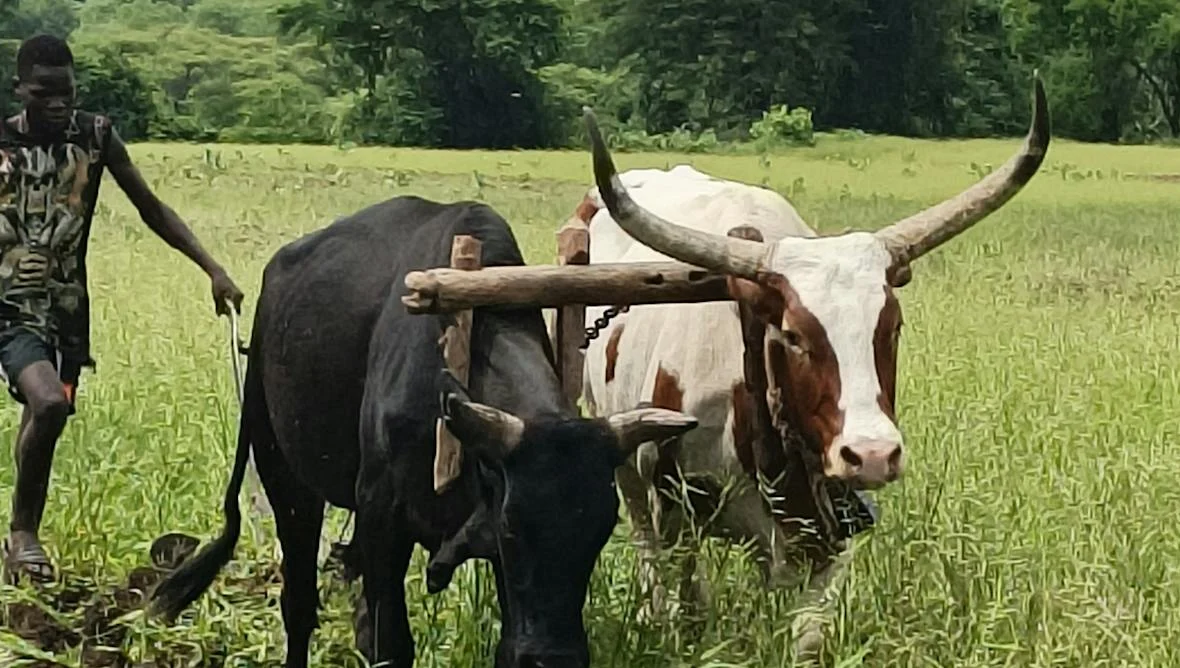
Neither Norwegian nor Chinese projects made livestock husbandry part of their interventions. Their models ignored a vital part of local mixed-farming systems that provides animal protein, organic manure, draught power and alternative income during crop failures. Mixed farming systems are more resilient in this region, where dependence on rain-fed agriculture is the norm.

Rethinking aid
Our study identified three strategies that could improve the effectiveness of donor aid in building rural resilience. Development partners and policymakers can:
-
support crop diversification, soil conservation and agroforestry rather than single export cash crops
-
explicitly address women’s access to secure land tenure, extension services and labour-saving tools
-
integrate livestock husbandry into aid portfolios alongside crop production.
Read more:
Direct support to small scale farmers reduces poverty – what Zambia is doing right
Overall, international development agencies must move away from rigid, top-down blueprints. Simply changing a donor’s flag or rebranding an aid programme does not inherently improve smallholder livelihoods. Real change requires funding flexible, farmer-led initiatives tailored to local socio-ecological realities.