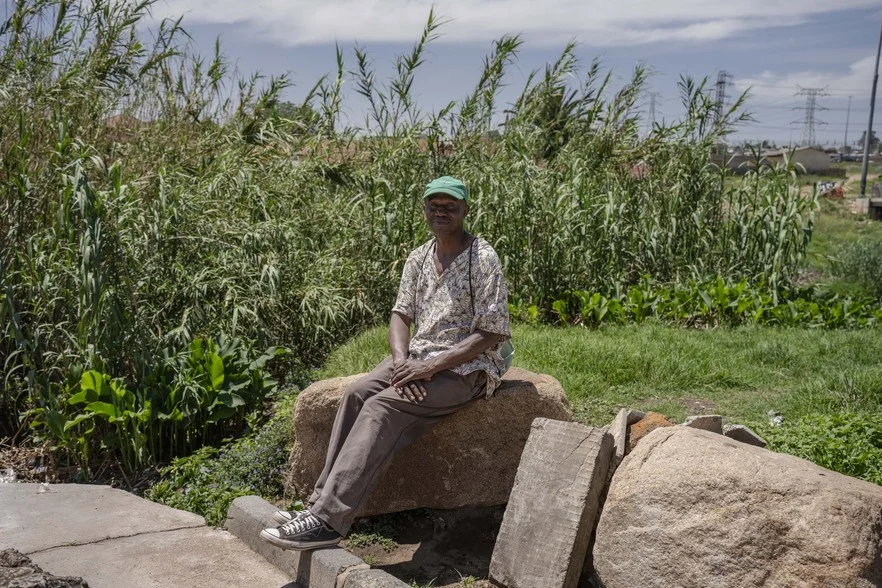
Samuel Mashimbi, co-founder of EnviroCare Thembisa, works on environmental solutions to the pollution crisis in Thembisa. Photos: Ihsaan Haffejee
- The wetland ecosystem surrounding the Kaalspruit in Thembisa has come under increasing pressure as urban development has expanded.
- Residents living alongside the river say sewage spills, illegal dumping and other pollution have driven away wildlife.
- Resident Samuel Mashimbi wants to turn a piece of land beside the river into a botanical garden.
Samuel Mashimbi stands beside the Kaalspruit in Thembisa, Ekurhuleni, and imagines what it could become: an urban green space filled with indigenous trees, birds and wildlife.
The lifelong Thembisa resident remembers spending time here as a child and developing a love for nature. He wants to restore the area, which he describes as an “urban lung”, and turn it into the Thembisa Botanical Garden.
“Picture it – hundreds of indigenous trees and plants, people learning about and caring for their environment,” he says.
But the river running through the site is heavily polluted. Rubbish accumulates along its banks, sewage flows into the waterway and much of the vegetation has disappeared.
Mashimbi says the environment he remembers from childhood is disappearing.
“It’s been ages since I’ve seen a frog, a toad, or a crab,” he says. “People are dumping rubble and trash on top of wetlands, while sewage runs into the water from blocked pipes.”
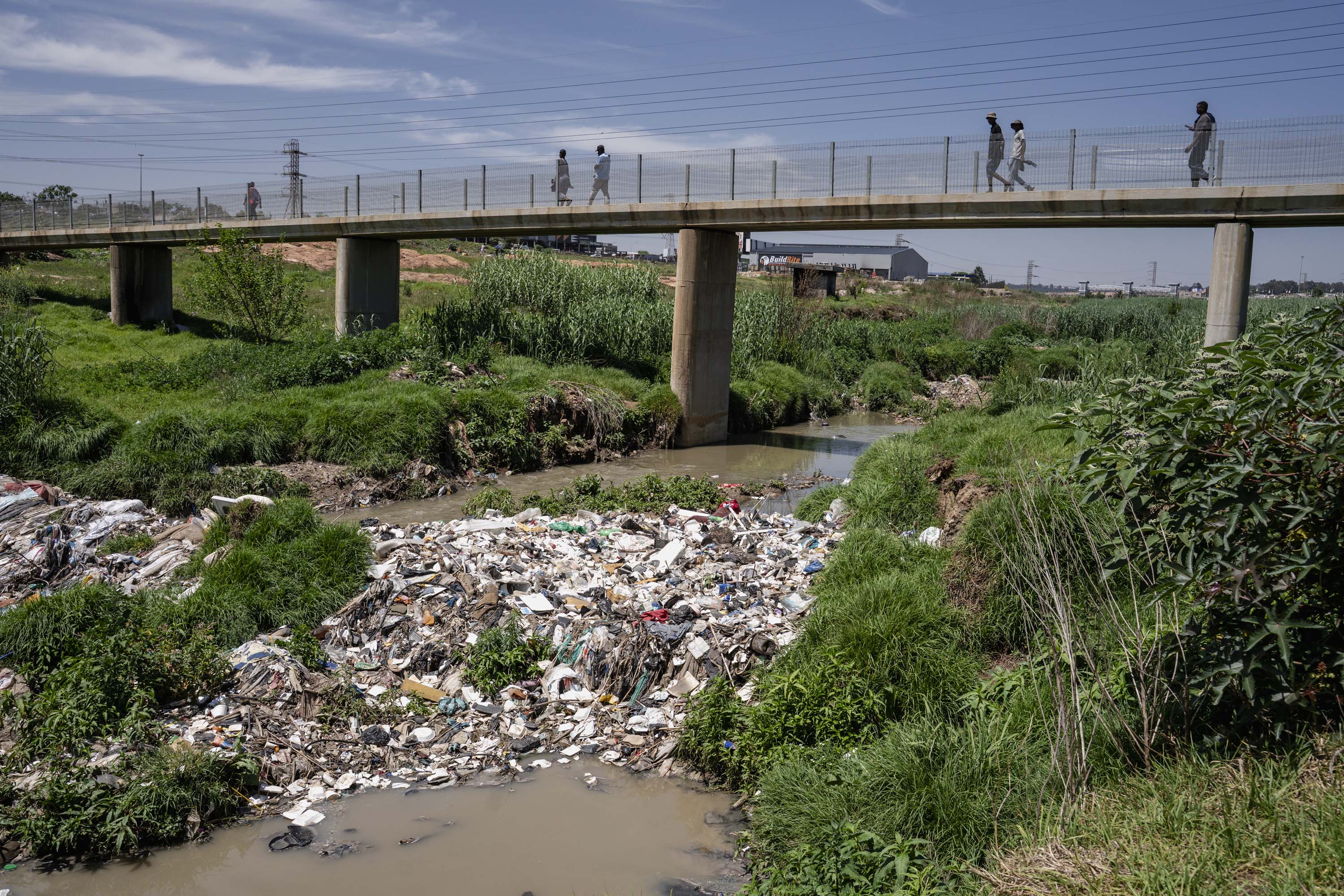
Rubbish clogs the polluted Kaalspruit River in Thembisa.
The site is near Nyiko Primary, where Mashimbi teaches learners about environmental care. He wants children to develop a connection with nature from an early age and understand the importance of protecting it.
“We need to teach them to love nature, what plastics do to our environment, how water is life, and how bad littering and illegal dumping is,” he says.
Mashimbi co-founded EnviroCare Thembisa, a non-profit company, in 2021. It works to raise environmental awareness and address pollution along the Kaalspruit.
He patrols sewage drains along the river and reports spills to the City. With a handful of volunteers, he also cleans up rubbish at dumping hotspots, using gloves and black bags.
“Complaining and not doing anything about it won’t assist us,” he says.
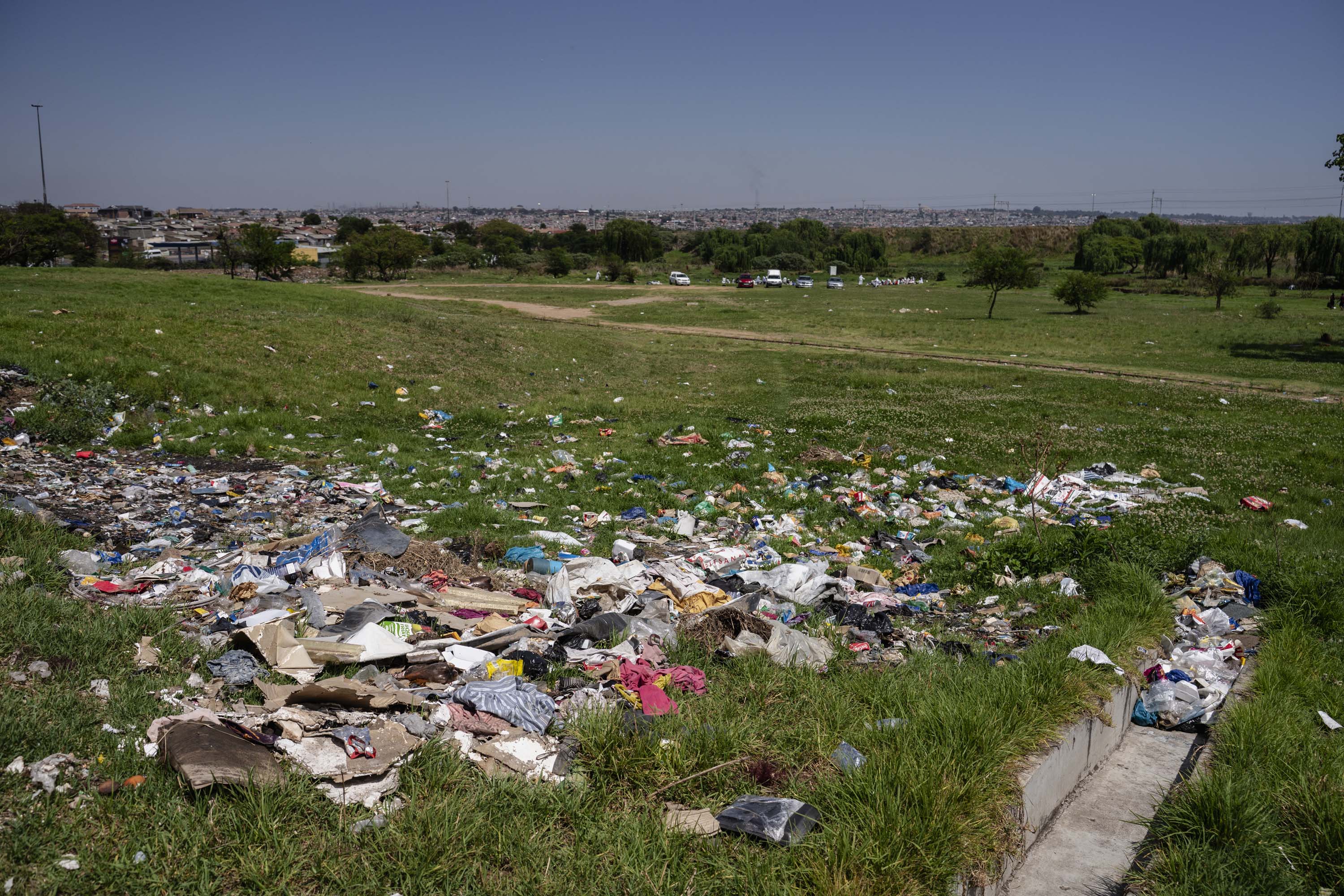
Rubbish dumped in an open park space near the Kaalspruit.
Decades of pollution
Researchers at the University of Johannesburg used satellite imagery from 1990 to 2022 to track changes across the Kaalspruit wetland and its immediate surroundings. They found that built-up areas increased from 194 to 449 hectares, while land classified as vegetation declined from 203 to 58 hectares. The area classified as water also decreased from 27 to 6.5 hectares.
The researchers, Innocent Sinthumule and Janet Maluleke, said the loss of vegetation and water had reduced the wetland’s ability to regulate flooding and erosion, filter waste, and provide habitat for wildlife.
The effects are also felt by residents. Upstream in Umthambeka, pensioner Gabriel Tsotetsi has lived beside the Kaalspruit for more than 20 years. He has spent 65 years in Thembisa and remembers when the river had fish, crabs and frogs.
“I was a very good fisherman,” he said.
Now, he said, aquatic life has disappeared.
Tsotetsi said a blocked sewer has carved a permanent channel through the ground near his house. The stench forces his household of four to keep their windows shut day and night.
He said municipal repairs often last less than a week, while promises to reroute sewer lines have yet to produce a permanent solution.
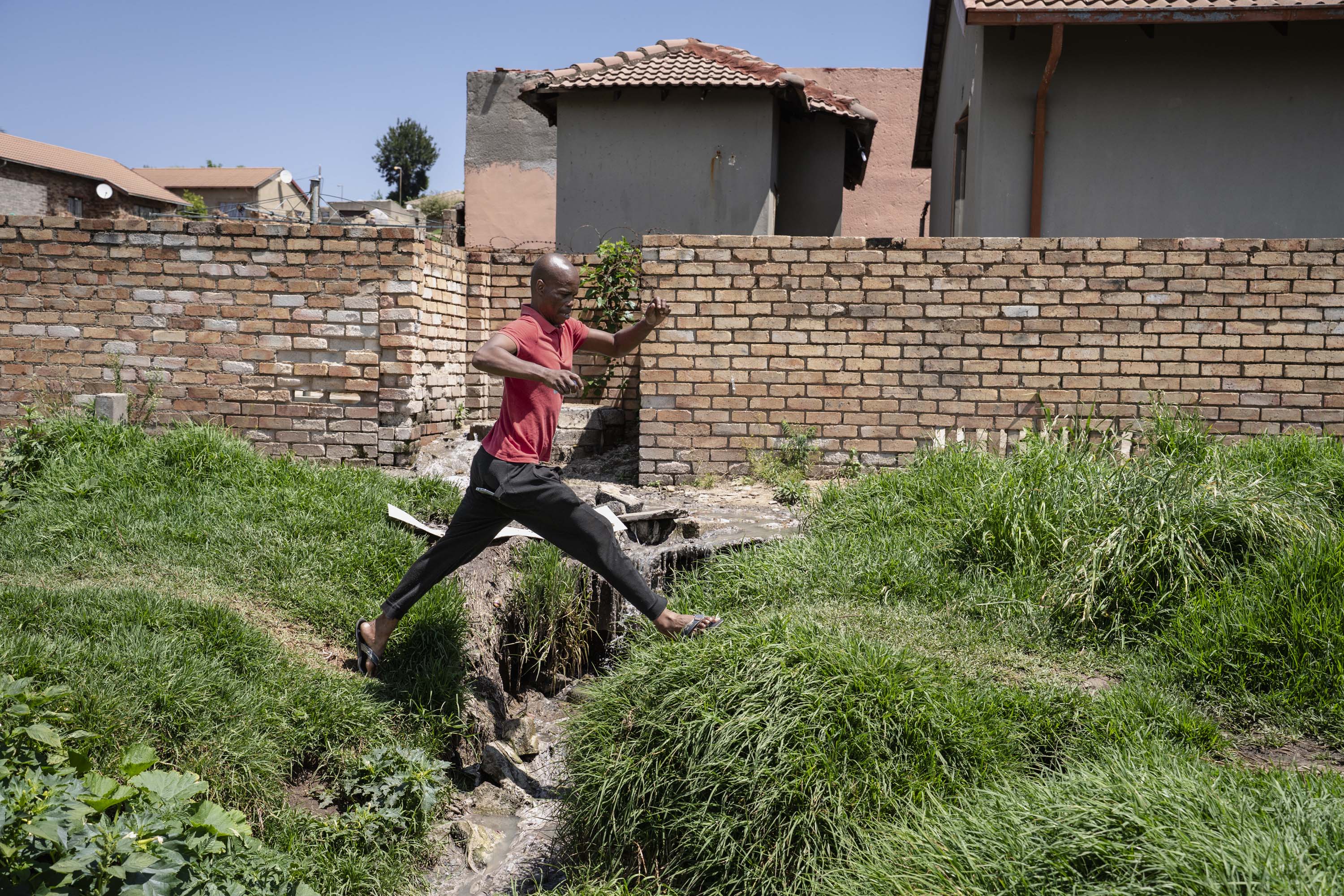
Thembisa resident Tumi Gama jumps over an overflowing sewage manhole located directly outside his home. He has to keep his windows and doors closed due to the smell.
His neighbour, Tumi Gama, said swarms of flies from an overflowing sewage manhole and illegal dumping behind his home have forced his family to install door netting.
Gama said sewer lines often burst. Rats are common and fish have disappeared. He said residents are “exhausted” from living alongside raw sewage.
EnviroCare Thembisa has identified more than 40 hotspots where sewage overflows into residential yards and the Kaalspruit.
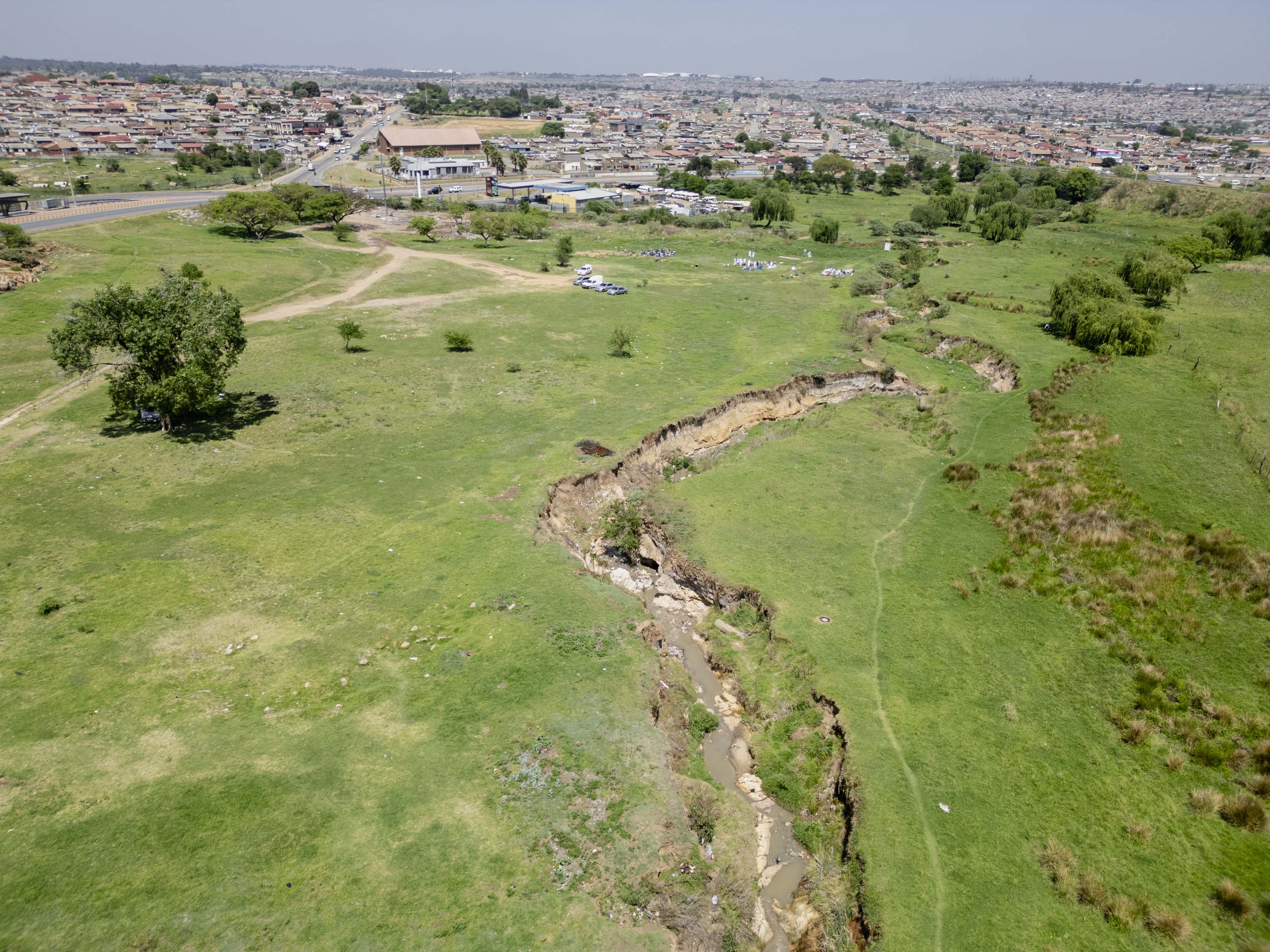
An aerial view of the area Samuel Mashimbi hopes to turn into a botanical garden.
Overwhelmed infrastructure
Ekurhuleni’s head of water and sanitation, Thokozani Maseko, told GroundUp that while Thembisa’s teams are “responsive”, repairs are delayed partly by illegal structures obstructing sewer infrastructure and backyard dwellers overloading the system.
He said some sewer outfall pipelines are being designed or constructed to address capacity constraints.
The pressure on Ekurhuleni’s wastewater system is also detailed in a recent report by the South African Human Rights Commission.
The report found that Ekurhuleni’s wastewater system was performing comparatively well overall, with a Green Drop score of just under 82%. But seven of the municipality’s 17 wastewater treatment works operated at or above design capacity.
Olifantsfontein, which serves Thembisa, was operating at 172% of its design capacity.
The report also cited material irregularities that the Auditor-General issued in May 2024 regarding pollution at Olifantsfontein and two other treatment works. Neglected maintenance, non-functional infrastructure and hydraulic overloading had resulted in non-compliant effluent being discharged into rivers, the report said.
It said municipal funds initially allocated to the treatment works in 2025/26 had been “redirected to other service-delivery priorities”.
It said refurbishment is planned for Olifantsfontein, with a contractor expected to be appointed by the end of December 2027.
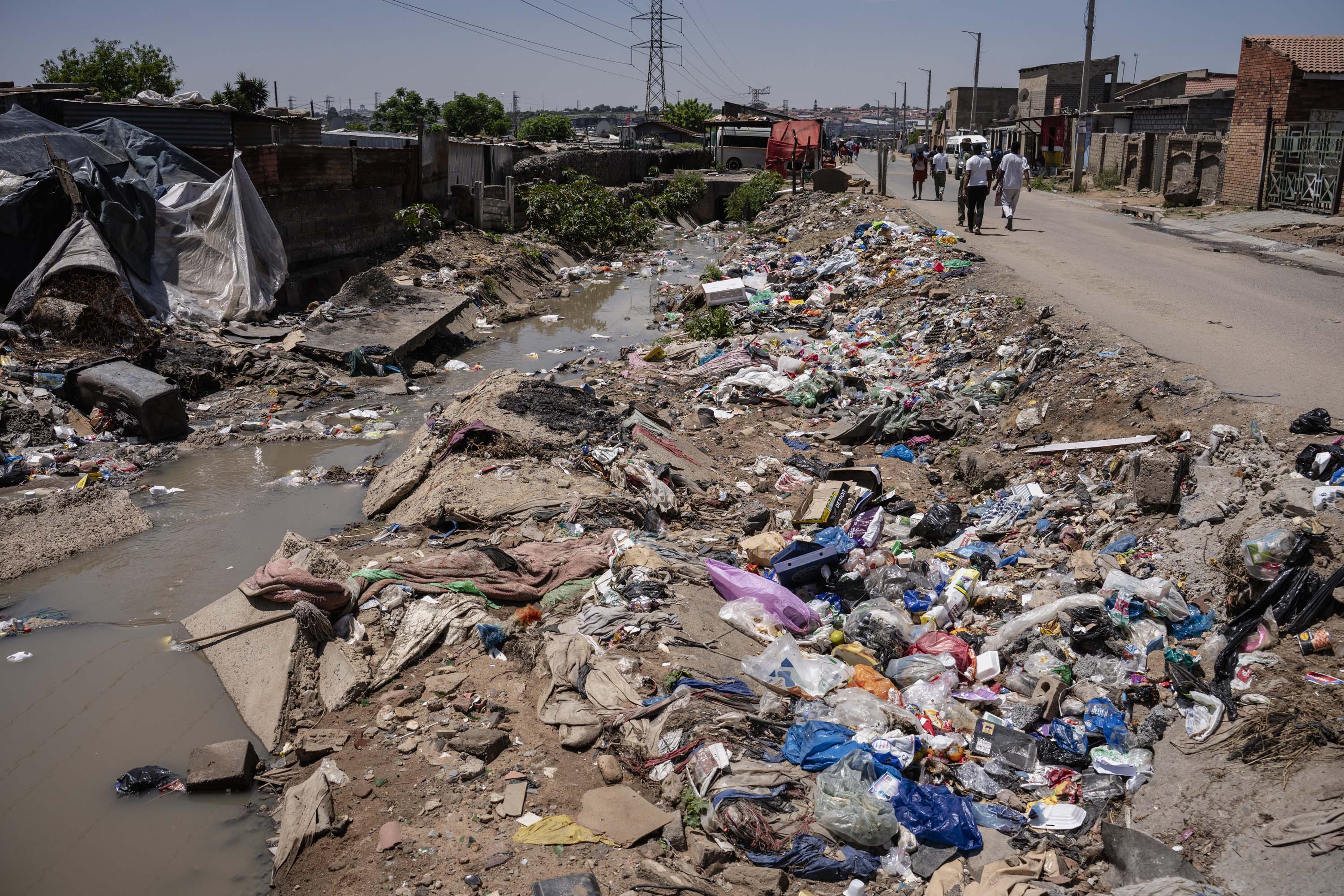
Illegally dumped rubbish at the Kanana informal settlement in Thembisa.
The pollution extends beyond Ekurhuleni.
In the nearby Kanana informal settlement, under the City of Johannesburg, resident Mangu Molefe described years of sewage and rubbish entering stormwater drains that feed into the Kaalspruit.
During our visit in October, we saw sewage and stormwater carrying plastic waste flowing from residential areas into the Kaalspruit and the surrounding wetland areas.
Johannesburg Water spokesperson Nombuso Shabalala said illegal sewer connections, structures built over or too close to sewer pipes, and vandalism contribute to recurring blockages that pollute the river.
The region receives hundreds of reports of sewer blockages each month, she said.
The City issues demolition notices for these structures, but the process is lengthy and notices are often ignored, Shabalala said.
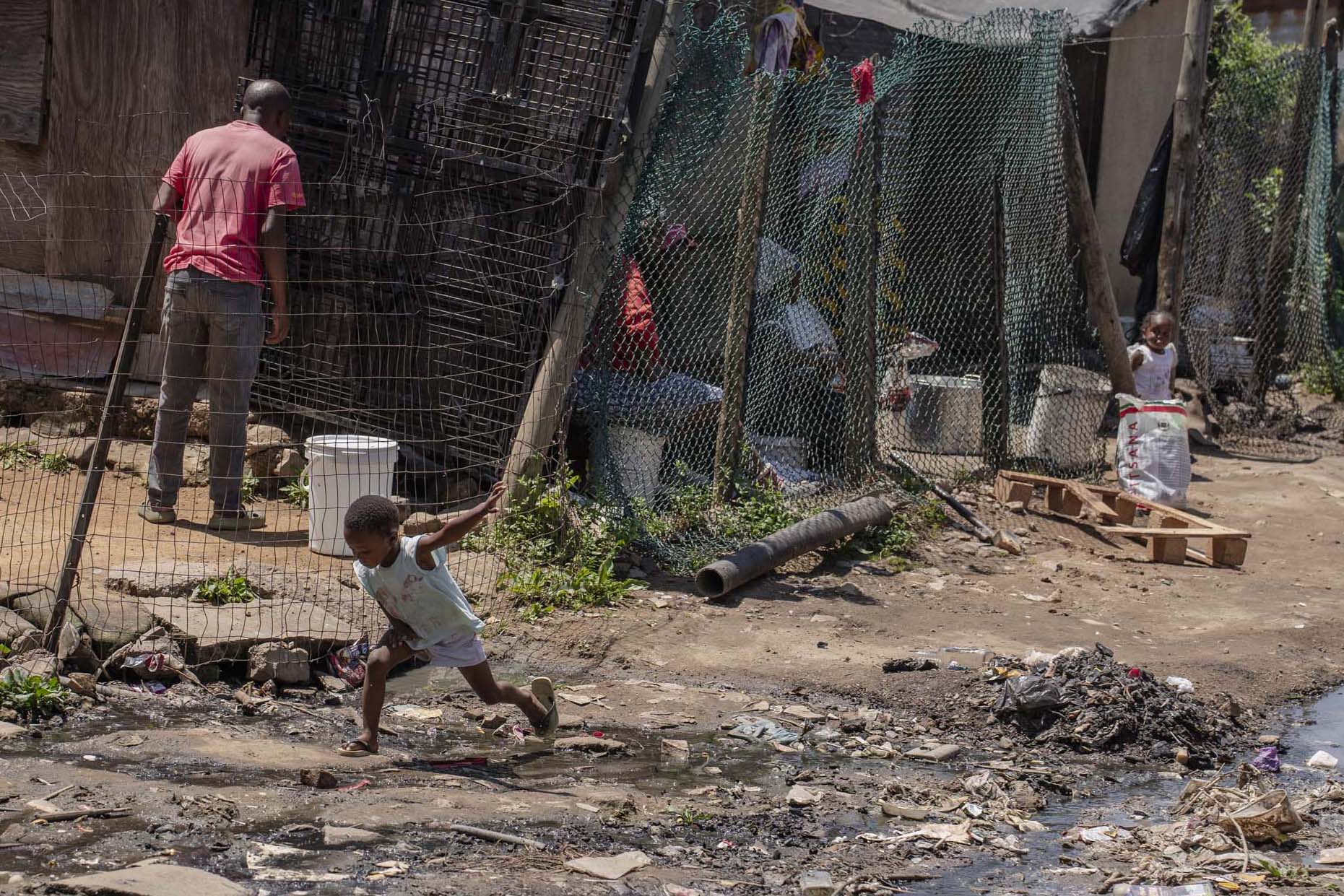
A young child navigates overflowing sewage in the streets of the Kanana informal settlement in Thembisa.
A green lung for Thembisa
For Mashimbi, restoring the environment means more than clearing rubbish from the riverbank. He wants residents to have a place where they can learn about and experience nature.
The botanical garden would be filled with indigenous trees and plants, providing shade from the Highveld heat and creating a space for environmental education.
But Mashimbi says the garden cannot become a reality while sewage continues to flow into the waterway and illegal dumping degrades the surrounding wetland.
Repairing sewer networks, stopping sewage spills and addressing illegal dumping are essential, he says.
“Otherwise, we can never bring back wildlife here,” he says.
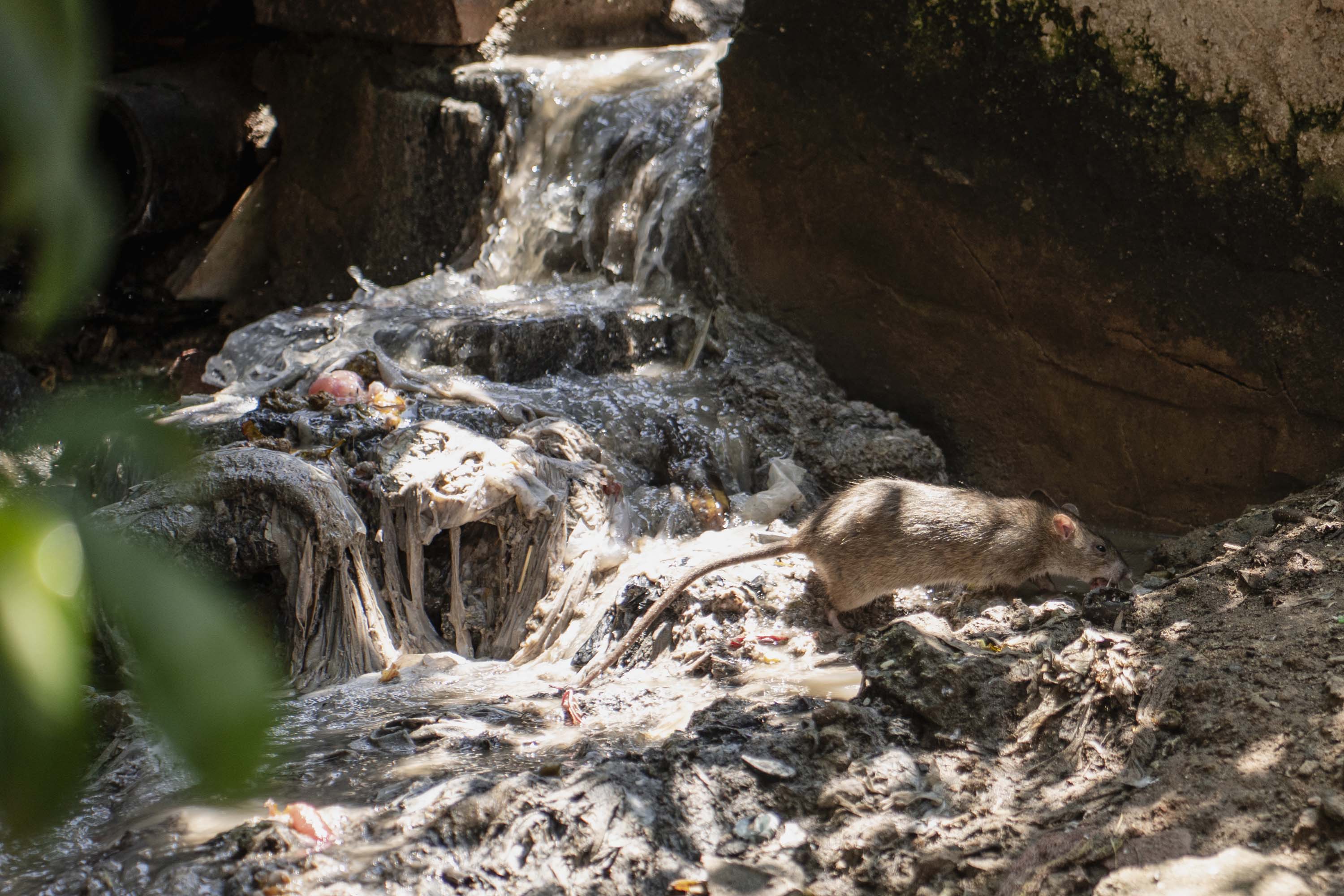
A rat runs near an overflowing sewage manhole in the Kanana informal settlement.